

Big picture: the best flour for sourdough starter is the one you can buy easily, afford regularly, and trust. From there, you can choose to keep things super simple with all-purpose or bread flour, or play a little with whole grains and rye once you feel more confident.
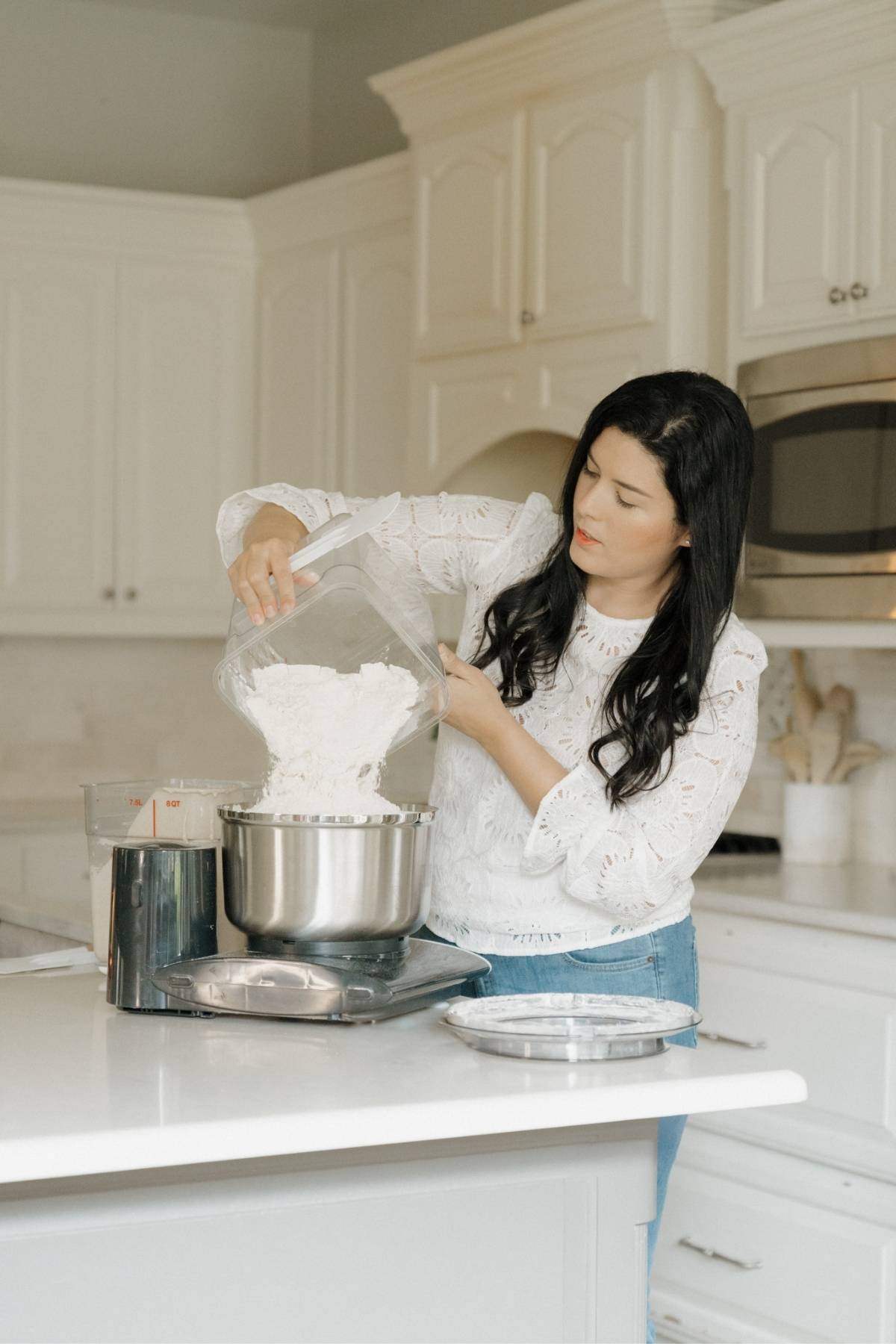
Here is the truth I wish more people would say out loud: your starter does not need the "perfect" flour to come alive. It needs a decent flour and a human who feeds it consistently.
You can absolutely build a strong, bubbly starter with flour from your regular grocery store. The trick is understanding what to look for on the bag and how each type of flour behaves, so you can make choices that fit your life, not just the internet's opinions.
Ready to make a sourdough starter from scratch? Here is my recipe and method:
In this post we'll walk through:
- What actually matters in a flour for starter success
- The differences between all-purpose, bread, whole wheat, rye, other grains, and gluten free
- Which flours I like for starting a brand new starter vs maintaining one for the long term
- A simple cheat-sheet table you can keep coming back to
Jump to:
What Actually Feeds Your Sourdough Starter
Your sourdough starter is a tiny, bubbly ecosystem.
Most of the wild yeast and bacteria that make it work come straight from the flour.
At the same time, they eat the starches and minerals in that flour, then give you gas (rise) and acid (flavor).
So when we talk about "best flour for a sourdough starter," what we are really asking is:
- Does this flour bring enough natural life and nutrition to the party?
- Does it avoid chemicals that might make the microbes' lives and jobs harder?
- Is it something I can keep buying over and over without issues?
If those answers are yes, you are in great shape.
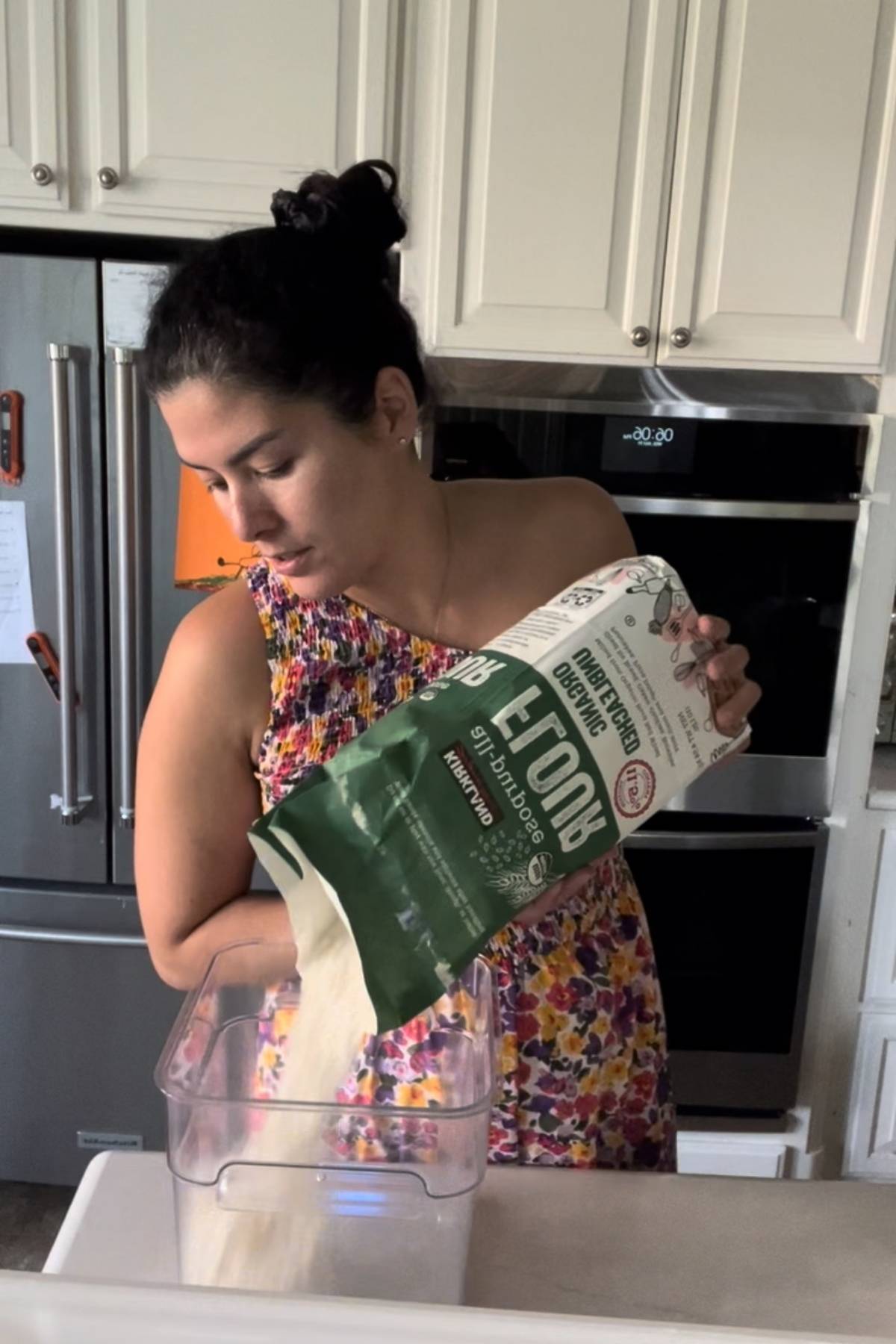
Four Qualities I Love In Sourdough Starter Flour
When you are staring at a wall of bags at the store, here is what I would look for first.
1. Organic if possible
Organic flour is milled from grain grown without synthetic pesticides. That means:
- Fewer weird residues that could bother the microbes in your starter
- Usually a little more mineral content and natural "life" still clinging to the grain
Do you have to use organic flour for a starter to work? No.
Is it a really nice bonus if it fits your budget and is easy to find? Yes.
2. Unbleached
Skip flours that say "bleached."
Bleaching uses chemicals to whiten and "age" the flour quickly. That process also strips away some of the flour's natural goodness and can reduce the wild yeasts and bacteria you are trying to grow.
Unbleached flour is closer to the grain's natural state. That usually means:
- Easier, faster fermentation
- A starter that wakes up more reliably
Look for "Unbleached" on the front of the bag of flour.
3. Not enriched
"Enriched" flour is a highly processed type of flour because it starts as refined white flour, which has had most of its natural nutrients removed during milling, and then synthetic nutrients are added back in.
This extensive processing strips away fiber, some vitamins, and minerals (all the good stuff your sourdough starter needs to thrive), and only adds a portion of the nutrients back to create a product with a finer texture and longer shelf life.
You can keep a starter on enriched all-purpose flour, but I prefer to avoid synthetic nutrients.
4. Unbromated
Some bread flours are "bromated," which means they contain potassium bromate, a chemical used to artificially strengthen dough.
For sourdough, we do not need that help. Long fermentation already develops plenty of strength. Bromate is also something a lot of bakers avoid for health reasons.
If you can, choose flour that is:
- Unbromated (most organic and many mainstream flours will say so)
- Or simply not labeled as bromated at all

Common Flour Types For Sourdough Starters
Let's talk about what is actually in your pantry and how it behaves when you feed a starter with it.
All-Purpose Flour (Unbleached)
All-purpose flour is the simple, trusty option for most home bakers: easy to find, affordable, and perfect for everyday starter feedings as long as it's unbleached.
It gives your starter a mild, pleasant flavor and behaves very predictably, though a brand-new starter may take an extra day or two to really get going compared to whole wheat or rye.
For many bakers, this is the flour their starter happily eats for years.
Bread Flour
Bread flour is a higher-protein white flour milled from hard wheat, which helps your starter rise tall and gives your loaves a strong, chewy structure.
I especially like bread flour for sourdough starters because it is often milled with a little malted barley flour, which adds enzymes that help break down starches into sugars and give the yeast plenty to eat.
It can be a bit pricier and harder to find in smaller stores, though, so if you don't keep it on hand, unbleached all-purpose flour will still make a perfectly happy sourdough starter.
Whole Wheat Flour
Whole wheat flour is a great option for your starter, because it's made from the whole wheat berry (bran, germ, and endosperm), bringing extra minerals, fiber, and wild yeasts that often help a brand-new starter wake up and get bubbly faster, with a slightly more complex, tangy flavor over time.
The tradeoff is that the bran can weigh things down a bit (so a 100% whole wheat starter may not rise as high) and it absorbs more water, so you might need a touch extra to keep that thick-batter consistency.
A lot of bakers like to kick off a new starter with whole wheat or a blend, then switch to mostly all-purpose for easy, predictable daily maintenance.
Rye Flour
Rye flour is very enzyme- and mineral-rich, which often makes new starters wake up quickly and adds a tangy, slightly fruity, complex flavor.
Because it's low in gluten, a rye starter will be looser, may not "double" as dramatically in the jar, and can feel a bit stickier to work with even when it's very active.
A nice middle ground is to use some rye in the early days (or as an occasional "boost" when your starter seems sleepy), but maintain it day to day with wheat flour for easier handling.
Other Grains: Spelt, Einkorn, and Friends
You can absolutely bring more adventurous grains into your starter's life, like ancient wheats (spelt, einkorn, emmer, kamut) or small amounts of barley or oat flour, especially if you already love baking with them or want more aroma and character.
Their gluten behaves differently (spelt and einkorn are more delicate, and barley/oats don't add much gluten at all), so I would use them as part of the feeding mix rather than 100% of the flour, especially for beginners.
They're fun to experiment with once you feel comfortable, but you definitely don't need them to have a strong, happy sourdough starter.
Gluten-Free Flours
If you need to bake gluten free for medical reasons, you'll want a separate gluten-free starter, and whole grain flours like brown rice, sorghum, millet, or buckwheat are great options because they have enough starch and minerals to feed the yeast and bacteria.
A gluten-free starter will look more like a thick batter (not a tall, stretchy rise), so you'll judge readiness more by bubbles and smell than by doubling in height, and it's best to avoid blends with gums and lots of additives.
To be totally honest with you, I tried making a gluten-free starter once, and failed. I need to try again!
If you don't actually need gluten-free bread, I recommend starting with a simple wheat-based starter first, because it's much easier to learn the basics that way.
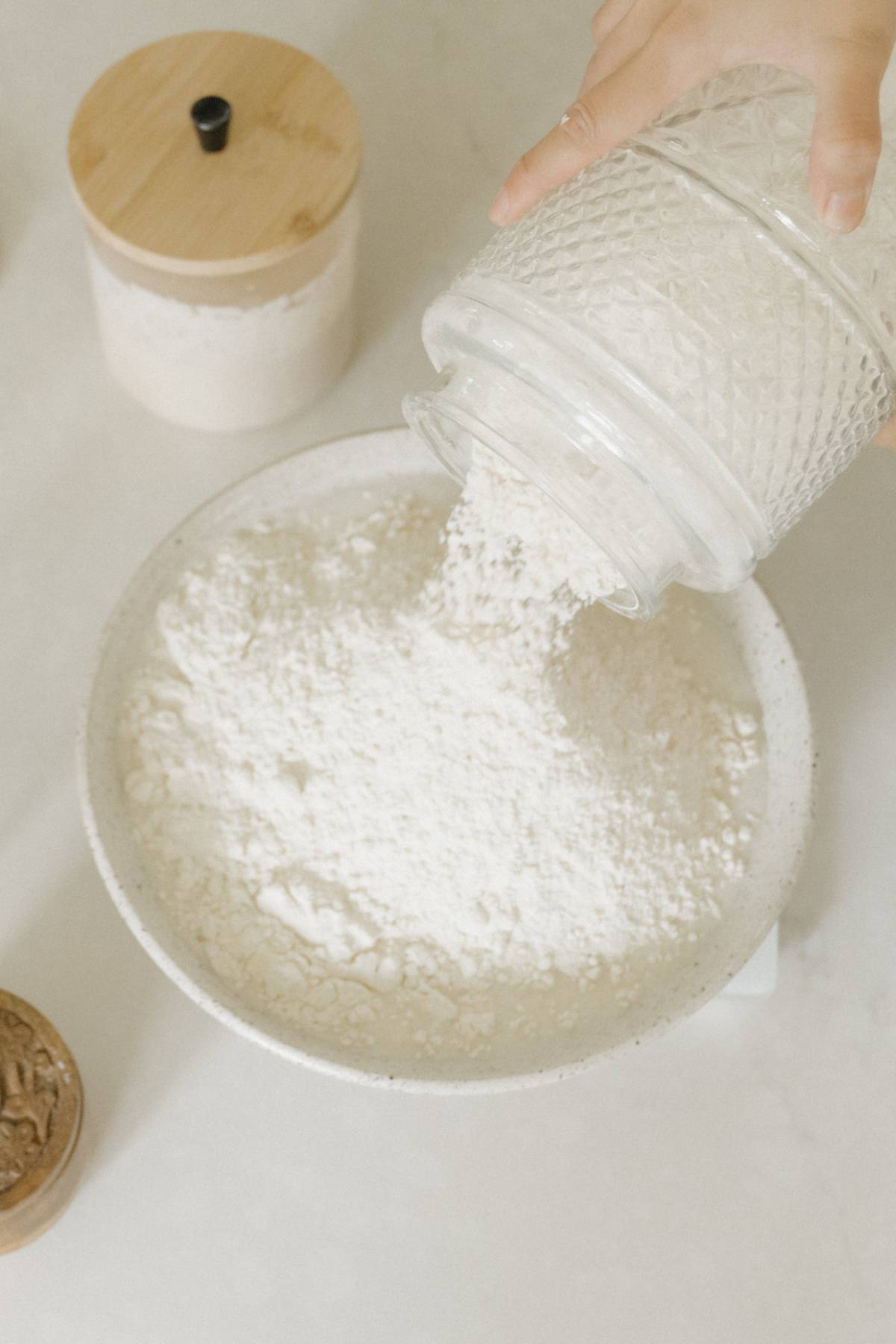
I personally don't think you need "fancy" flour to have a strong starter.
But you do need a flour you can trust and a routine you can live with.
If all you have is unbleached all-purpose or bread flour, start there.
If you can add a little whole wheat or rye in the early days, even better.
Feed it, watch it, learn its rhythm. Your starter will teach you what it likes.
Related Content
Looking for other posts like this? Try these:

Subscribe to get sourdough tips
Join the movement Bringing Bread Back to every family table! Get sourdough tips and recipes for homemade bread and other bakes delivered via email.
Leave a Reply