

This post is sponsored by the Missouri Pork Producers Association. All opinions and recipes are my own.
Cachitos de Jamón are soft, light and slightly sweet bread rolls filled with a generous amount of ham. These ham horns are very popular bakery items in Venezuelan panaderías.
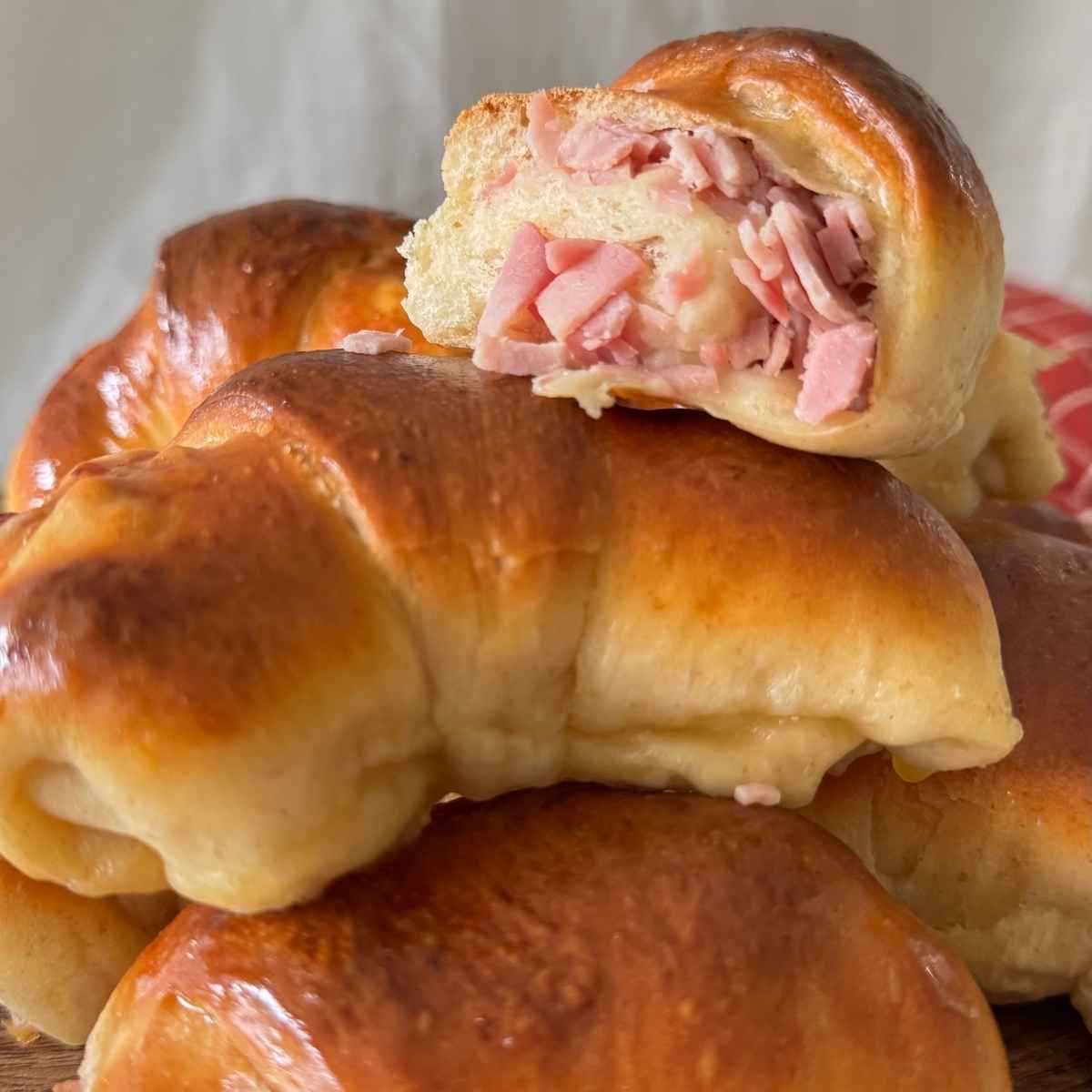
The dough is super simple to make and easy to work with, and you can use yeast or a sourdough starter to help it rise. It's the same dough I use for the Pan de Jamón and you can find the recipes here: Pan de Jamón made using yeast and Sourdough Pan de Jamón.
Once you learn how easy these ham horns are to make, you will find yourself wanting to make them using ham AND cheese, or just cheese, or even guava and cream cheese!

This recipe is part of my partnership with the Missouri Pork Producers Association, and it's a great example of why I love baking with ham and other pork products.
For this recipe I am using lean ham that I roughly chopped, but you could use whichever type of ham you prefer.

Jump to:
What I Love About This Recipe For Cachitos de Jamón - Ham Horns
These are the reasons why these ham horns are a staple on Venezuelan lunchboxes:
- The Softest Crumb: Thanks to the enriched dough (eggs, butter, sugar and milk), the texture remains pillowy and soft for days.
- The Perfect Balance: Between carbs and protein. Perfect to fuel a full day of learning or work! Also, the contrast between the salty ham against the sweet dough is so good.
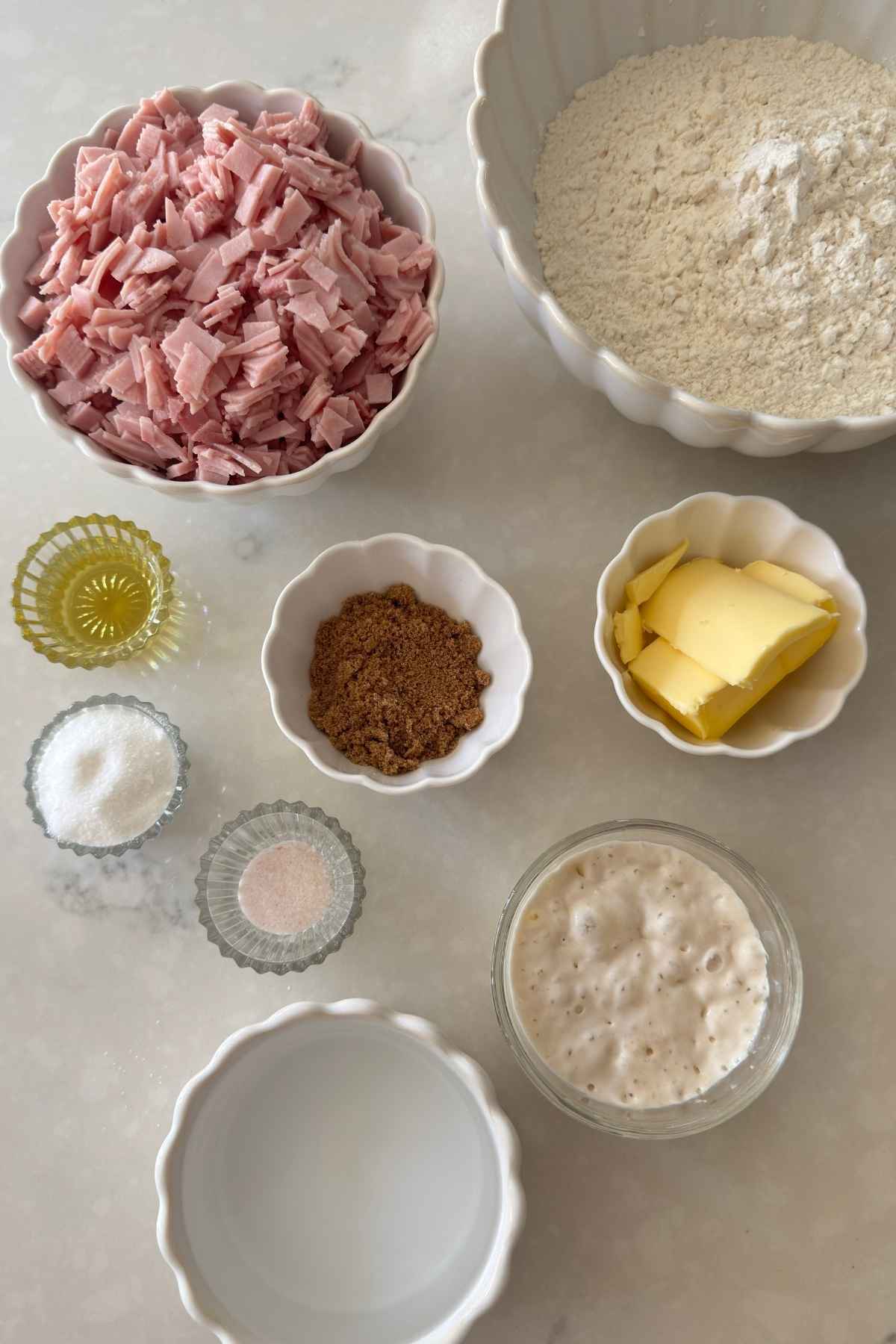
Ingredients For Cachitos de Jamón - Ham Horns
To get that authentic flavor and texture, you need a few specific ingredients for both the enriched dough and the sweet and savory filling.
- All Purpose Flour: I recommend high-quality All Purpose flour for tender cachitos. But I have made them with bread flour many times and it works great, too.
- Sourdough Starter or Yeast: When using sourdough starter keep in mind that the first and second rise will take much longer, especially since it's an enriched dough. You can use instant yeast or rapid yeast, but just be sure it is fresh so you get a good rise.
- Warm Milk: warm whole milk creates the perfect hydration and richness for the dough.
- Sugar: Granulated sugar feed the yeast and give the dough that sweetness that goes great with the ham.
- Butter and eggs: Unsalted butter and 2 eggs enrich the dough.
- Lean Ham: The star of the show-use lean ham that is roughly chopped, so it keeps its texture inside the horns. You can use Smoked or Honey Ham.
See recipe card for quantities.
Equipment Needed To Make Cachitos de Jamón - Ham Horns
You don't need fancy tools to make this ham bread, just standard baking equipment to handle the dough.
- Stand Mixer or Bread Mixer: With a dough hook attachment to knead the enriched dough thoroughly. I love using my Thermomix too if it's just one batch.
- You can mix the dough by hand, too, if you don't have a mixer.
- Rolling Pin: To roll the dough into a large 16 inch circle.
- Baking Sheet: Lined with parchment paper or a silicone mat.
- Pastry Brush: For applying the egg wash before baking and the melted butter on top after baking.
- Small Bowls: For your mise en place (organizing your ingredients before prep).
Key Steps To Make Cachitos de Jamón - Ham Horns
Follow these steps and everything detailed in the recipe card to make the best cachitos de jamón!
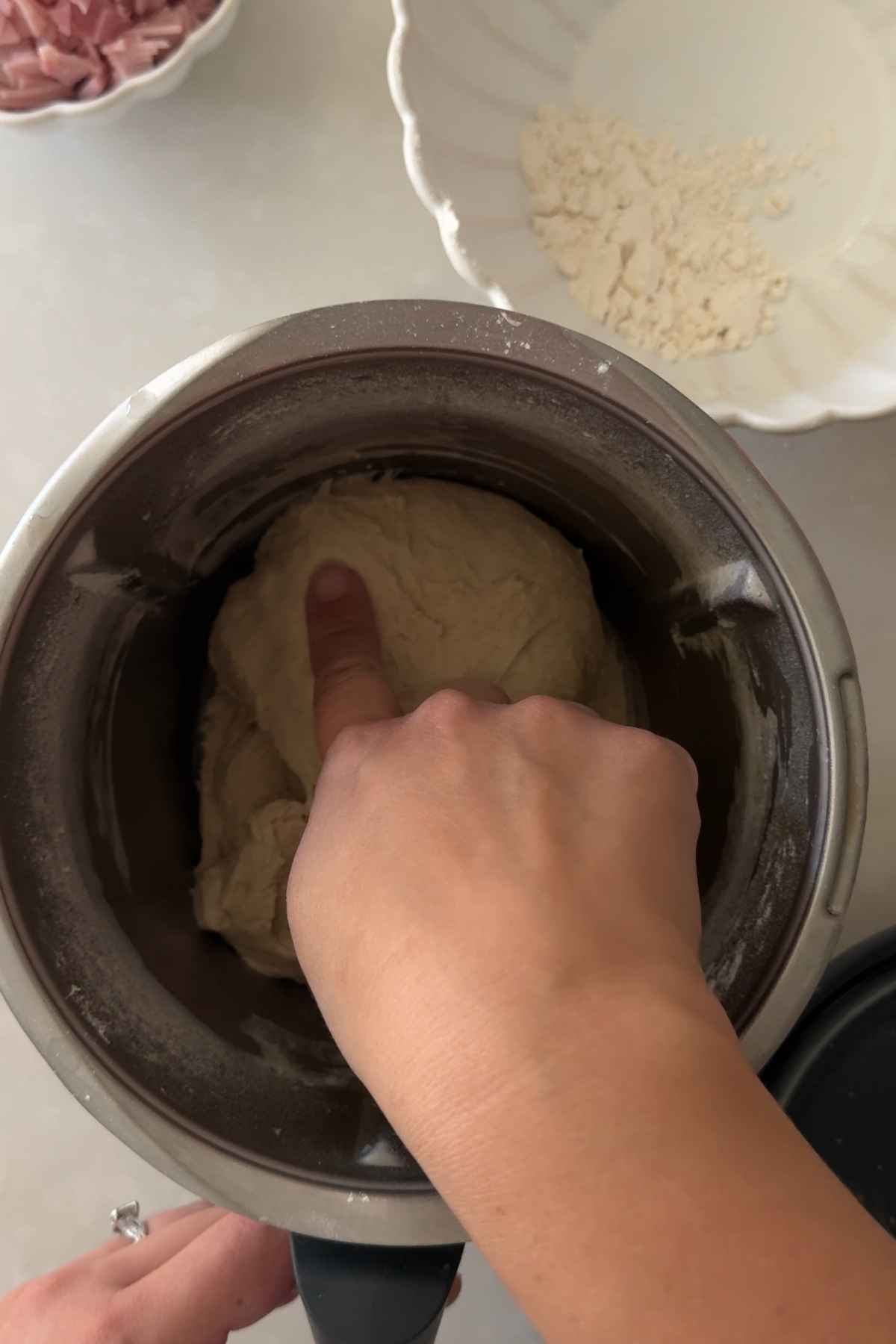
Mixing the dough
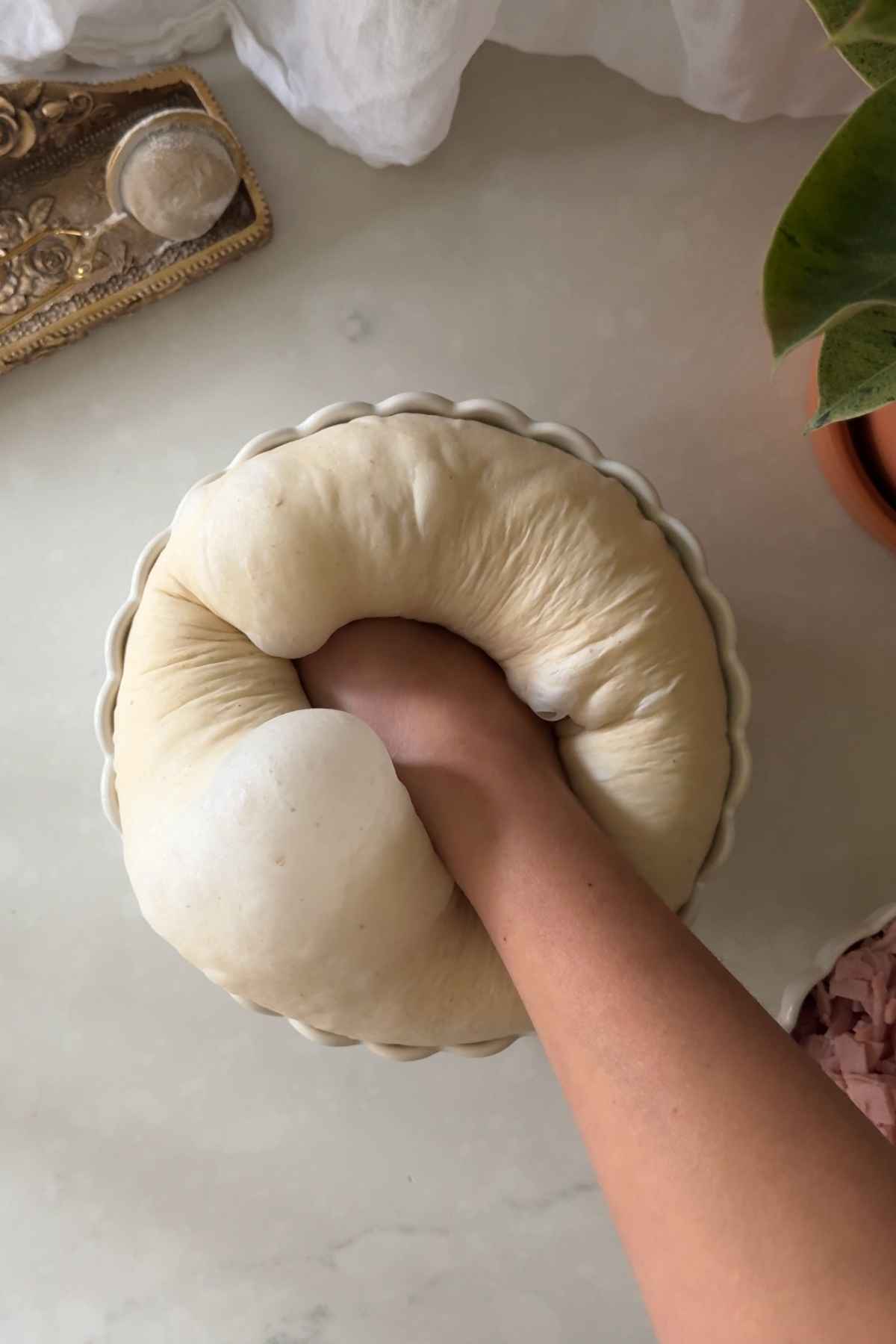
Let it rest until it has doubled in volume and punch it to degass it.
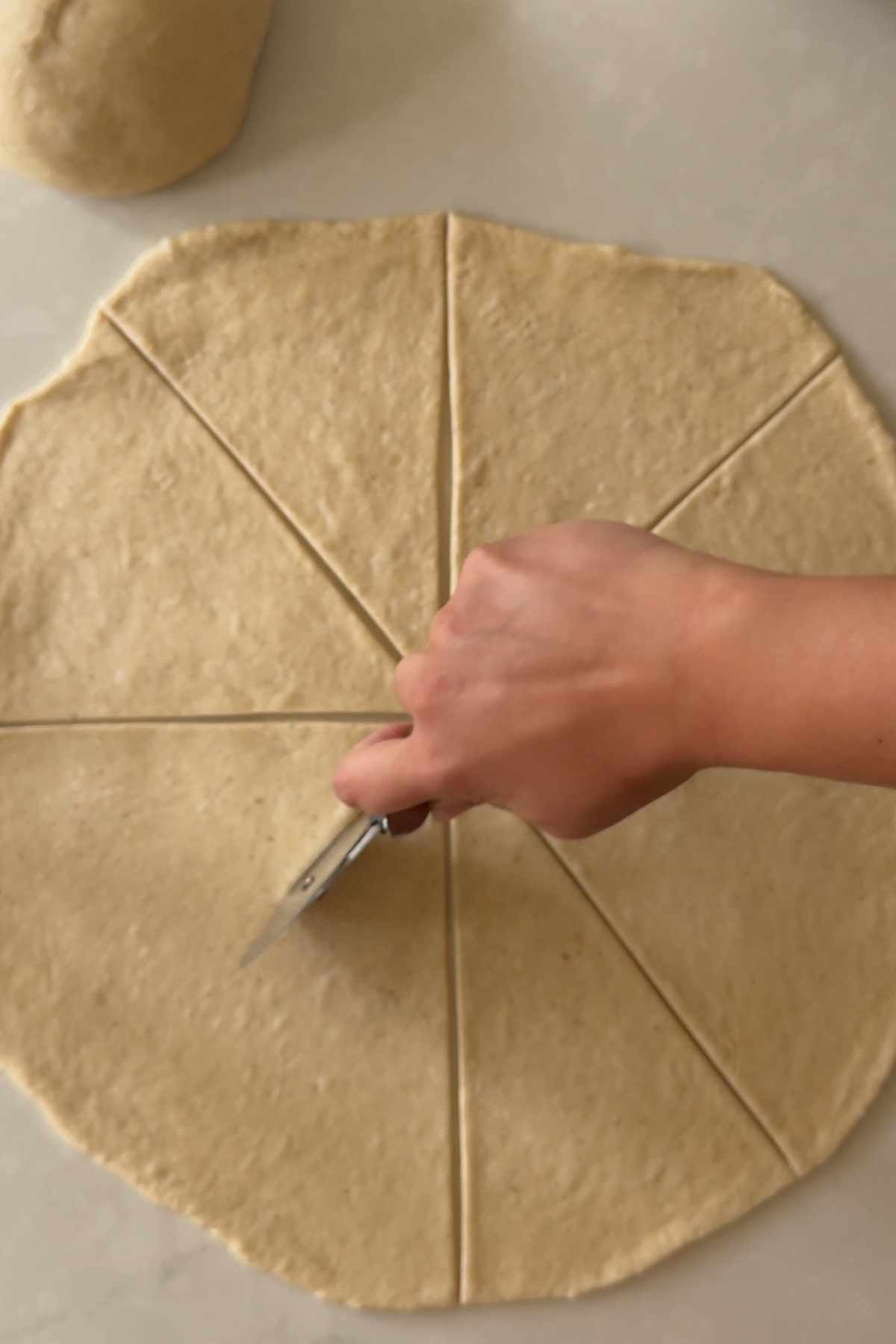
Roll it into a circle that's at least 16" in diameter. Use a pizza cutter to cut 8 triangles.
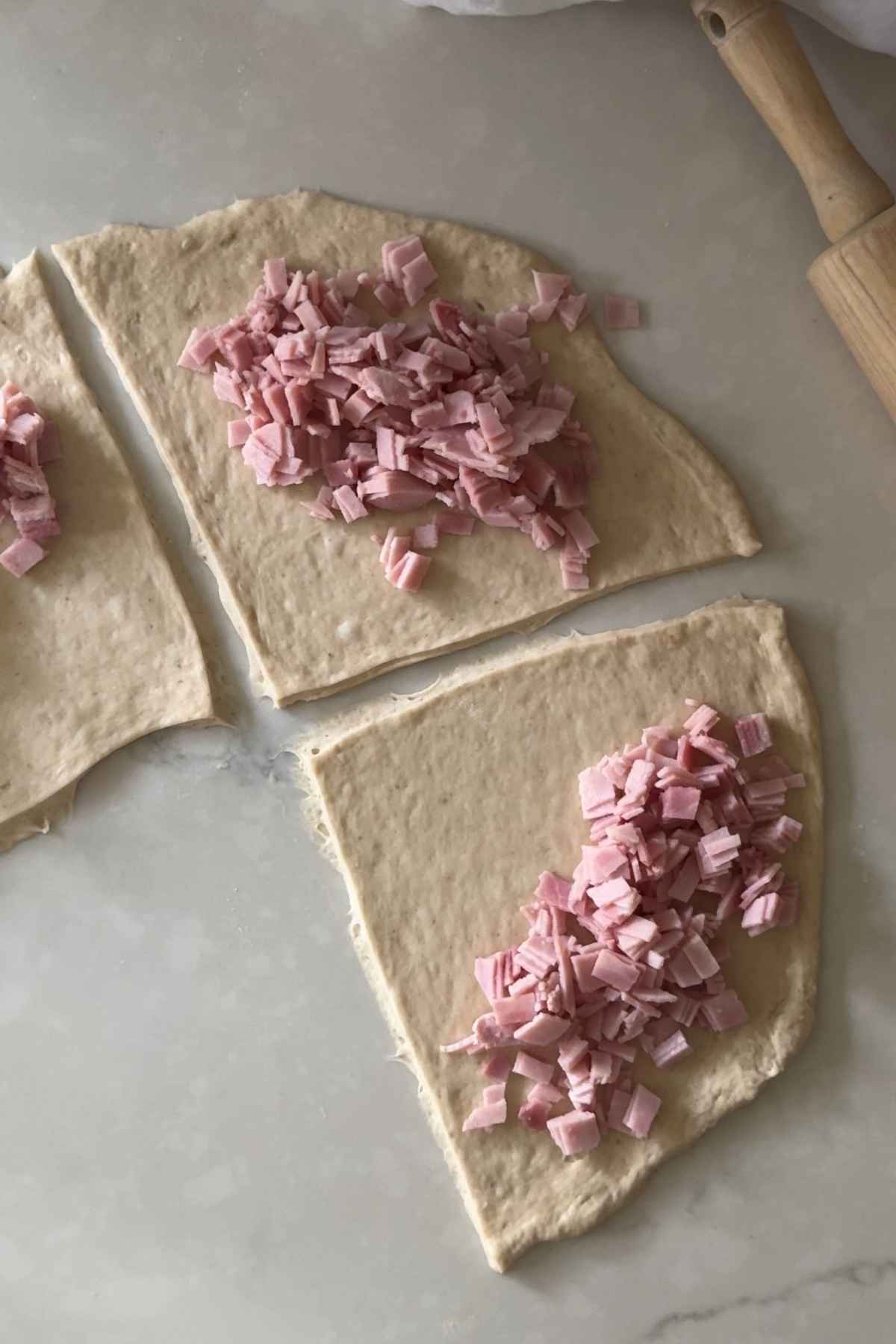
Add the ham.
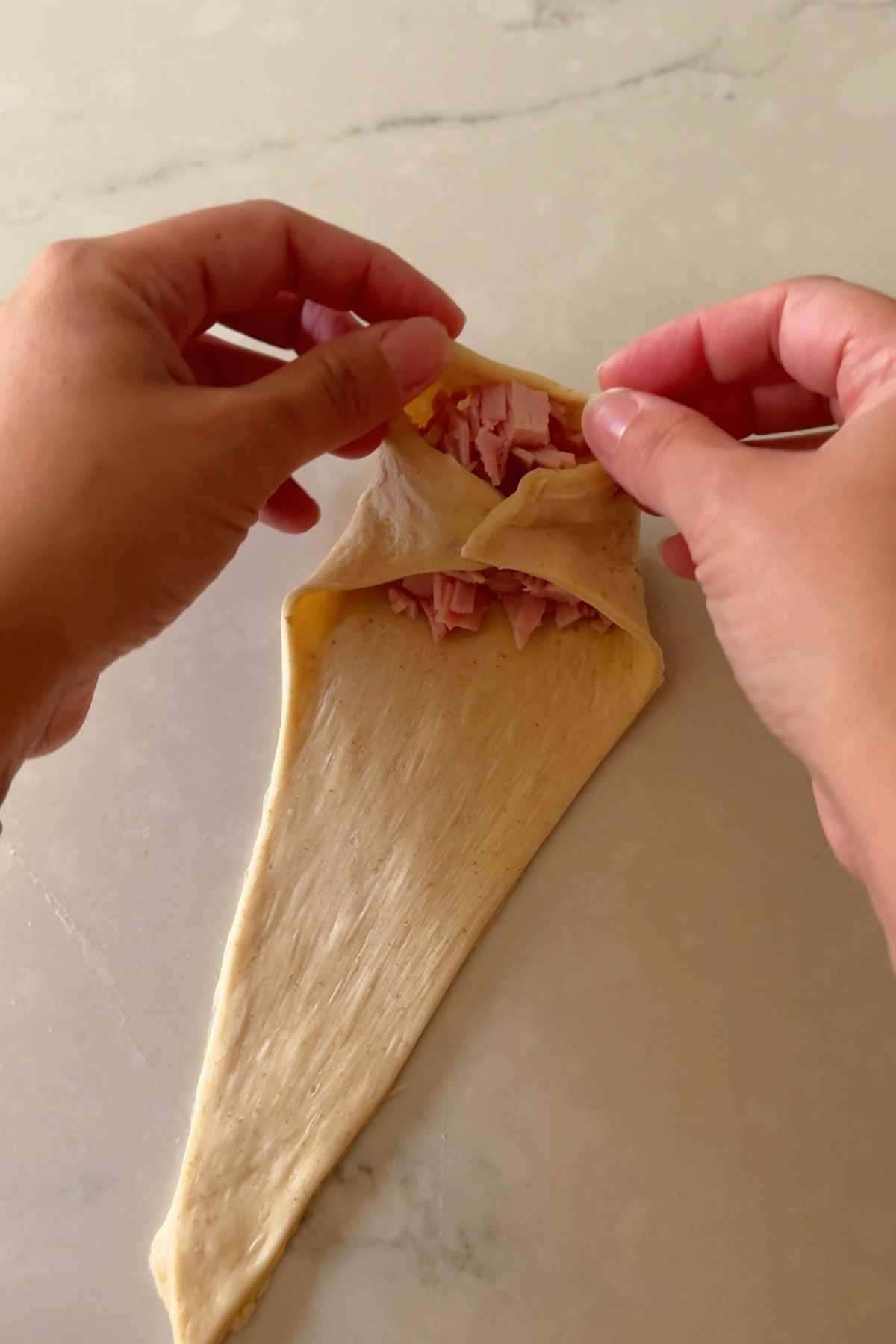
Stretch the dough. Cover the ham with the top 2 corners and start rolling down from the op.
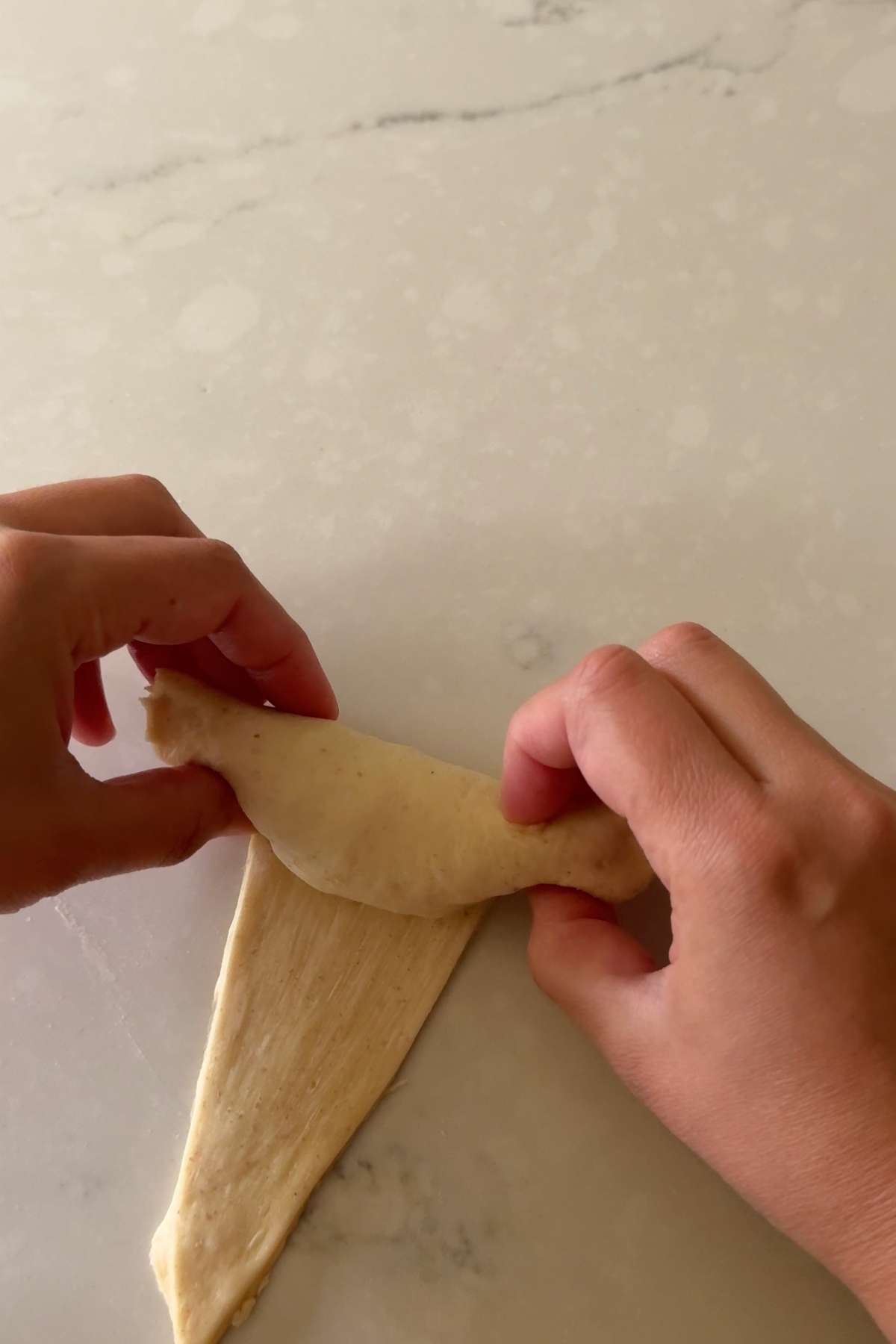
Continue rolling down while stretching the dough slightly upward with every roll.
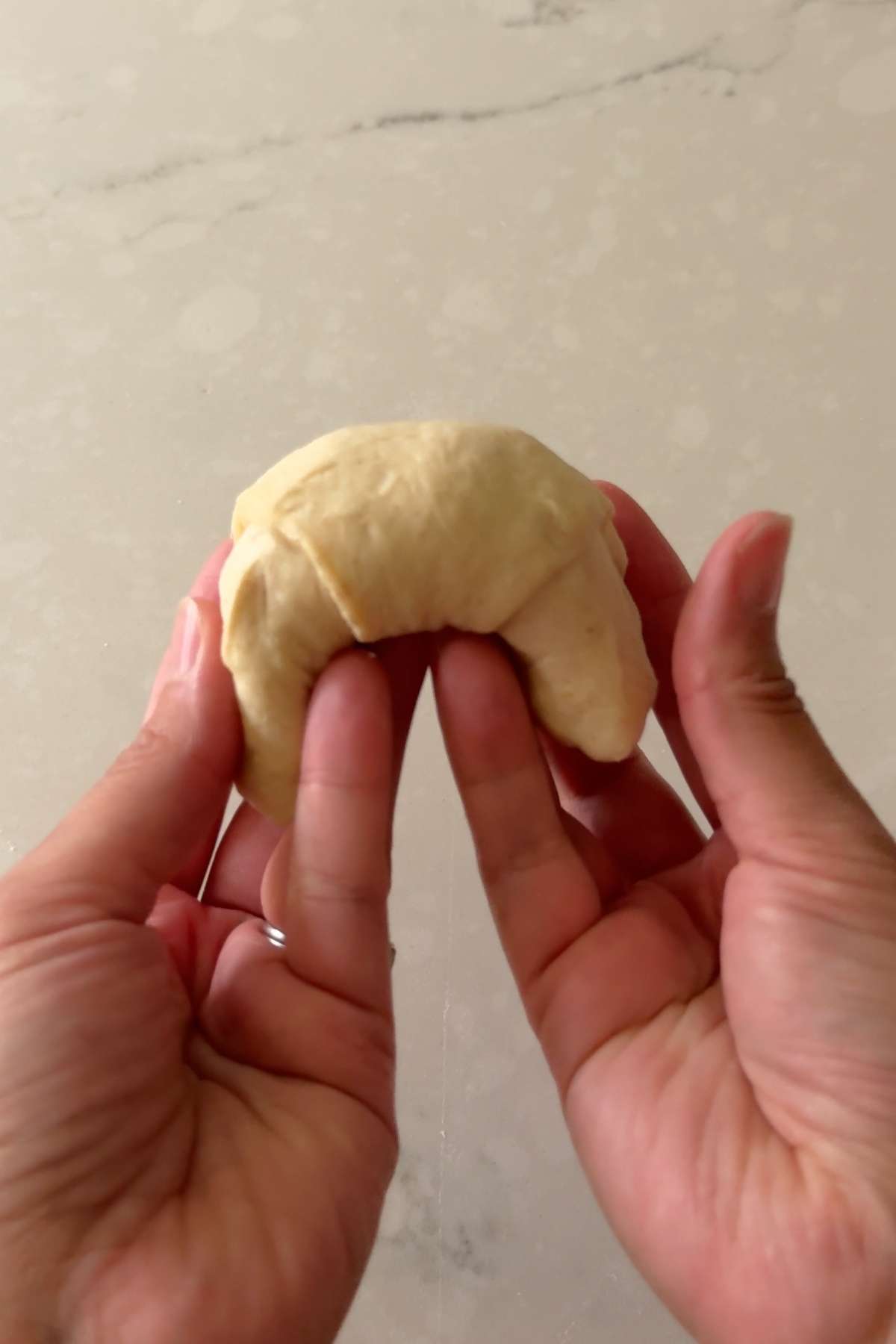
Then shape it as a crescent moon or little horn. Place them all on a baking sheet lined with parchment paper and let them rest while the oven preheats.
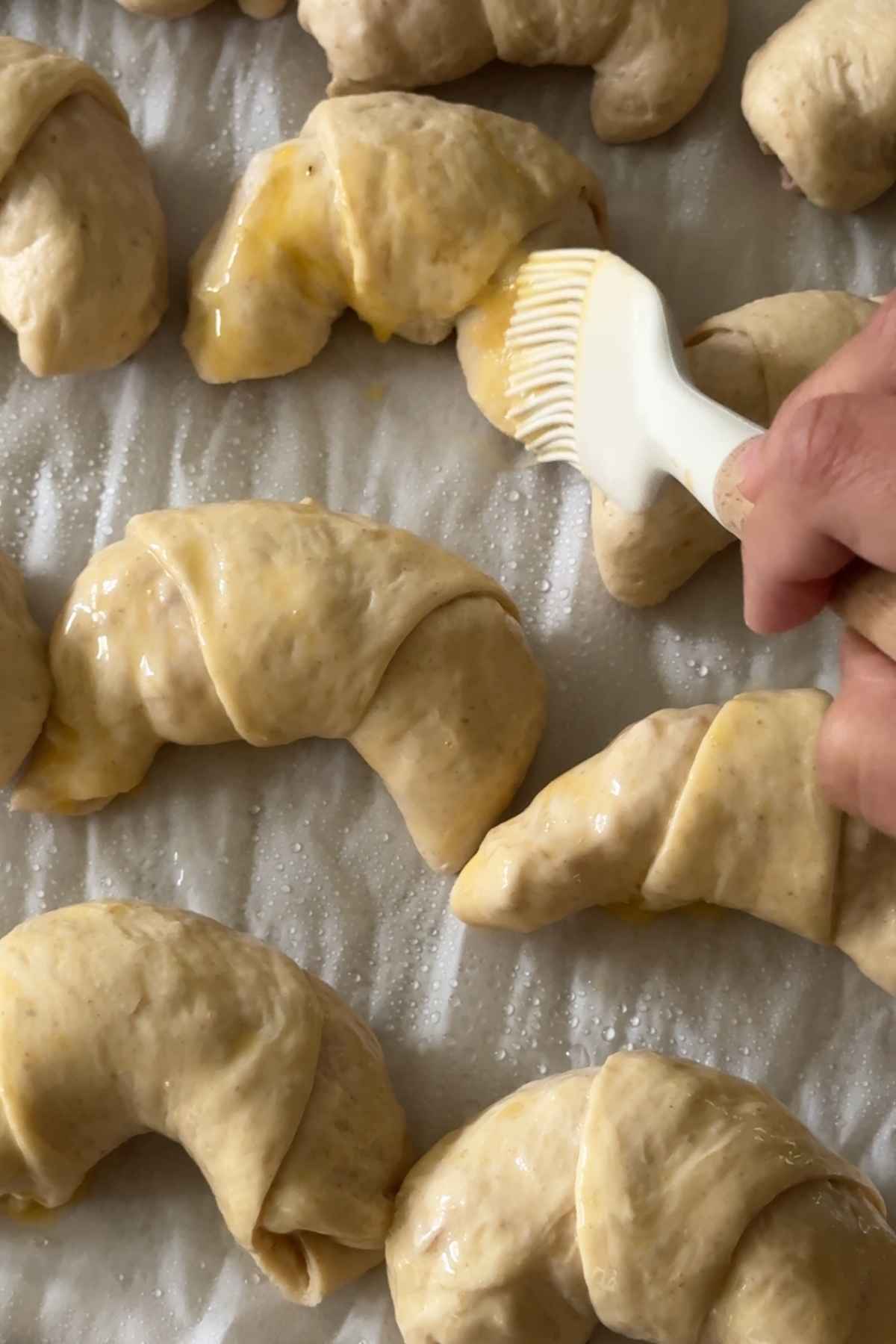
Give the cachitos an egg wash before baking.
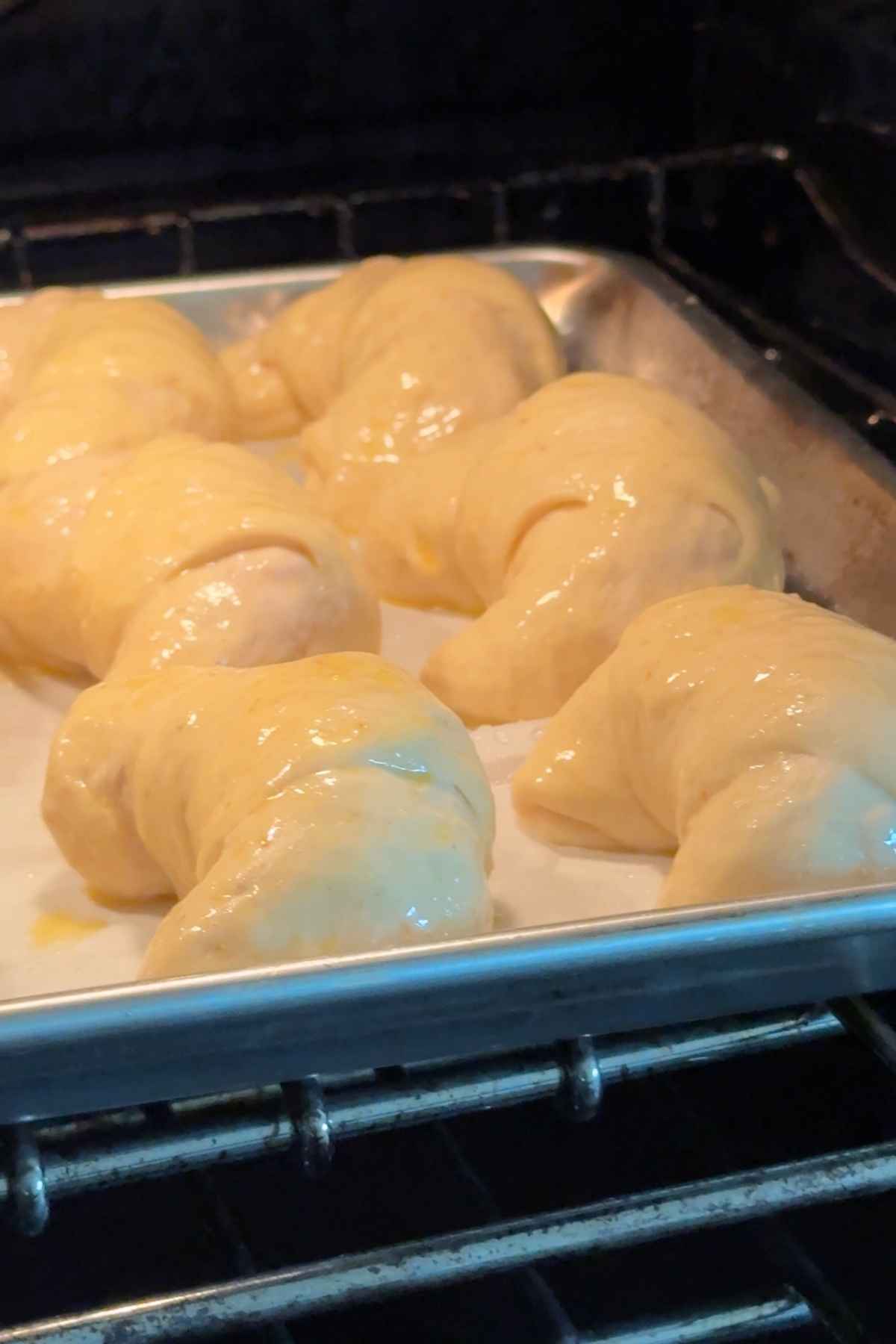
Bake at 375F for 20-25 minutes or until golden brown.
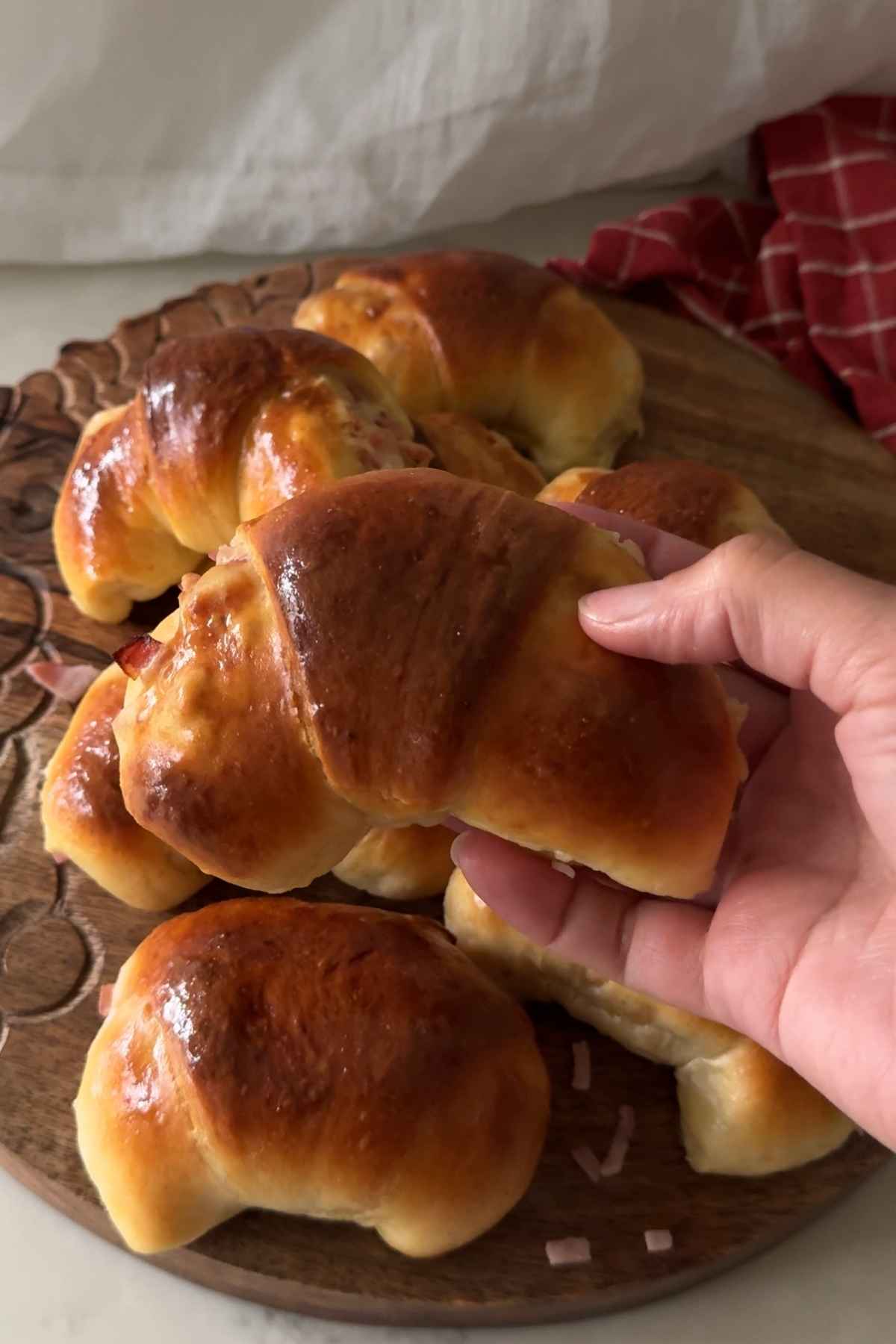
Enjoy!
Storage Tips for Cachitos de Jamón - Ham Horns
Because of the ham filling, cachitos cannot be stored at room temperature like other breads.
It is safe to leave them out on the table for serving for maximum 2 hours at room temperature, or 1 hour above 90°F.
Storage Method: Place them inside a container or a paper or plastic bread bag and store them in the refrigerator for 3 to 4 days.
Freezing is the best way to preserve the texture for extended periods: Let them cool completely and wrap them tightly in plastic wrap, then a layer of foil to prevent freezer burn. They keep well for 2 months.
Reheating
You can eat them cold, but know the fats in the ham and butter solidify in the fridge. A quick warm-up in the oven wakes up the flavors and makes the bread soft and pillowy again.
Oven (Best Result): Reheat at 350°F (175°C) for 10-15 minutes. This crisps the crust and melts the fat in the ham, making the inside juicy again.
Microwave (Quickest): 20-30 seconds is enough. It will be softer (less crispy), but still delicious.
Want to Save This Page?

Cachitos de Jamon - Ham Horns
Ingredients
Ingredients for the dough
- 480 grams (4 cups) high-quality organic All Purpose flour (You can substitute for bread flour)
- 26 grams (2 tablespoons) white granulated sugar
- 8 grams (1 ½ teaspoons) fine salt
- 100 grams (½ cup) active sourdough starter (at peak 100% hydration) OR 1 packet of instant dried yeast (See notes)
- 240 grams (1 cup) whole milk warm, between 100°F - 110°F (38°C - 43°C)
- 2 large eggs - beaten room temperature
- 57 grams (4 tablespoons or ½ stick) unsalted butter 65°F (18°C)
- 13 grams (1 tablespoon) oil to coat the rising container and the dough I prefer avocado oil, but can use olive or vegetable oil.
For the filling
- 454 grams (1 pound) lean ham roughly chopped
For the egg wash
- 1 egg - beaten room temperature
- 21 grams (1 tablespoon) unsulphured molasses or Papelón (or Panela/Piloncillo)
For the finish
- 57 grams (4 tablespoons or ½ stick) unsalted butter melted
Instructions
Mixing
- In the bowl of a mixer with a dough hook, whisk together the 240 grams (1 cup) whole milk, 100 grams (½ cup) active sourdough starter (at peak 100% hydration)and 26 grams (2 tablespoons) white granulated sugar until well dissolved and bubbly.Add the 480 grams (4 cups) high-quality organic All Purpose flour and 8 grams (1 ½ teaspoons) fine salt .Mix for 2 minutes on medium speed, just until it comes together, no more or it will be hard to incorporate the eggs.
- Add the 2 large eggs - beaten and continue mixing for about 5 minutes or until fully incorporated, stopping to scrape the bowl midway.
- With the mixer on medium speed, add the 57 grams (4 tablespoons or ½ stick) unsalted butter, one table spoon at the time. Mix for 1-2 minutes between each butter addition.
- The dough should look smooth and soft. It should not be wet or sticky and it should pass the window pane test.If it looks too wet, add ½ tablespoon of flour, mix and reassess.
First rise
- Coat a large bowl with 13 grams (1 tablespoon) oil to coat the rising container and the dough.Brush the dough with the oil as well to prevent drying during rising.
- Place the dough in the oiled bowl and let it rest, covered with plastic wrap, until it doubles in volume. If you are using sourdough this might take about 4-5 hours, in a warm spot around 78°F (26°C). If you are using yeast, this might take about one hour or so.Ambient temperature plays a huge role in rising times: a cooler spot means a longer wait, while a warmer spot speeds things up. Because other factors like flour type and starter strength also affect the speed, the golden rule is to watch the dough, not the clock.
Cold Retard
- Once the dough has doubled, it should feel aerated but still have some resistance when pressed. The dough should look smooth and slightly domed.Place the dough in the refrigerator for 30 minutes, covered with plastic wrap, so it's easier to roll later.You can extend this cold retard for up to 24 hours, but the dough will become tangier as time passes.
Filling and shaping
- Remove the dough from the fridge 10 minutes before rolling, so the butter can soften slightly to get a smooth rectangular circle.Degass and gently transfer the dough onto a clean, lightly floured surface.Cut the dough into two equal balls.
- Using a rolling pin, roll one of the balls of dough out into a large circle, roughly 16 inches in diameter (40 cm). Aim for a thickness of about ⅛ inch / 3-4 mm-you want it thin enough to spiral nicely, but thick enough to hold the heavy filling.
- Use a pizza cutter or a knife to cut the circle into 4 equals triangles or slices. Cut each piece once more to end up with 8 equal triangles/slices.Place ¼ cup or about 28 grams of the chopped 454 grams (1 pound) lean ham over one of the triangles. Fold the top two corners and the top of the dough over the ham. Start rolling each triangle towards the tip. Once rolled into crescents, slightly curve the edges and place on a baking tray lined with parchment paper. Repeat with the rest of the triangles. Repeat with the second ball of dough to make 16 cachitos total.
Second rise or proofing
- When all the cachitos are rolled, cover the tray with a clean and damp kitchen towel and let them rise in a warm spot.If you are using sourdough, this might take about 4 hours, in a warm spot around 78°F (26°C). If you are using yeast, this might take about one hour or so.I do not recommend doing a cold proof at this point because this is a delicate enriched dough, filled with a heavy amount of inclusions. The moisture from the ham could seep into the dough, creating a gummy or raw layer inside the spiral.
- Towards the end of the second rise, preheat the oven to 375°F (190°C). Place a rack in the middle of the oven.The Poke Test: Gently press a finger into the dough. The indentation should spring back very slowly and leave a small dent. If it springs back instantly, it needs more time.
Egg wash and bake
- Whisk the remaining 1 egg - beaten with the 21 grams (1 tablespoon) unsulphured molasses or papelón (panela/piloncillo) and brush the mixture all over the risen cachitos, making sure to brush the top and all sides for even color.
- Transfer to the oven and bake on the middle rack for 20-25 minutes, rotating halfway to ensure even browning. The bread is done when the crust is a deep golden color.
- Remove from the oven and immediately brush with the 57 grams (4 tablespoons or ½ stick) unsalted butter.
- Allow to cool completely before enjoying.
Preserving
- Because of the ham filling, this bread cannot be stored at room temperature like other breads.It is safe to leave out on the table for serving for maximum 2 hours at room temperature, or 1 hour above 90°F.Storage Method: Place them inside a container or a paper or plastic bread bag and store them in the refrigerator for 3 to 4 days.Freezing is the best way to preserve the texture for extended periods:Let them cool completely and wrap them tightly in plastic wrap, then a layer of foil to prevent freezer burn. They keep well for 2 months.
Reheating
- You can eat this bread cold, but know the fats in the ham and butter solidify in the fridge. A quick warm-up in the oven wakes up the flavors and makes the bread soft and pillowy again.Oven (Best Result): Reheat at 350°F (175°C) for 10–15 minutes. This crisps the crust and melts the fat in the ham, making the inside juicy again.Microwave (Quickest): 20–30 seconds is enough. It will be softer (less crispy), but still delicious.
Related Recipes
Looking for other recipes like this? Try these:


Leave a Reply