

Pan de Jamon is a traditional Venezuelan bread and the ultimate holiday centerpiece. It features a soft, slightly sweet dough rolled with savory smoked ham, salty olives, and sweet raisins. This spiral ham bread has the perfect balance of flavors in every slice.
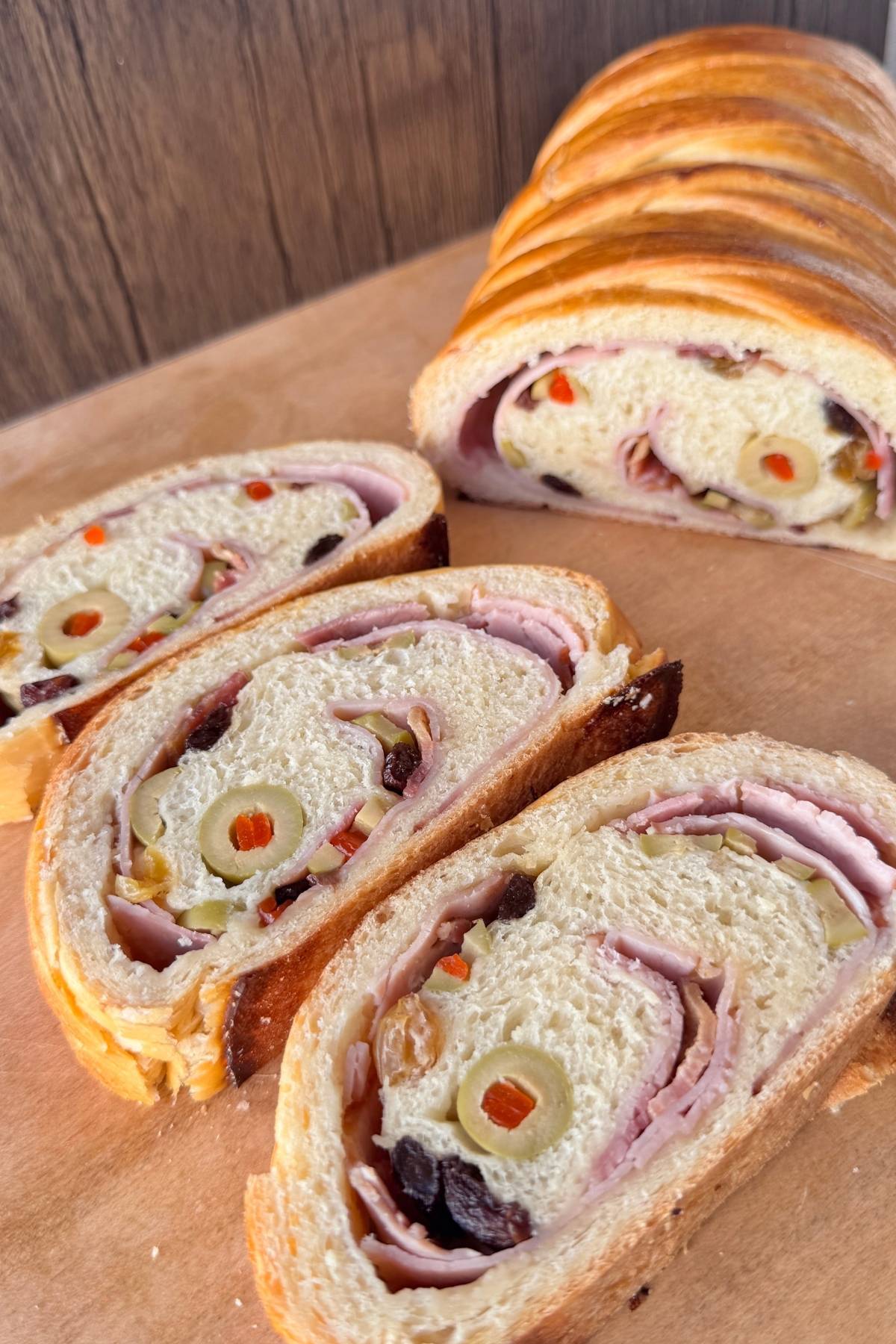
The dough is a variation of my yeasted brioche recipe. It's still enriched with eggs, milk, butter, and sugar, but in a way that's sturdy enough to hold a good amount of fillings.
If you have a sourdough starter, you might want to try my Sourdough Pan de Jamon Recipe or my Sourdough Discard Pan De Jamon Recipe.
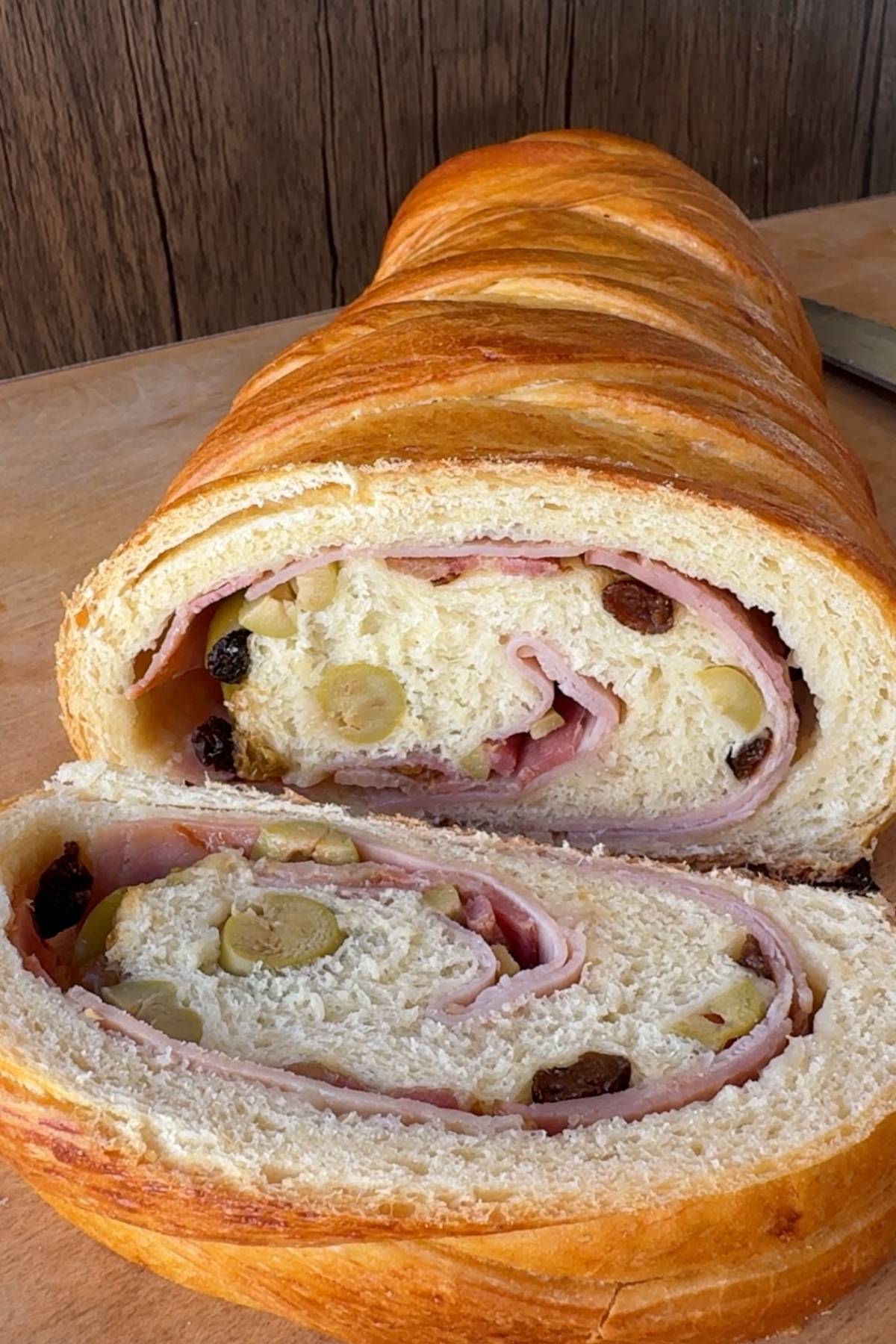
I grew up eating Pan de Jamon multiple times during the months of November through January. As a kid, I used to take out the olives and raisins (and so do my kids now), but as I got older I started to appreciate the perfect savory and sweet combination all the ingredients bring.
My mom taught me how to make it and I have to make it several times every year because it won't last long in my house!
You might want to try my other Venezuelan recipes like our traditional arepas, or other bread recipes made with yeast.
Jump to:
What I Love About This Recipe For Pan De Jamon
There is a reason this bread is a staple on every Venezuelan holiday table-it creates the perfect sweet and savory bite.
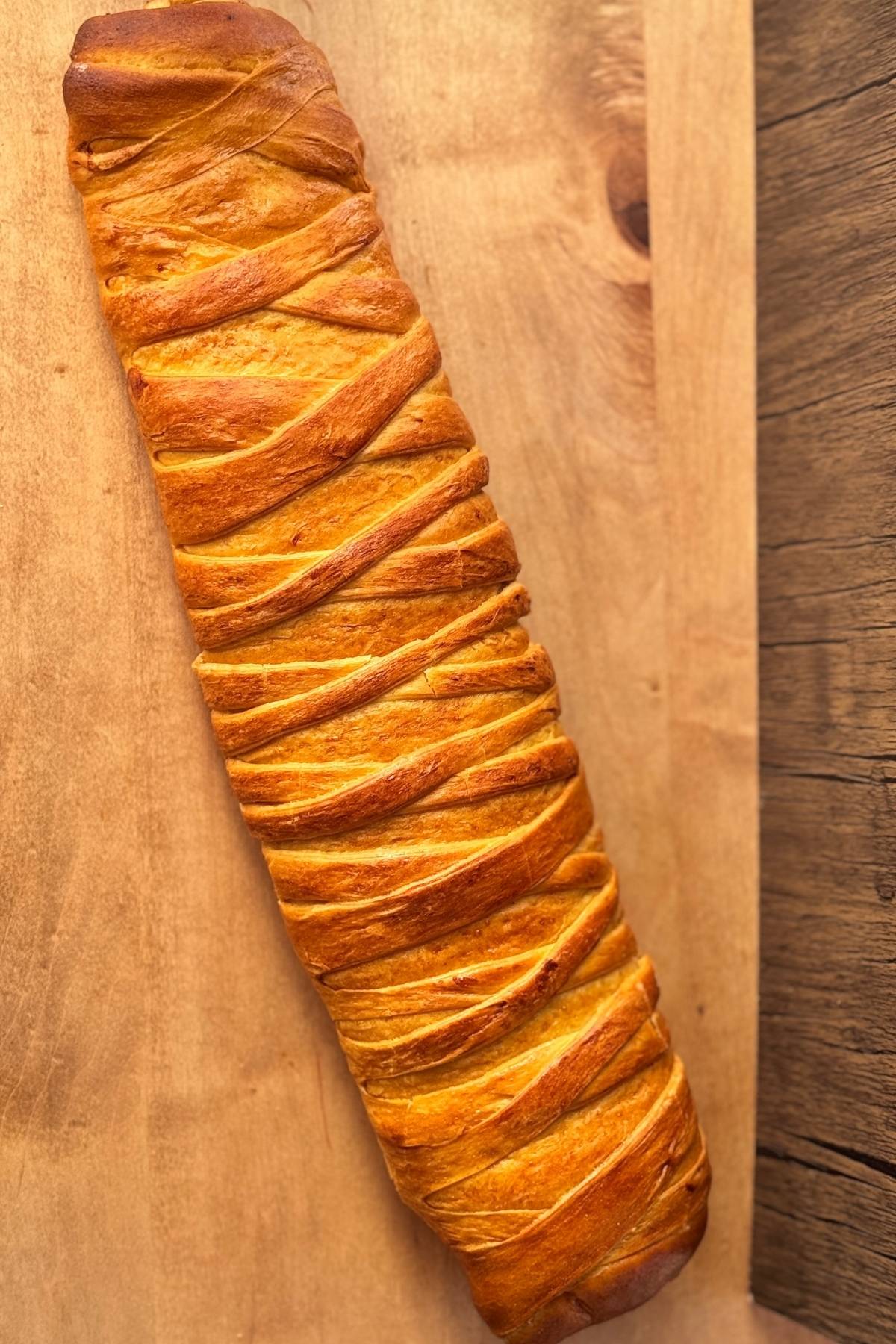
- A Showstopper Look: The spiral cross-section and the decorative dough strips on top make it look incredibly professional, yet it is achievable for home bakers.
- The Perfect Balance: The contrast between the salty smoked ham and olives against the sweet dough and raisins is so good.
- The Softest Crumb: Thanks to the enriched dough (eggs, butter, sugar and milk), the texture remains pillowy and soft for days.
Ingredients To Make Pan De Jamon
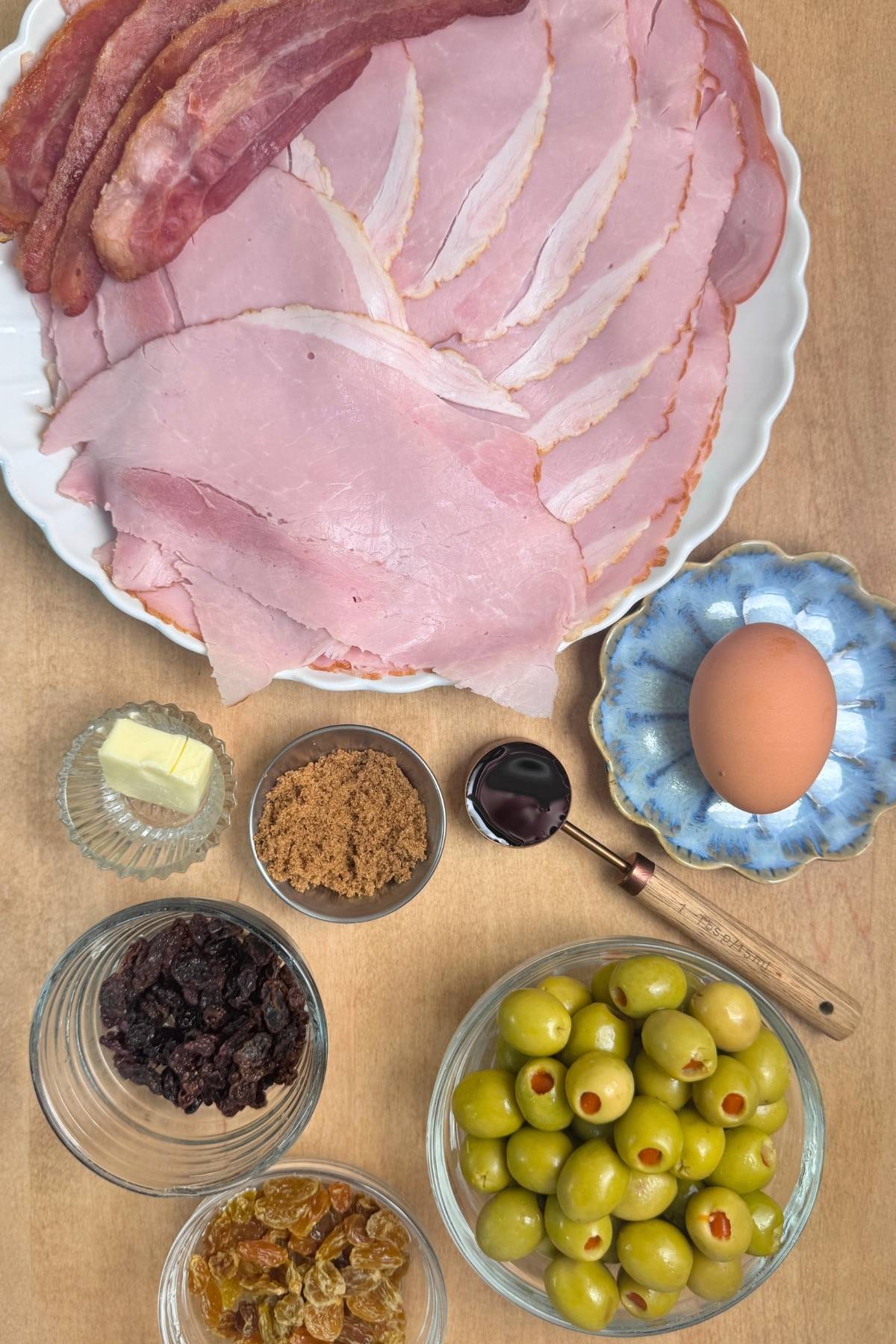
To get that authentic flavor and texture, you need a few specific ingredients for both the enriched dough and the sweet and savory filling.
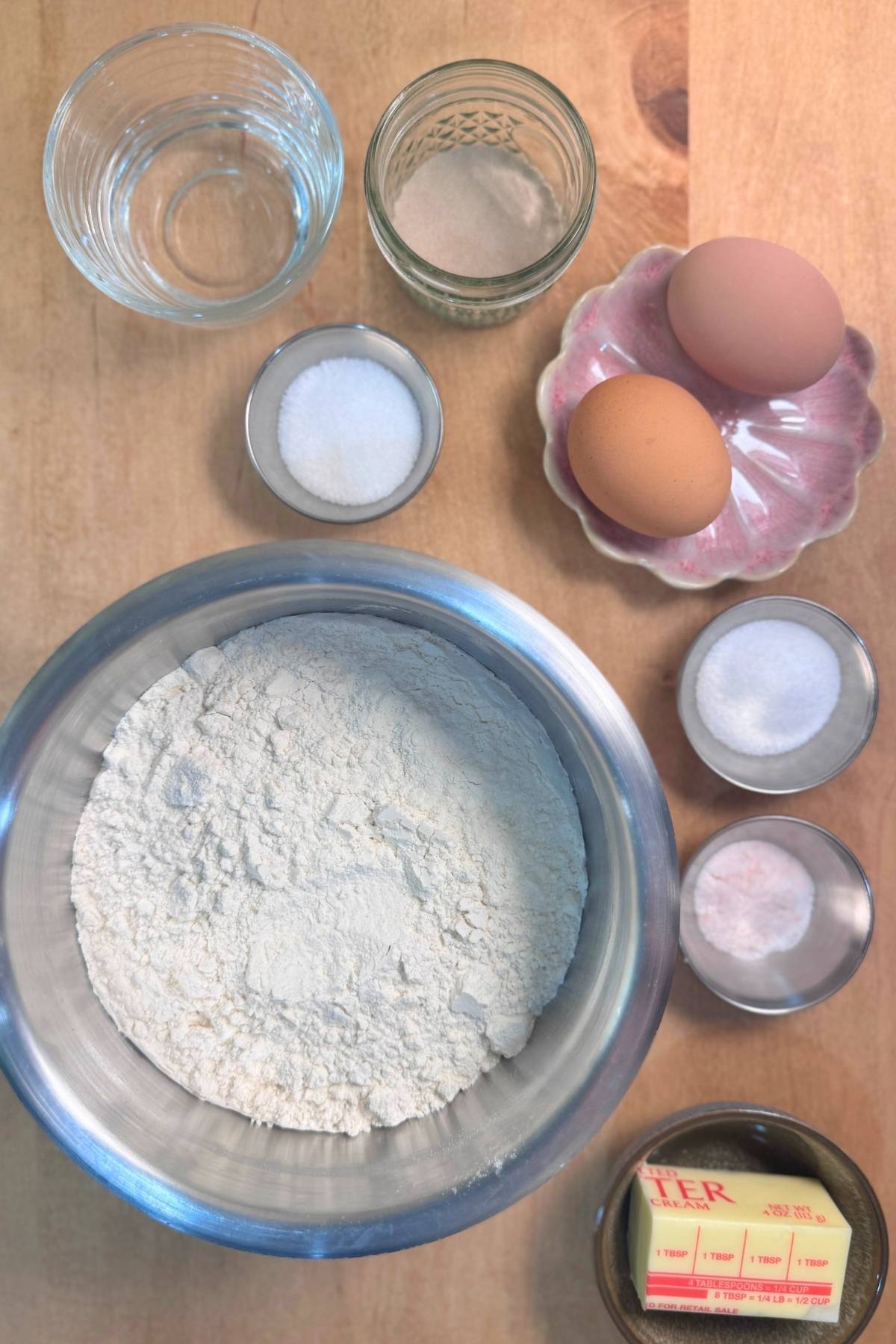
- Bread Flour: I recommend high-quality organic bread flour with 13% protein or more to give the loaf the sturdy structure it needs to hold the heavy filling. But I have made it with all-purpose flour many times and it works great, too.
- Yeast: You can use instant yeast or rapid yeast; just be sure it is fresh so you get a good rise.
- If you are looking for a sourdough version of this recipe you can find it here: Sourdough Pan de Jamon.
- Liquids (Milk & Water): A combination of warm water and warm whole milk creates the perfect hydration and richness for the dough.
- Sugars (White & Brown): You will use granulated sugar to feed the yeast and dough, and dark brown sugar sprinkled inside that goes great with the ham.
- Butter: Unsalted butter enriches the dough.
- Smoked Ham: The star of the show-use smoked ham that is thinly sliced but not shaved, so it keeps its texture inside the roll. You can also use Honey Ham.
- Bacon: A few strips of smoked bacon add a savory punch and extra fat to keep the filling moist. I have also used turkey bacon if that's what I have at hand.
- Olives: Green olives stuffed with pimentos provide the signature salty bite and a festive look; you will use half whole and half sliced.
- Raisins: These add bursts of sweetness; be sure to soak and drain them so they remain plump. I like to use a combination of blonde and dark raisins.
- Molasses/or Papelon & Egg: This mixture creates a dark, glossy egg wash that gives the bread its iconic golden-brown crust.
See recipe card for quantities and more details.
Equipment Needed To Make Pan De Jamon
You don't need fancy tools to make this ham bread, just standard baking equipment to handle the dough.
- Stand Mixer or Bread Mixer: With a dough hook attachment to knead the enriched dough thoroughly.
- You can mix the dough by hand, too, if you don't have a mixer.
- Rolling Pin: To roll the dough into a large 12 x16 inch rectangle.
- Baking Sheet: Lined with parchment paper or a silicone mat.
- Pastry Brush: For applying the melted butter inside and the egg wash outside
- Small Bowls: For organizing your mise en place (olives, raisins, egg wash).
Key Steps To Make Pan De Jamon
Follow these steps and everything detailed in the recipe card to make the best pan de jamon ever!
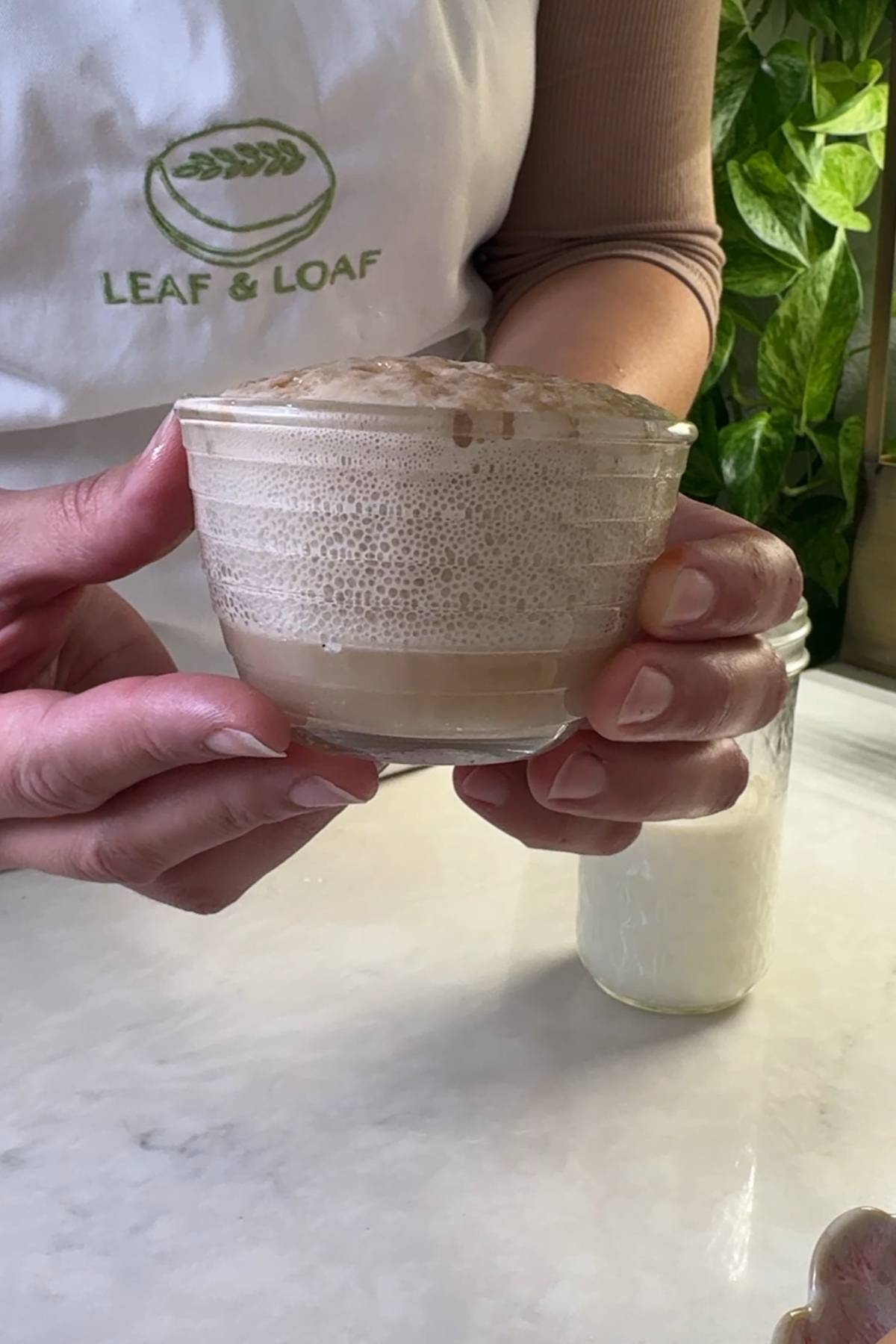
Activate the Yeast
Combine warm water, yeast, and one tablespoon of sugar, then let it sit for 15 minutes until foamy.
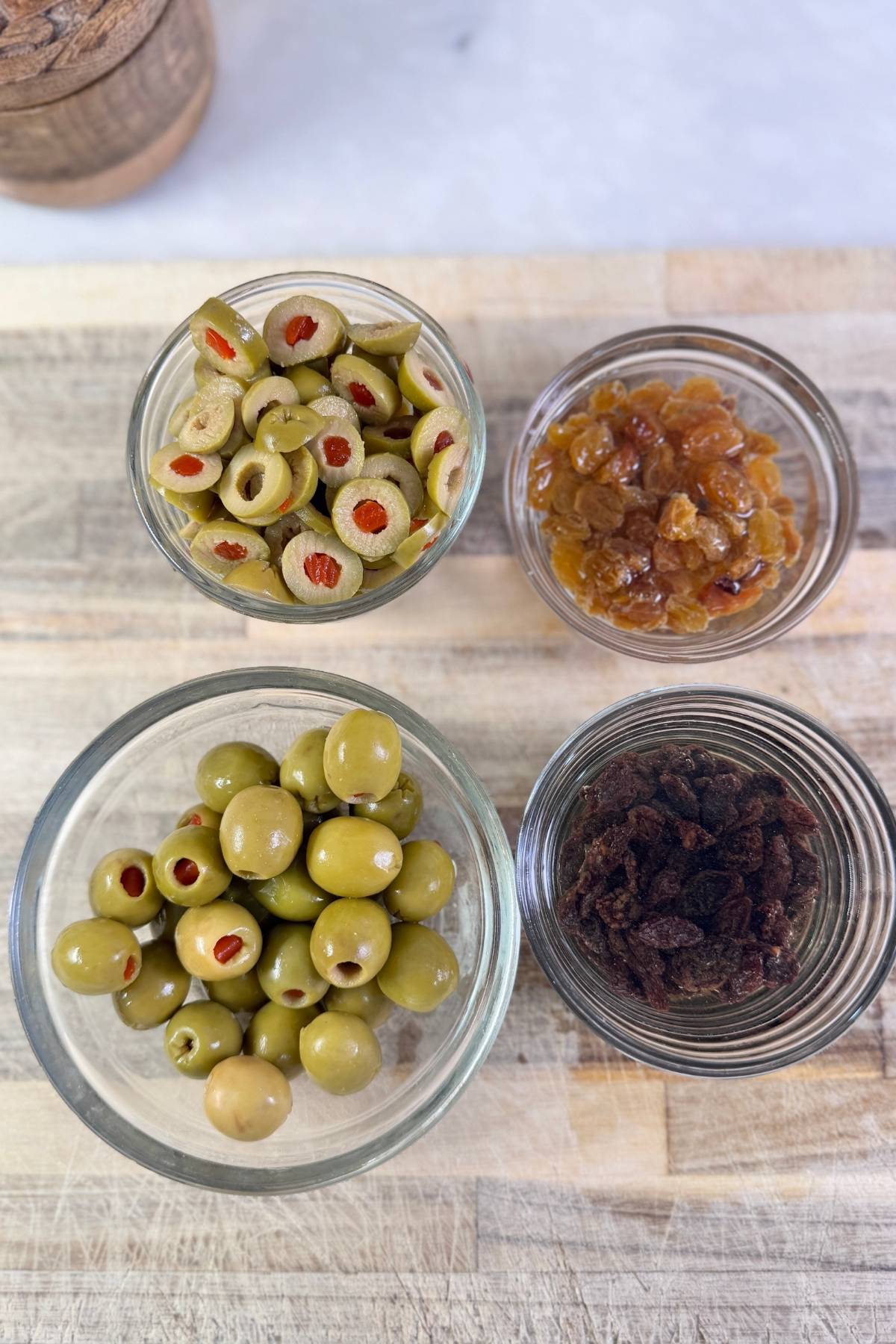
Prep the Ingredients
While the yeast blooms, soak the raisins in warm water (or rum!) and par-cook the bacon just until the fat renders.
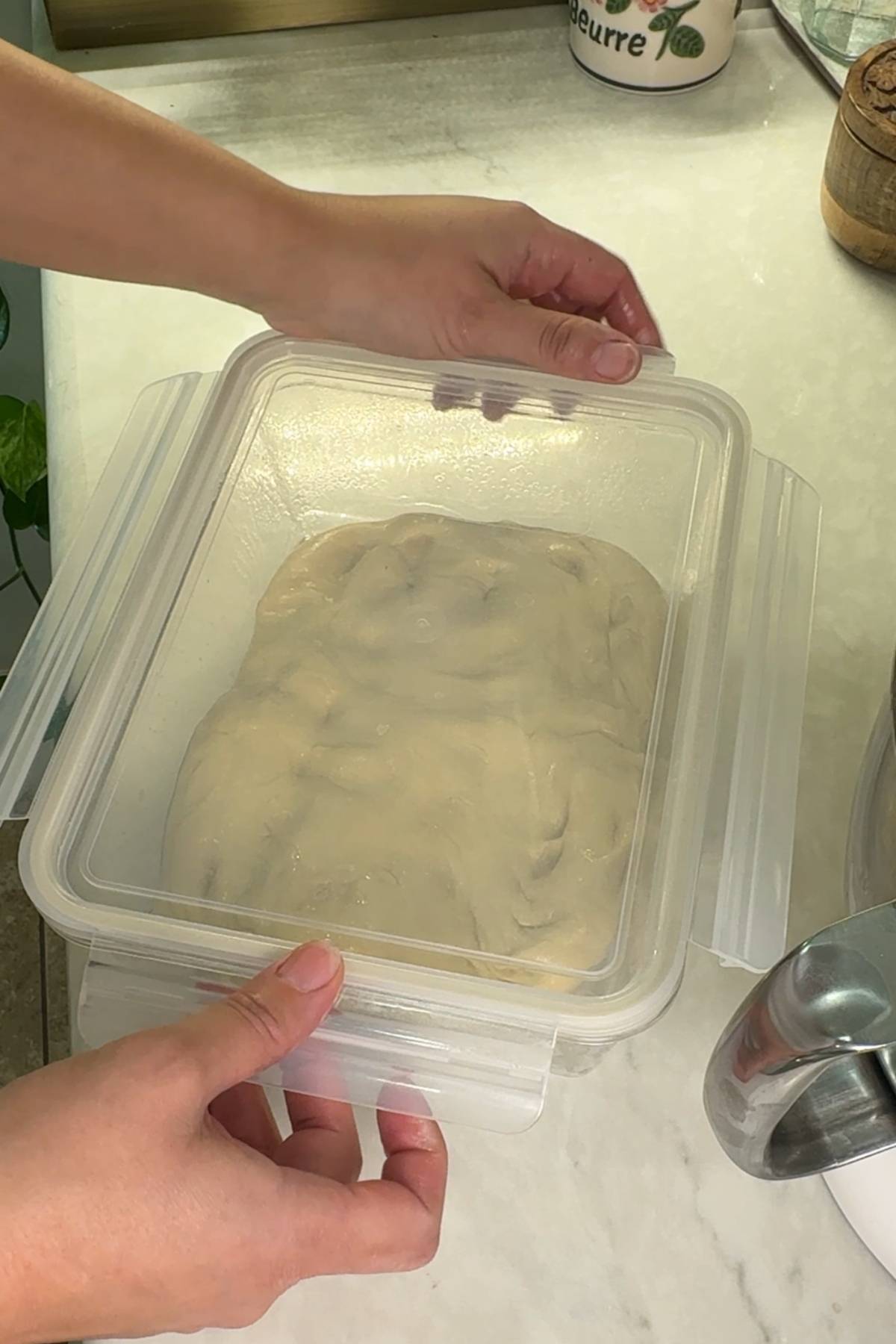
Mix & First Rise
Knead the flour, sugar, salt, milk, yeast mixture, eggs, and butter in your mixer until smooth and strong, then let the dough rise in an oiled container for 1 hour.
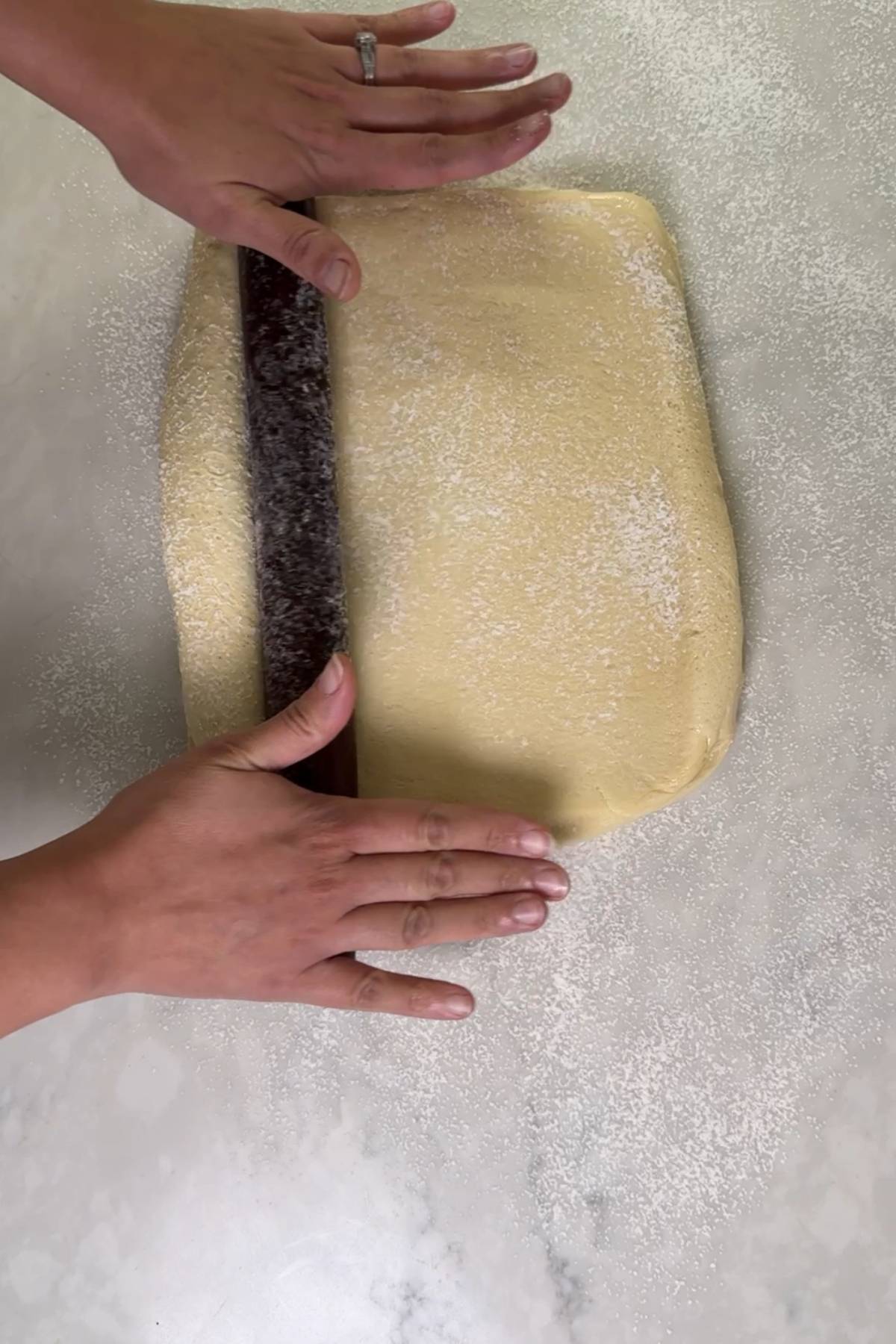
Roll The Dough
Roll the dough into a large rectangle, brush with melted butter, and sprinkle dark brown sugar over the surface.
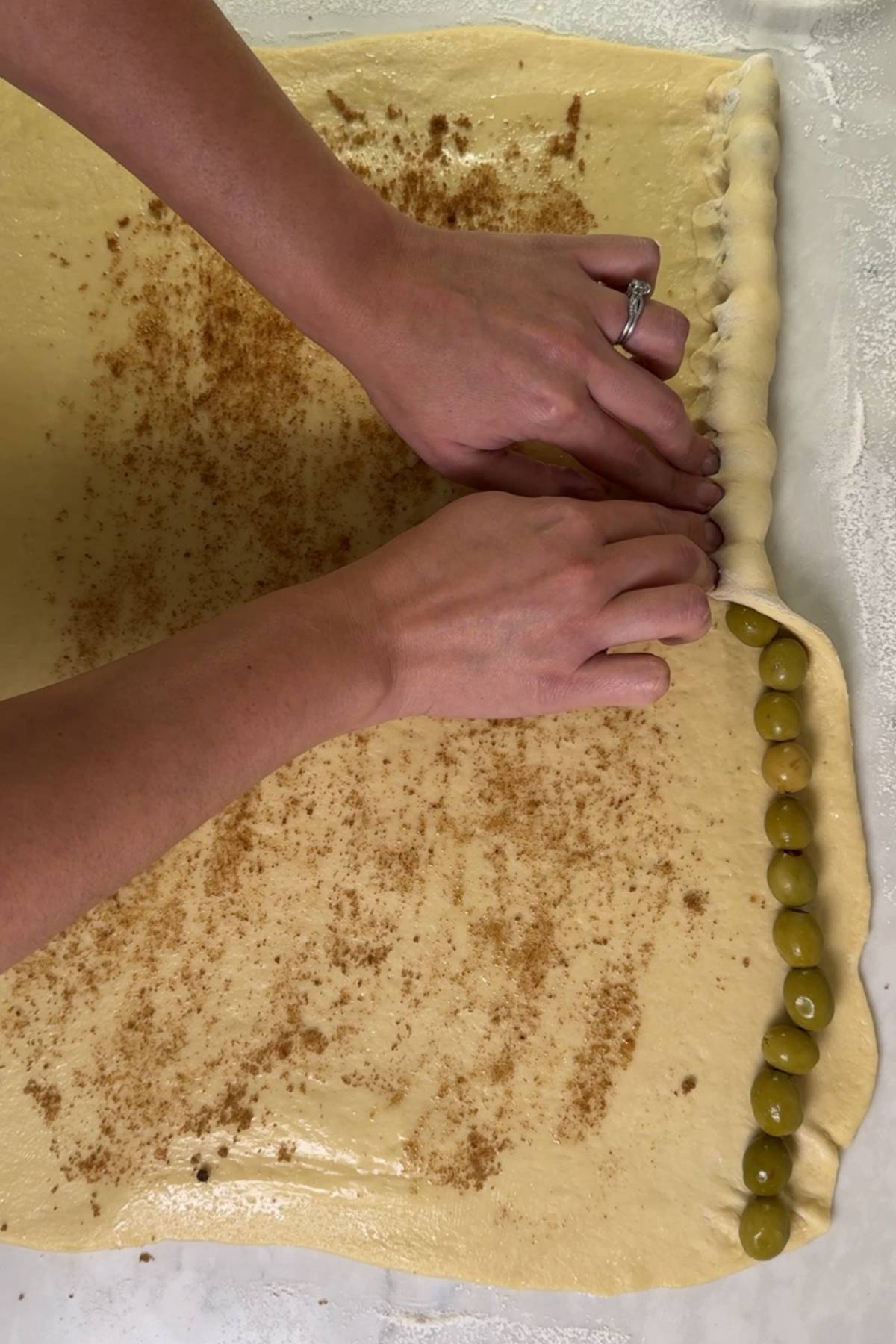
Create the Olive Row
Place a row of whole olives near the top edge and fold the dough over them to create the "center" of your spiral.
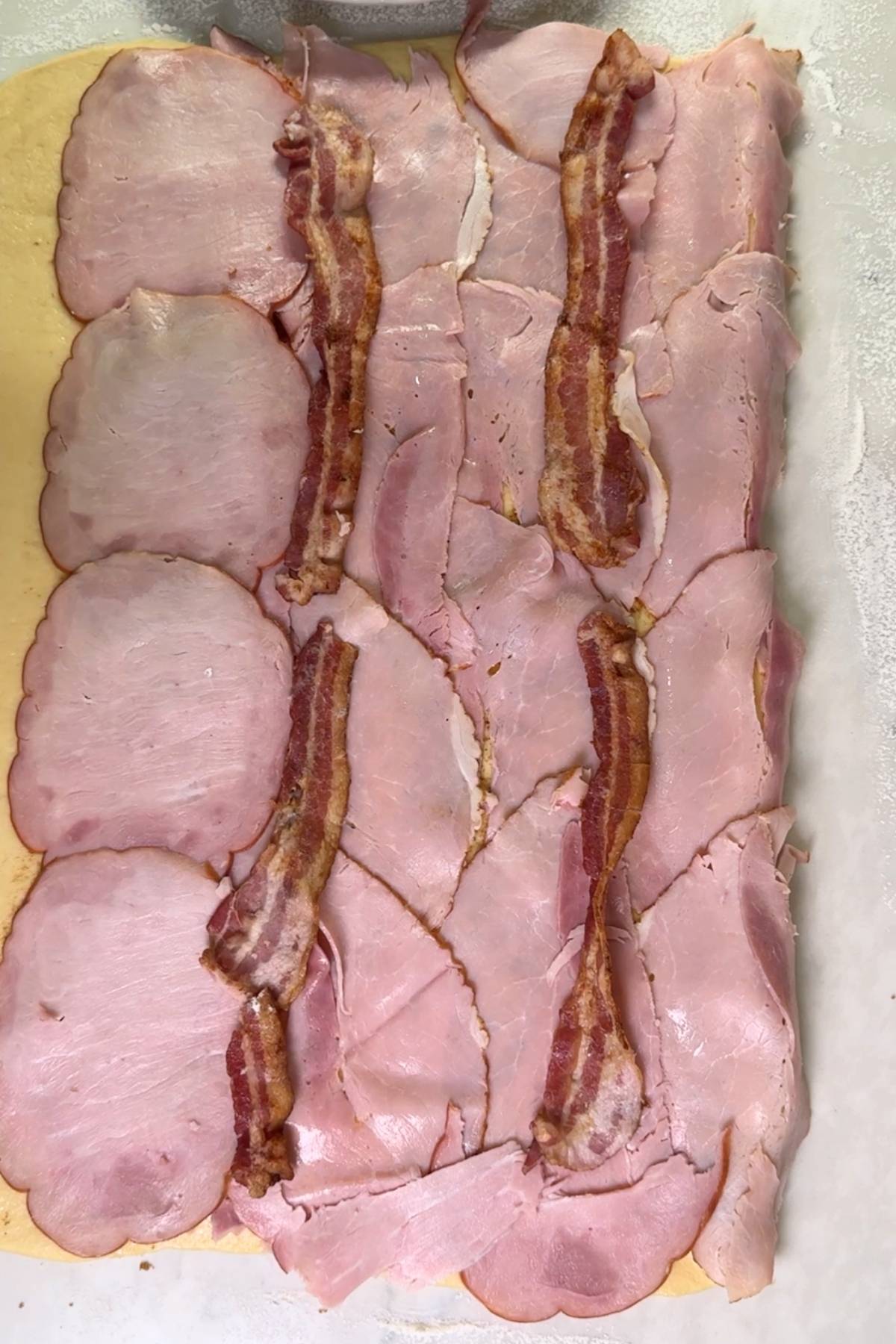
Layer Ham & Bacon
Drape the ham slices over the olive row and across the dough, then distribute the cooked bacon strips on top.
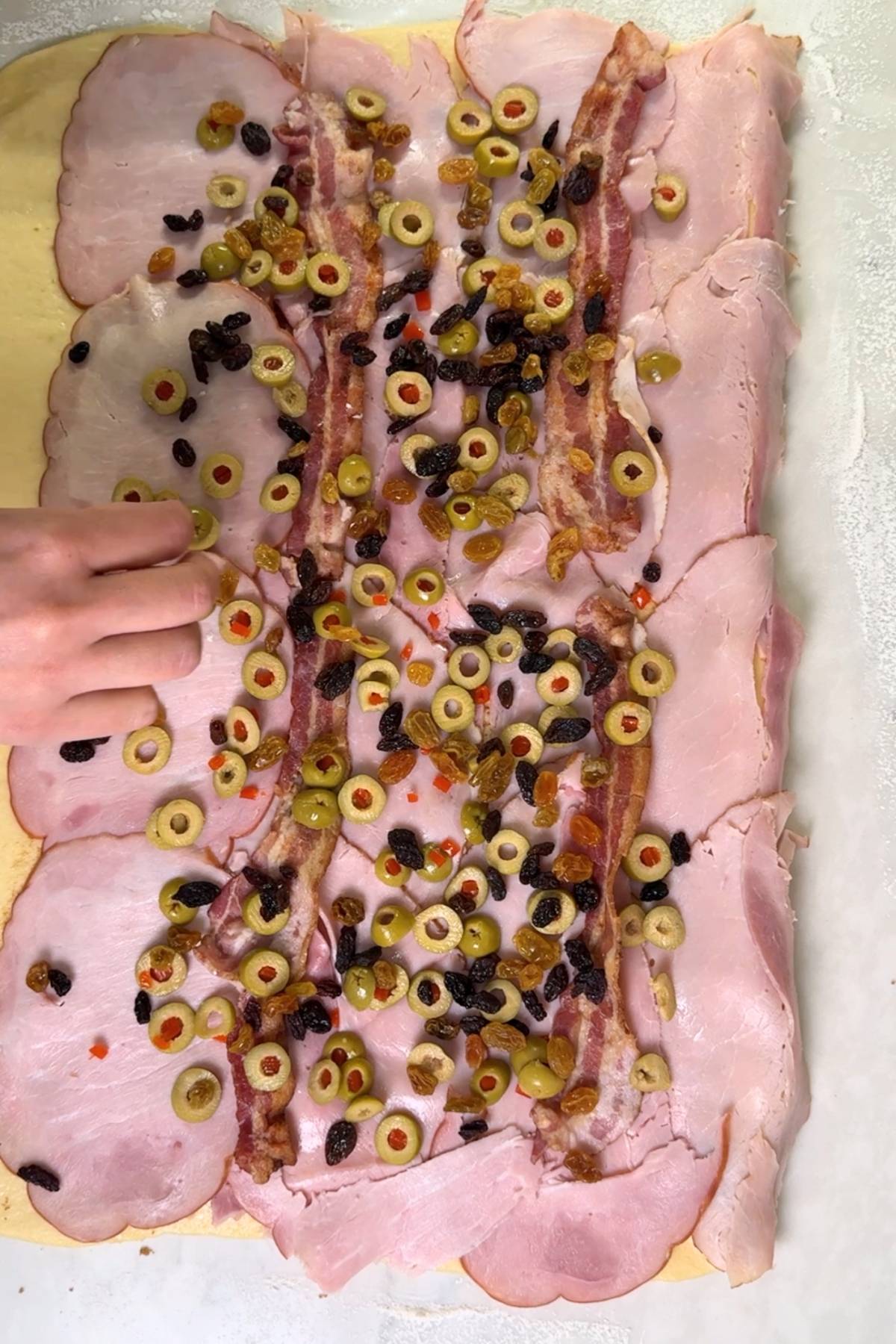
Add Olives & Raisins
Scatter the sliced olives and soaked raisins evenly over the ham.
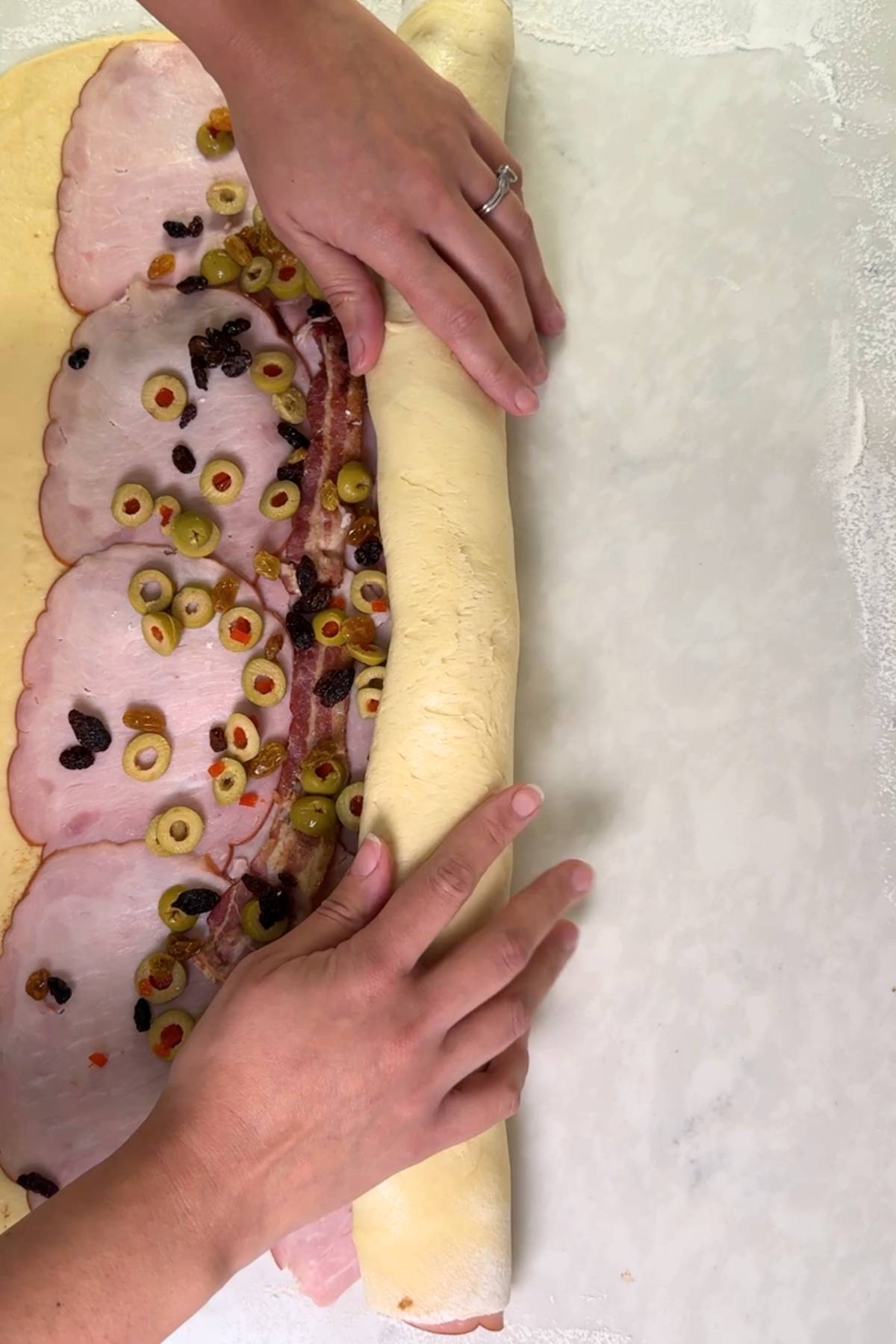
Roll, Decorate & Second Rise
Roll the dough tightly into a log, decorate with dough strips, dock with a fork, and let it rise for another hour.
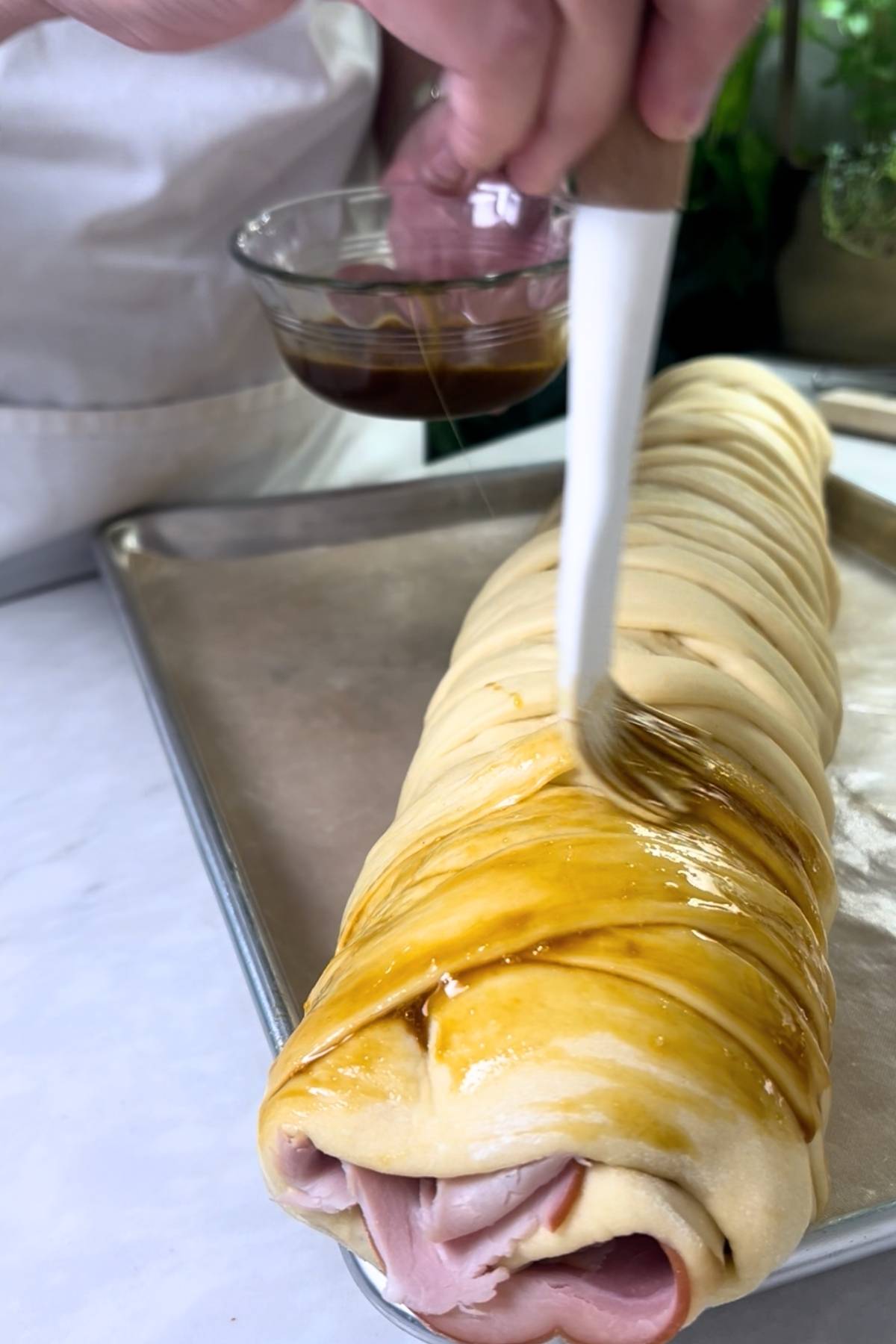
Egg Wash
Brush with the molasses/papelon egg wash.
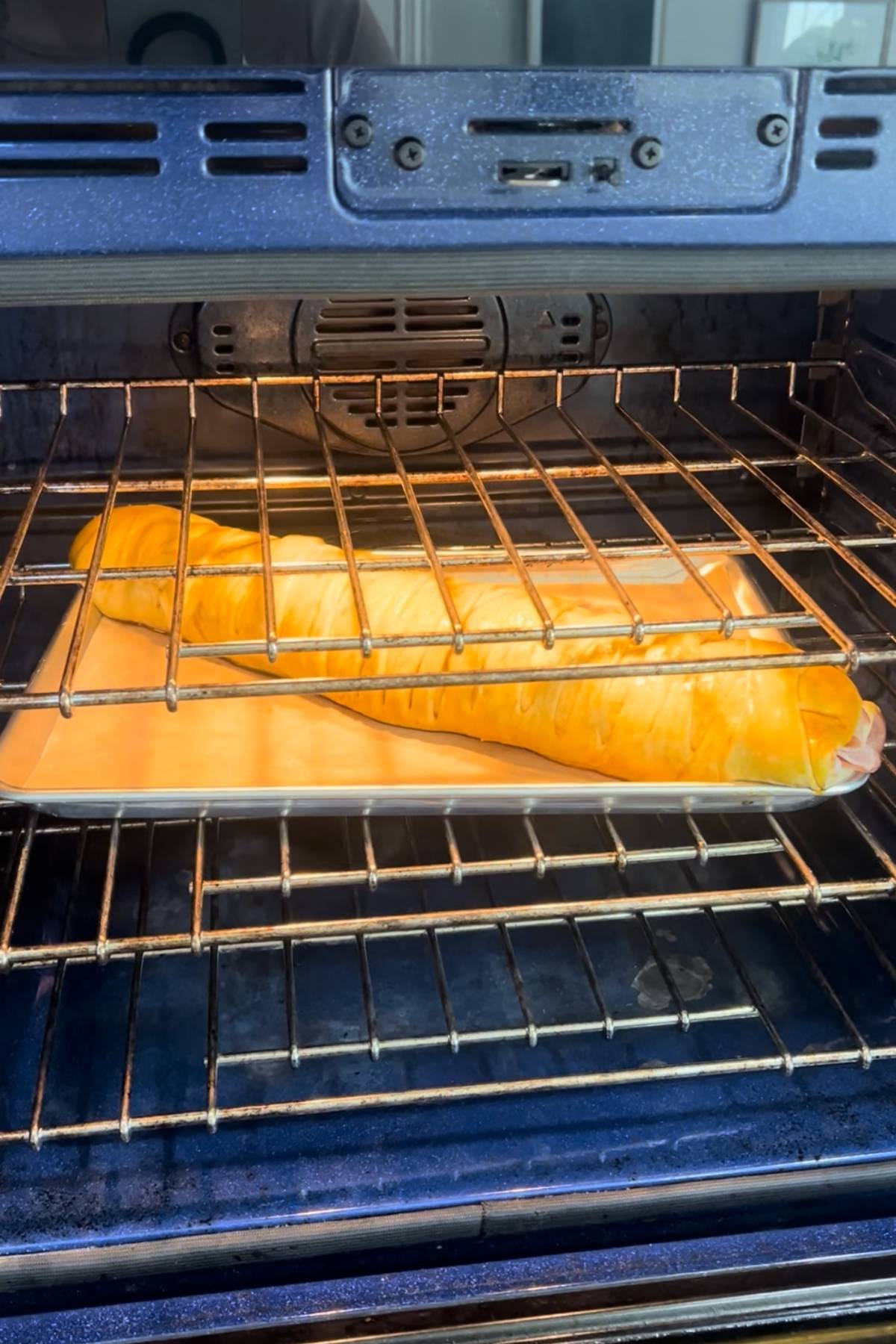
Bake
Bake at 350°F (175°C) for 30 minutes, rotating every 10 minutes for even browning.
Secrets For Best Results Making Pan De Jamon
Yeast Activation: Be precise-use exactly 1 tablespoon of sugar to bloom the yeast (not 2!) and ensure your water is around 120°F (49°C) so you don't kill the yeast. If it doesn't get frotty, it means your yeast is too old. Discard and get new yeast to try again.
The "Baby Bottle" Test: If you don't have a thermometer, test the milk on your wrist; it should feel comfortably warm between 100°F - 110°F (38°C - 43°C), not hot.
Soak the Raisins: Dry raisins will suck moisture out of your bread. Soaking them for 10-15 minutes ensures they stay juicy inside the loaf.
Bacon Texture: Do not let the bacon get crispy! Cook it only until it starts to turn golden so it remains flexible enough to roll without tearing the dough.
Ham Thickness: Ask for "thinly sliced" ham at the deli, but avoid "shaved" ham, which can disappear into the dough and create a gummy layer.
Cooling is Crucial: You must let the loaf cool completely before slicing to allow the structure to set; cutting it hot may cause it to fall apart.
Storage
Because of the meat filling, this bread requires careful storage compared to standard loaves.
- Room Temperature: It is safe to leave out for serving for 2-4 hours, but do not leave it out overnight.
- Refrigerator: Wrap the loaf tightly in plastic wrap or a bread bag and store it in the fridge for 3-5 days.
- Reheating: Do not eat it cold! The fats solidify in the fridge. Reheat slices in the microwave for 20-30 seconds, or in a $350^{\circ}F$ oven for 10-15 minutes to crisp the crust.
Want to Save This Page?
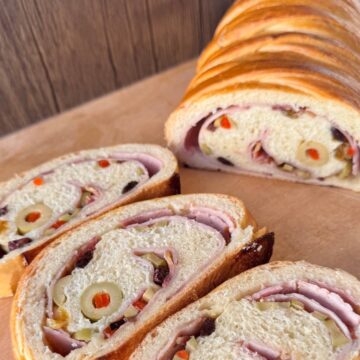
Pan de Jamon
Ingredients
Ingredients for the dough
- 59 grams (¼ cup) warm water around 120°F (49°C). See note 1
- 26 grams (2 tablespoons) white granulated sugar divided in two
- 7 grams (2 ¼ teaspoons) instant yeast or rapid yeast or one packet
- 480 grams (4 cups) high-quality organic bread flour 13% or more protein content (You can substitute for All-Purpose Flour)
- 8 grams (1 ½ teaspoons) fine salt
- 180 grams (¾ cup) whole milk warm, between 100°F - 110°F (38°C - 43°C)
- 2 large eggs - beaten room temperature
- 57 grams (4 tablespoons or ½ stick) unsalted butter 65°F (18°C)
- 13 grams (1 tablespoon) oil to coat the rising container and the dough I prefer avocado oil, but can use olive or vegetable oil.
For the filling
- 14 grams (1 tablespoon) unsalted butter melted
- 13 grams (1 tablespoon) dark brown sugar
- 454 grams (1 pound) smoked ham thinly sliced, but not "shaved"
- 4 strips smoked bacon (optional)
- 1 jar (approximately 8 oz) green olives, stuffed with pimentos drained and dried. Keep half of them whole; slice the other half.
- 75 grams (½ cup )raisins soaked and drained. Can use a combination of blonde and regular raisins.
For the egg wash
- 1 small egg - beaten room temperature
- 21 grams (1 tablespoon) unsulphured molasses or Papelón (or Panela/Piloncillo)
Instructions
Activate the Yeast - See note 1 at the end of the recipe card
- In a bowl, combine the warm water, one tablespoon of the white granulated sugar and yeast. Let the mixture sit for 15 minutes until foamy. NOTE: Do not use 2 tablespoons of sugar for this. Only one. And make sure the water is not above 130°F (54°C).If it's not foamy after 15 minutes, it means the yeast is not active and the bread won't rise. Try with newer yeast and ensure the water is not too hot.
Prepare your ingredients
- While you wait for the yeast to bloom:- Soak the raisins in warm water (or rum/wine!) for 10–15 minutes.- Slice half of the stuffed olives- Cook the bacon until it starts to turn golden but hasn't darkened or hardened. Drain on paper towels.
Mixing
- In the bowl of a stand mixer with a dough hook, whisk together the bloomed yeast (water, yeast and sugar), with the warm milk until well dissolved and bubbly.Add the flour, remaining one tablespoon of sugar, and the salt. Mix for 2 minutes on medium speed, just until it comes together, no more or it will be hard to incorporate the eggs.
- Add the beaten eggs and continue mixing for about 5 minutes or until fully incorporated, stopping to scrape the bowl midway.
- Add the soft butter, one tablespoon at a time and mix for 2 minutes each time, stopping to scrape the bowl if necessary.
- The dough should look smooth and soft. It should not be wet or sticky.If it looks too wet, add half a tablespoon of flour, mix and reassess.
First rise
- Coat a rectangular container with oil.Brush the dough with the oil as well to prevent drying during rising.
- Place the dough in the oiled container and let it rest, covered with plastic wrap, for 1 hour, in a warm spot around 78°F (26°C).
Filling and shaping
- After 1 hour has passed, gently transfer the dough onto a clean, lightly floured surface.
- Using a rolling pin, roll the dough out into a large rectangle, roughly 12 x 16 inches (30 x 40 cm). Aim for a thickness of about ¼ inch-you want it thin enough to spiral nicely, but thick enough to hold the heavy filling.
- Brush the dough lightly with melted butter.
- Sprinkle the dark brown sugar on top of the dough.
- Place the whole olives in a single straight row near the top edge (the side you will start rolling from). This ensures that the center of your loaf has a beautiful line of olives running through it.
- Fold the top edge of the dough over the row of whole olives, tucking them in tightly. Press gently with your fingertips to secure the dough around the olives so they don't shift.
- Layer the first few slices of ham directly over the wrapped olive row. Center the slices so that the olive row sits right in the middle-this means the top half of the ham will drape over the back of the roll, while the bottom half extends onto the flat dough. Continue layering the rest of the ham to cover the dough completely, leaving a 2-inch clean border at the bottom edge of the dough for sealing.
- Next, distribute the cooked bacon strips, raisins, and sliced olives evenly over the ham.
- Starting from the top edge (where the whole olives are), gently but tightly roll the dough down toward you.When you reach the clean border at the bottom edge of the dough, cut it into thin strips (start by cutting it in half, then quarters, then eighths to get even pieces). Wrap these strips diagonally or in X shapes around the log to create that classic Pan de Jamón design.
Second rise or proofing
- Transfer the loaf to a baking sheet lined with parchment paper. Use a fork to poke holes on top of the loaf, pressing deep to allow steam to escape.
- Cover the loaf with a clean and damp kitchen towel and let it rise in a warm spot around 78°F (26°C) for about 1 hour.
- Preheat the oven to 350°F (175°C). Place a rack in the middle of the oven.
Egg wash and bake
- Whisk the remaining egg with the molasses or papelón (panela/piloncillo) and brush the mixture all over the risen loaf, making sure to brush the top and all sides for even color.
- Transfer to the oven and bake on the middle rack for 30 minutes, rotating the pan every 10 minutes to ensure even browning. The bread is done when the crust is a deep golden color.
- Remove from the oven and immediately brush with melted butter.
- Allow to cool completely before slicing.
Preserving
- Because of the ham and bacon filling, this bread cannot be stored at room temperature like other breads.It is safe to leave out on the table for serving for 2 to 4 hours, but it should not be left out overnight.Storage Method: Wrap the loaf tightly in plastic wrap or place it inside a paper or plastic bread bag and store it in the refrigerator for 3 to 5 days.Freezing is the best way to preserve the texture for extended periods:Let the loaf cool completely. Slice it into individual servings (optional, but convenient). Wrap tightly in plastic wrap, then a layer of foil to prevent freezer burn. It keeps well for 2 months.
Reheating
- Don't eat this bread cold! The fats in the bacon and butter solidify in the fridge. A quick warm-up in the oven wakes up the flavors and makes the bread soft and pillowy again."Oven (Best Result): Reheat at 350°F (175°C) for 10–15 minutes. This crisps the crust and melts the fat in the bacon/ham, making the inside juicy again.Microwave (Quickest): 20–30 seconds is enough. It will be softer (less crispy), but still delicious.
Notes
- If you are certain your yeast is new, stored according to the instructions on the label, and still active, you can skip blooming the yeast. If you skip that step, you can also replace the water with warm milk. So in the bowl of a stand mixer you will add the flour, the salt, both the 2 tablespoons of sugar, the yeast, and 240 grams of milk. No water. Mix and then proceed with eggs and butter as explained in the recipe.
Related Recipes
Looking for other recipes like this? Try these:

Subscribe to get my recipes
Join the movement Bringing Bread Back to every family table! Get recipes for homemade bread and other bakes delivered via email.
Leave a Reply