

This Sourdough Pan de Jamón is a love letter to the Venezuelan Christmas tradition, reimagined with the complex depth of natural fermentation. While the classic version uses commercial yeast for speed, this sourdough adaptation rewards your patience with a dough that is incredibly soft, digestible, and flavorful-the perfect vessel for the savory, salty, and sweet filling that defines the holidays.
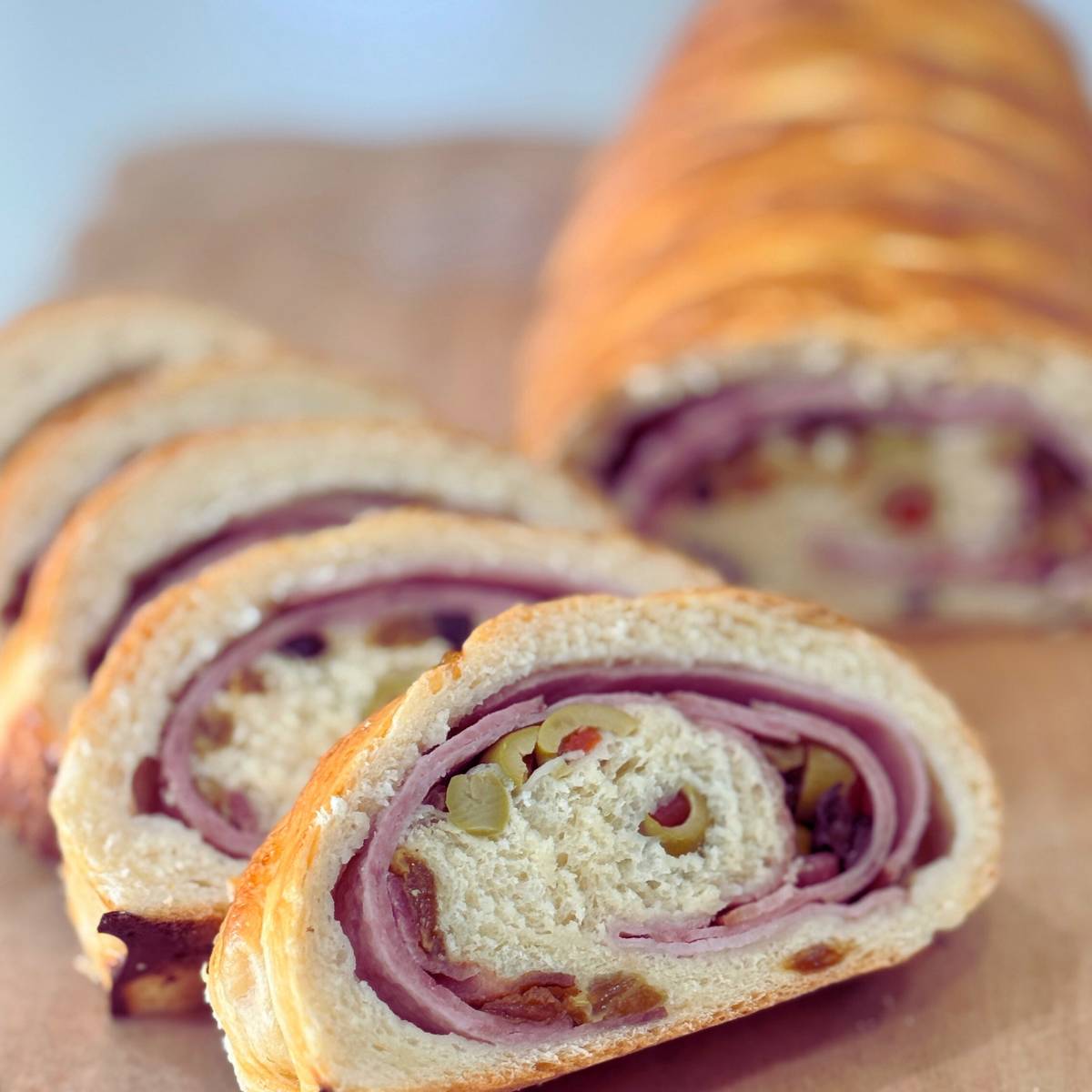
This dough is a naturally leavened adaptation of a classic enriched milk bread. The result is a crumb that is pillowy soft but sturdy enough to hold the heavy spiral of ham, olives and raisins without collapsing.
I personally think, in terms of appearance and texture, there is very little difference between a Pan de Jamon made with sourdough and one made with commercial yeast, as it often happens with brioche bread. This is because the addition of eggs, butter and sugar hides the tang brought by the sourdough starter. But of course, the sourdough version is a lot healthier and easier to digest.
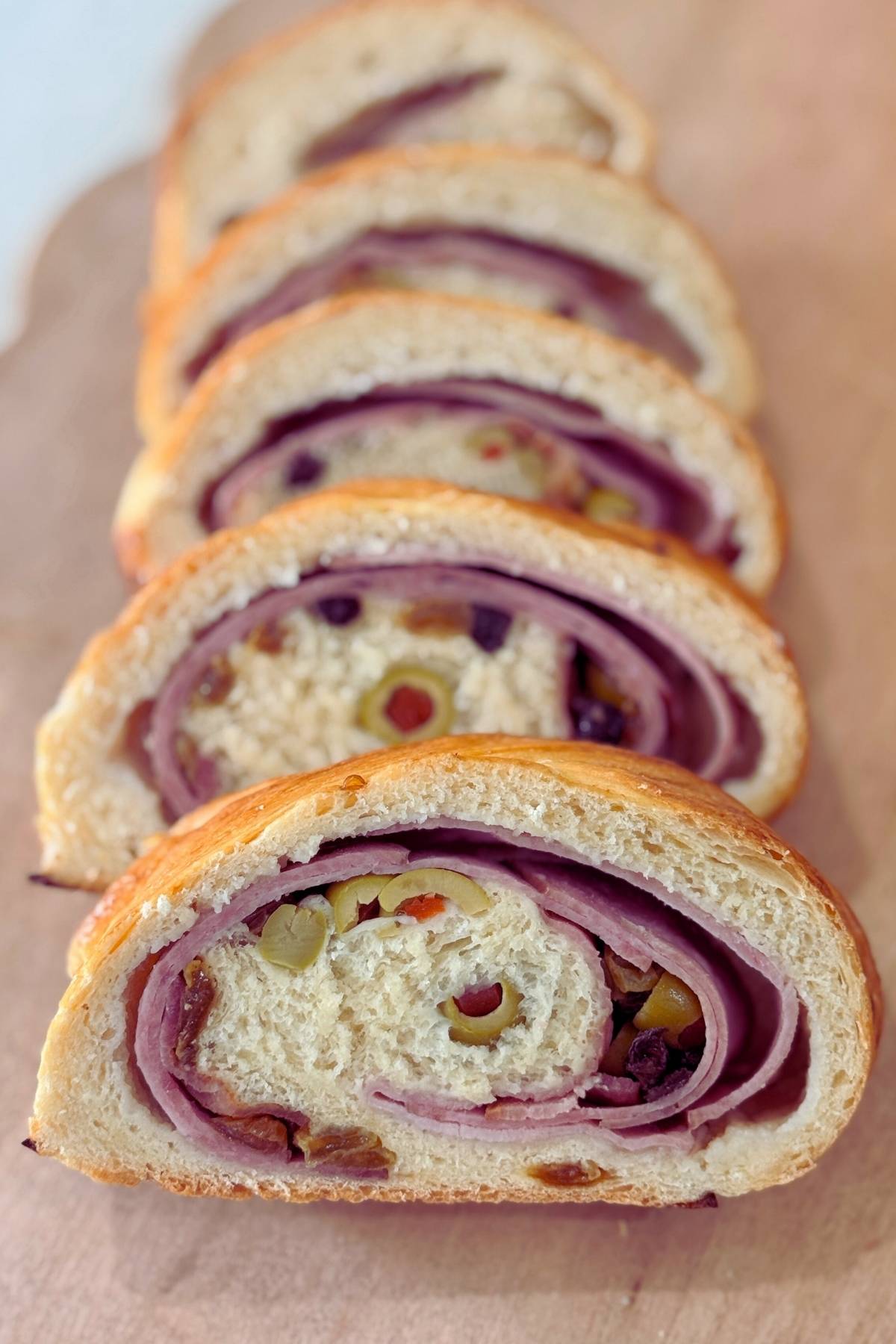
For me, the holidays officially begin with the smell of this bread baking. I grew up eating Pan de Jamón from November through January, and it was always the centerpiece of our table during special holiday meals.
I must admit, as a kid, I used to meticulously pick out the olives and raisins (a habit my own kids have now inherited!), but as I grew older, I fell in love with the complete experience-that perfect, harmonious clash of savory and sweet in every bite.
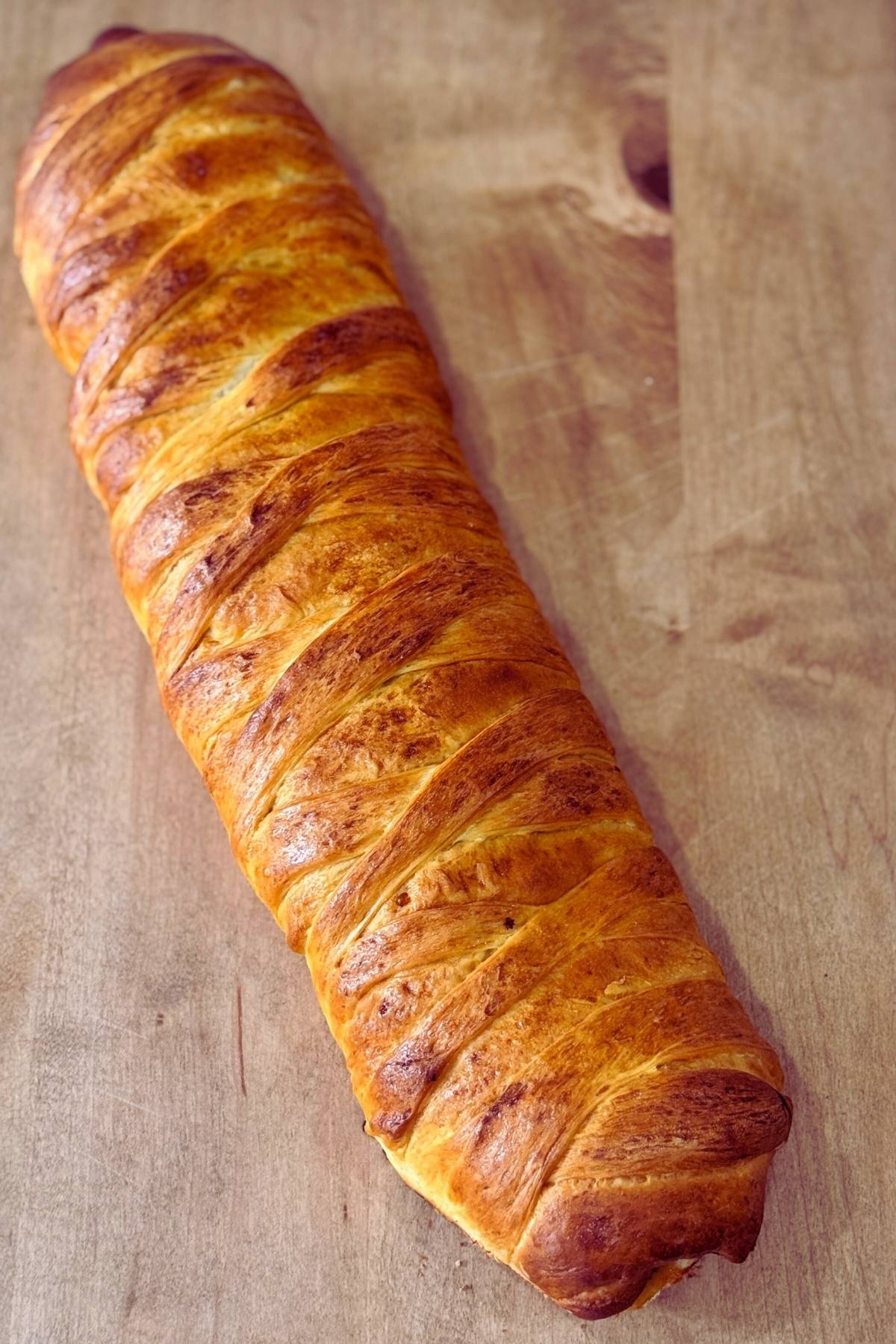
You might want to try my other Pan de Jamon recipes: Traditional Venezuelan Pan de Jamon (using yeast), and Sourdough Discard Pan de Jamon. I love making recipes all 3 ways to see what they look and taste like, and so that they can fit every schedule and lifestyle.
Jump to:
- What I Love About This Recipe For Sourdough Pan De Jamon
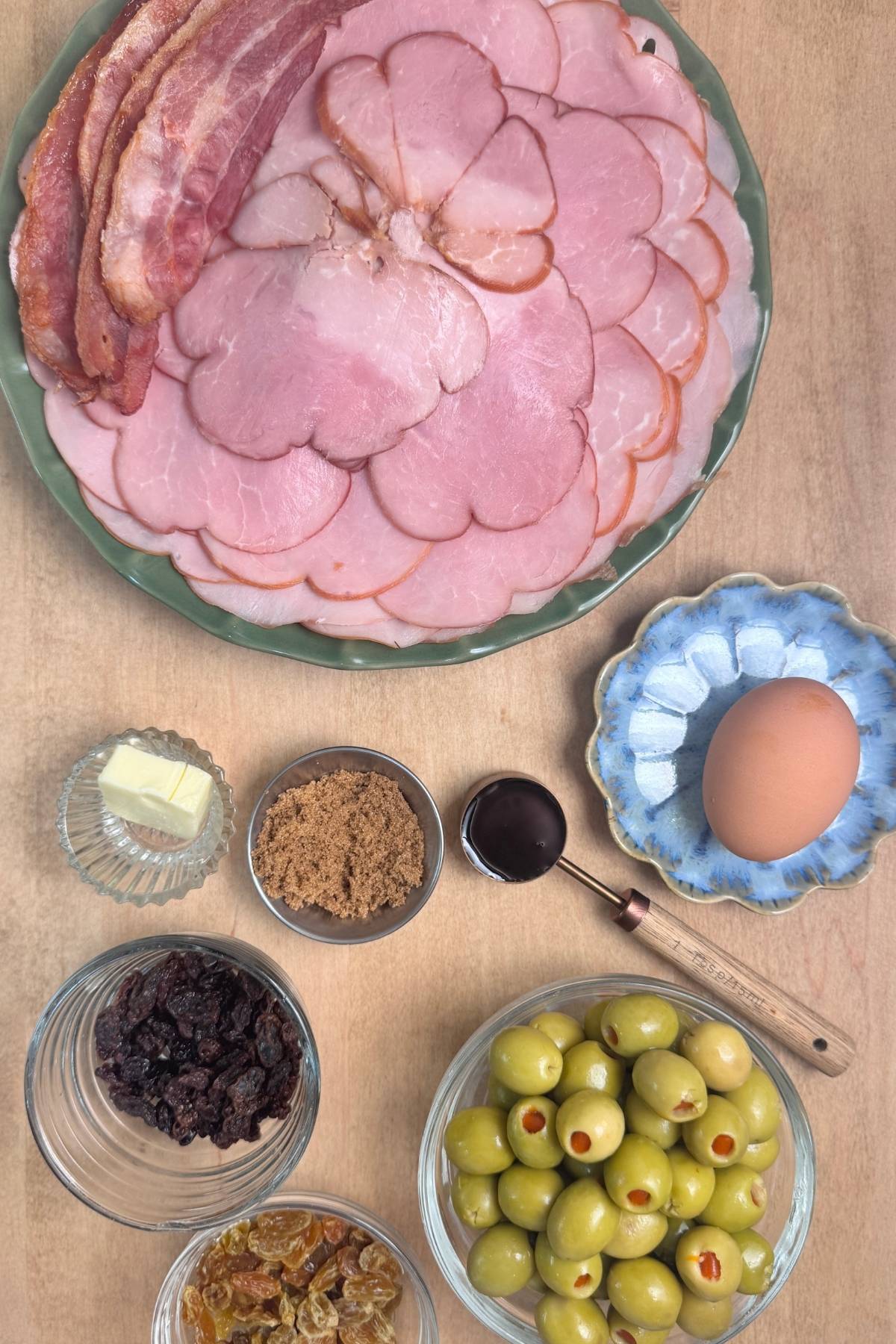
- Ingredients to Make Sourdough Pan de Jamon
- Equipment Needed To Make Sourdough Pan De Jamon
- Key Steps To Make Sourdough Pan De Jamon
- Secrets For Best Results Making Sourdough Pan De Jamon
- Substitutions and Variations
- Sourdough Pan de Jamon
- Related Recipes
- Subscribe to get my recipes
What I Love About This Recipe For Sourdough Pan De Jamon
There is something magical about slowing down the process to create a loaf that tastes truly artisanal.
- The Sourdough Tang: The subtle acidity of the sourdough starter cuts through the richness of the ham and bacon, creating a flavor profile that is even more balanced than the original. The tang is not very noticeable, but I think it does add balance.
- The Cold Retard: The optional step of chilling the dough makes it much easier to roll out into a perfect, thin sheet without it snapping back or tearing.
- A Softer Keep: Thanks to the natural fermentation and acidity, this bread stays soft and fresh for days longer than the yeast version.
Ingredients to Make Sourdough Pan de Jamon
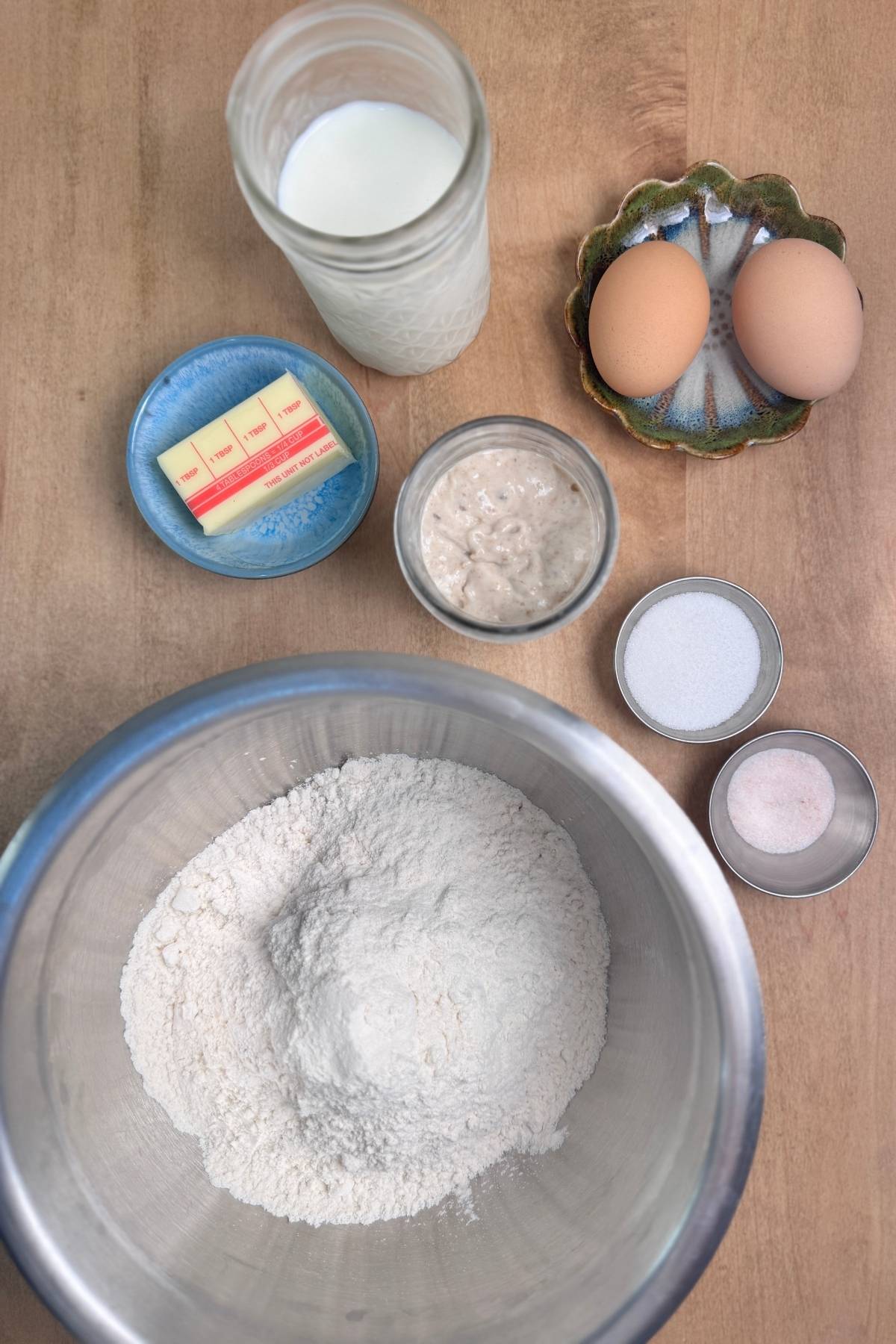
To support the long fermentation, we use high-quality ingredients that bring both strength and flavor to the dough.
- Sourdough Starter: You need active, bubbly starter at its peak; this provides the leavening and that signature flavor profile.
- Bread Flour: Use a high-quality organic flour with at least 13% protein to ensure the dough is strong enough to hold the heavy filling. I have also made this recipe using organic all-purpose flour and it comes out perfectly fine, as well.
- Whole Milk: Warm milk adds richness and creates a tender crumb.
- Eggs: These enrich the dough, giving it structure and a golden color.
- Butter: Softened unsalted butter is kneaded into the dough for flavor and texture, while melted butter is brushed inside for moisture.
- Sugars: White sugar feeds the starter and adds some sweetness to the dough, while dark brown sugar pairs amazing with the ham.
- Ham: Thinly sliced (but not shaved!) smoked ham is the main savory element; it needs to be substantial enough to stand out in the spiral.
- Bacon: Smoked bacon adds fat and a punch of saltiness.
- Olives & Raisins: A classic sweet-and-salty duo that adds a festive look to the bread.
- Molasses (or Papelon): Used in the egg wash to give the crust that iconic deep, dark, mahogany color.
See recipe card for quantities.
Equipment Needed To Make Sourdough Pan De Jamon
You don't need much, just standard tools to help handle this enriched dough.
- Stand Mixer: Essential for kneading the dough to the "windowpane" stage.
- Rolling Pin: To roll the dough into a large 12x16 inch rectangle.
- Baking Sheet: Lined with parchment paper to prevent sticking.
- Pastry Brush: For the butter and the sticky egg wash.
Key Steps To Make Sourdough Pan De Jamon
This process is slower than the yeast version, but the steps follow a similar rhythm.
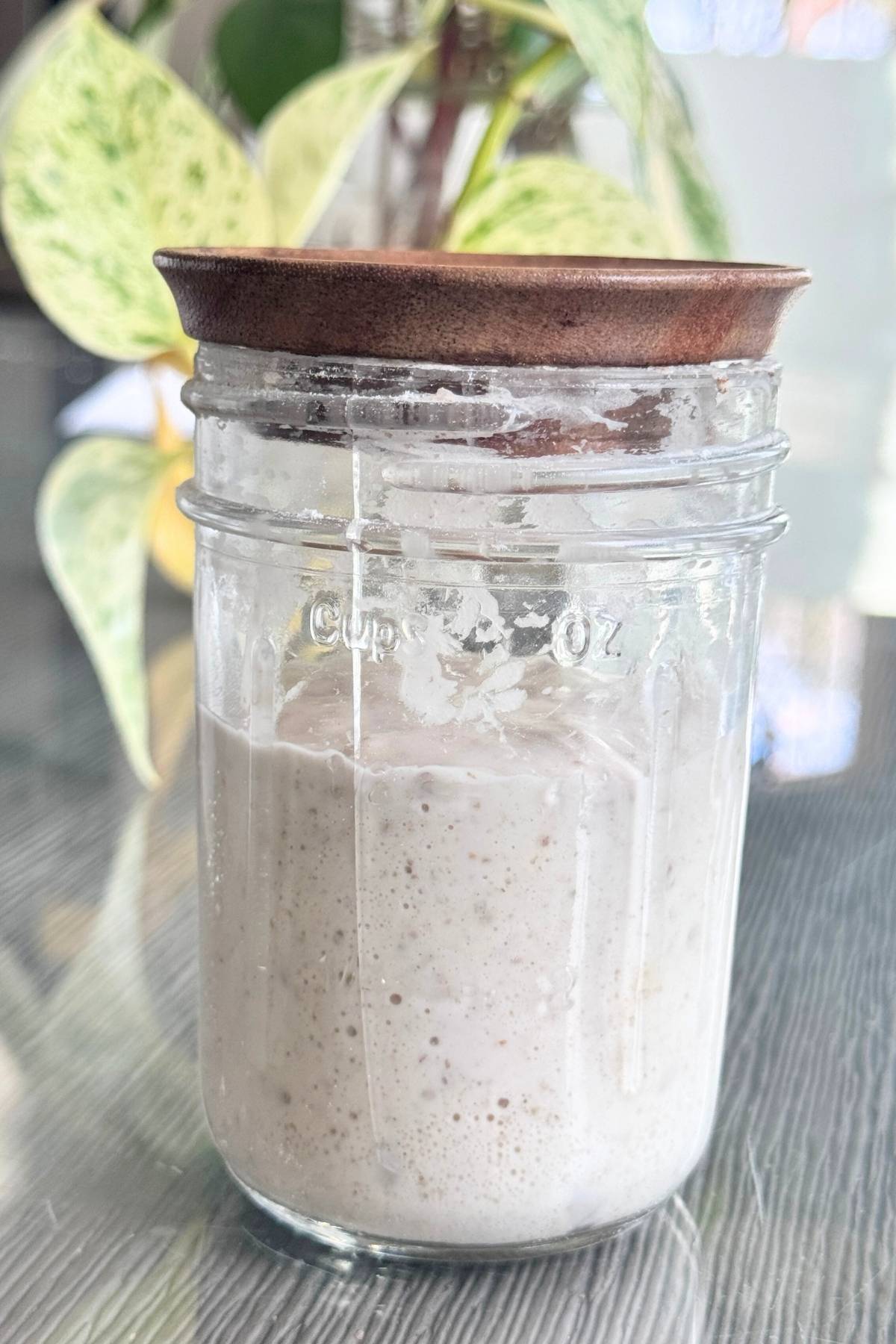
Feed Your Starter
The night before, feed your starter (I used a 1:6:6 ratio) so it is active and at its peak in the morning.
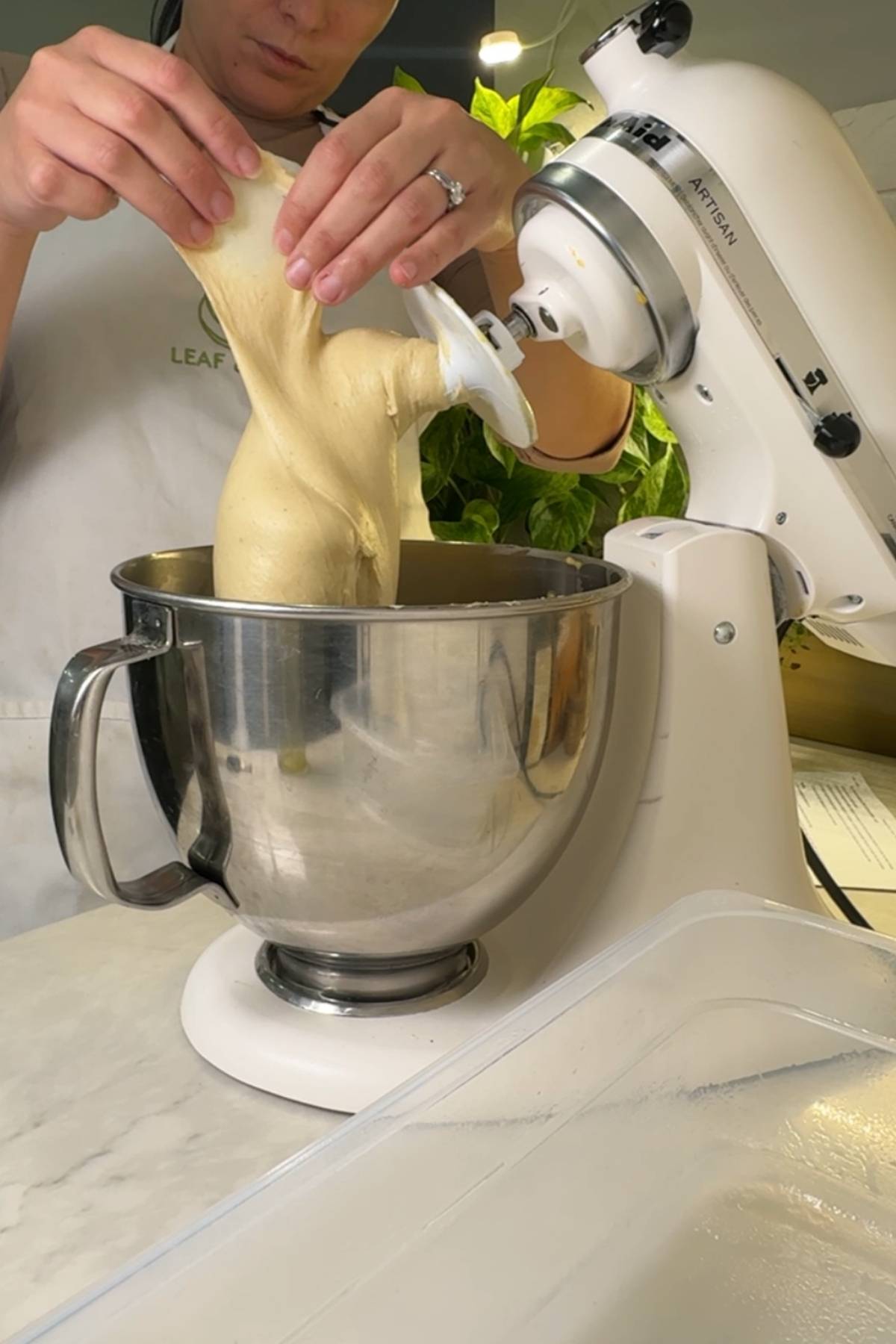
Mix the Dough
Whisk the starter, milk, and sugar, then knead in the stand mixer with flour, salt, eggs, and butter until the dough passes the windowpane test.
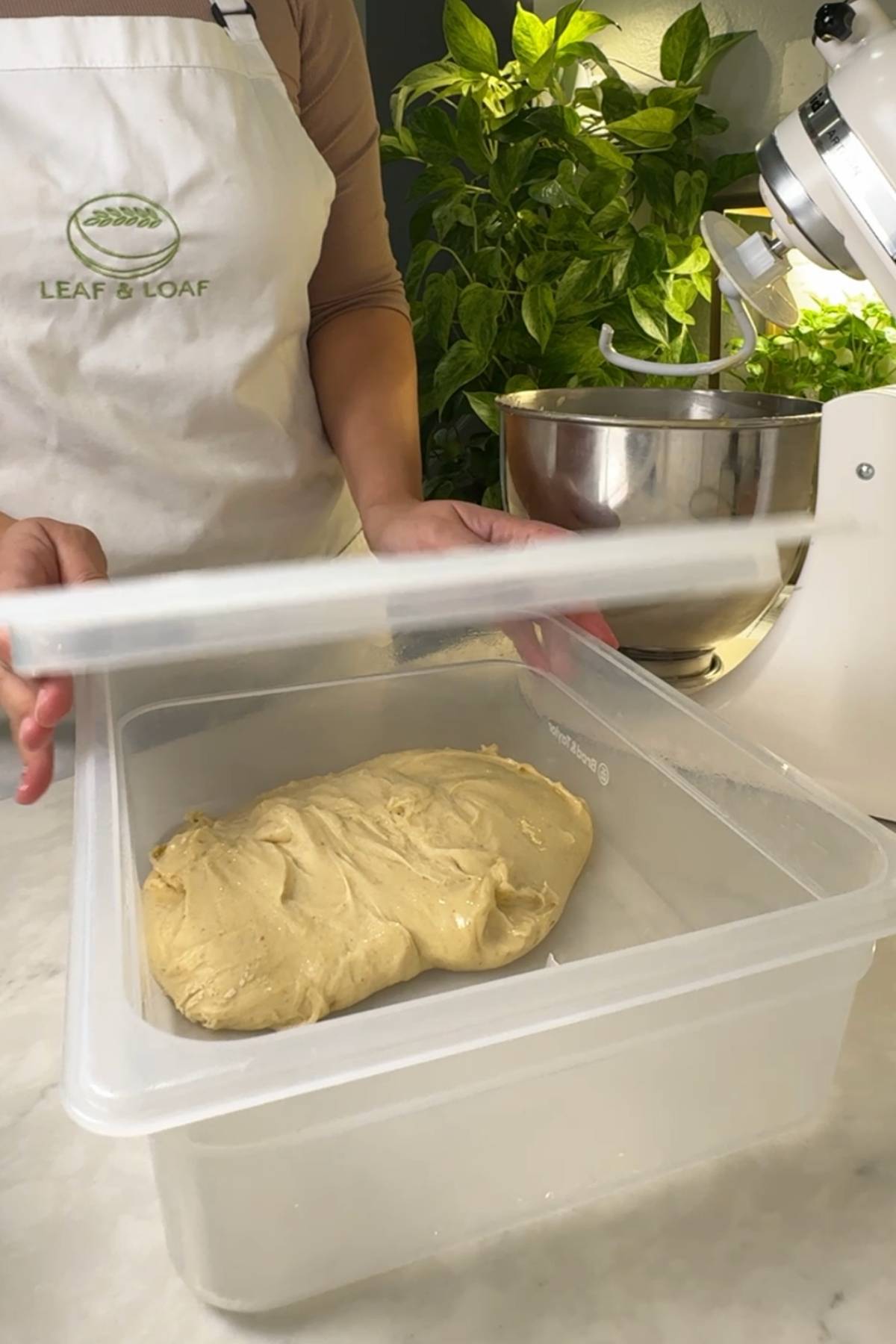
First Rise (Bulk Fermentation)
Let the dough rise in a warm spot (78°F (26°C) until it has grown by 50% (not doubled). This should take about 4-5 hours.
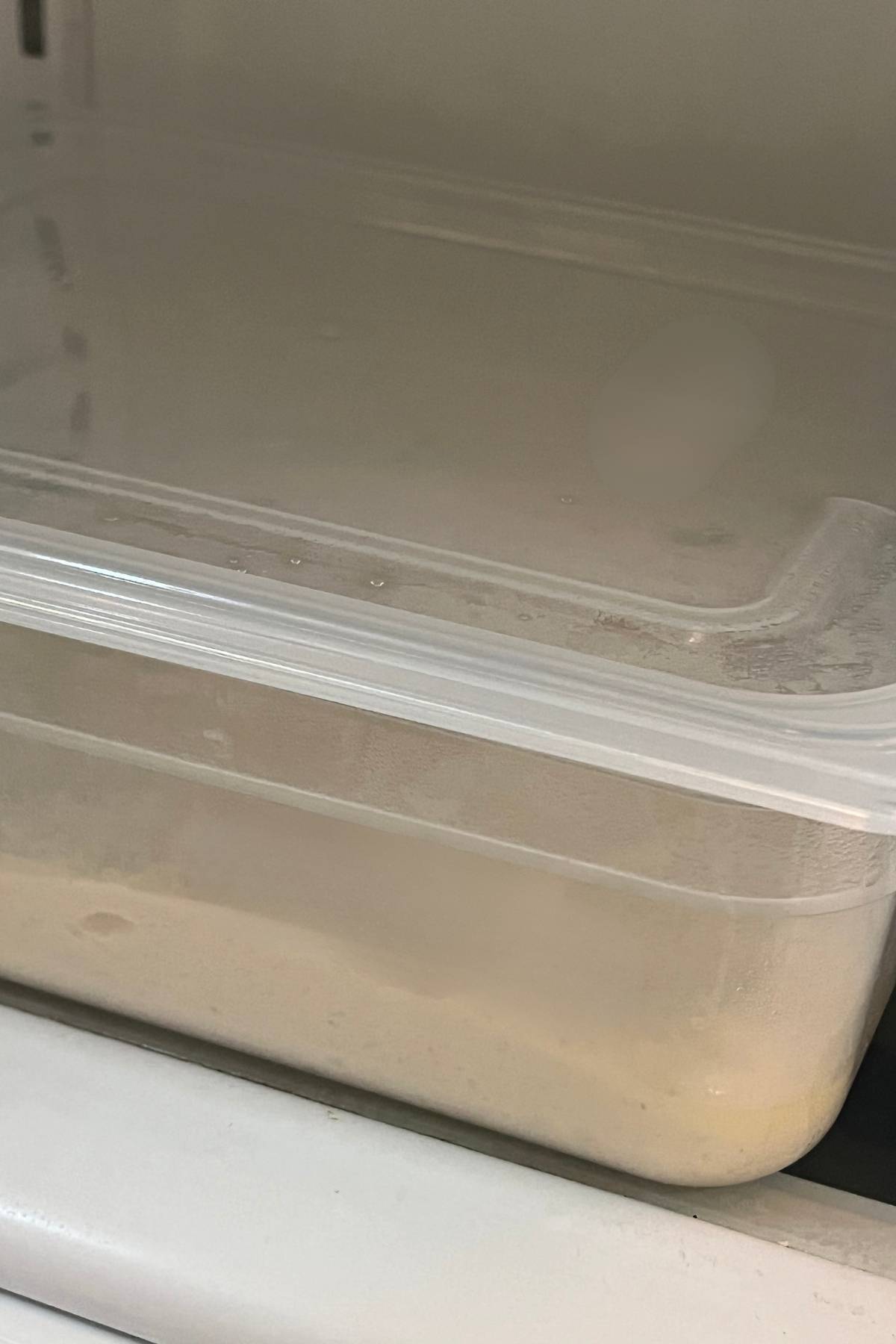
Cold Retard
Chill the dough in the fridge for 1 hour to firm up the butter, making it easier to roll out.
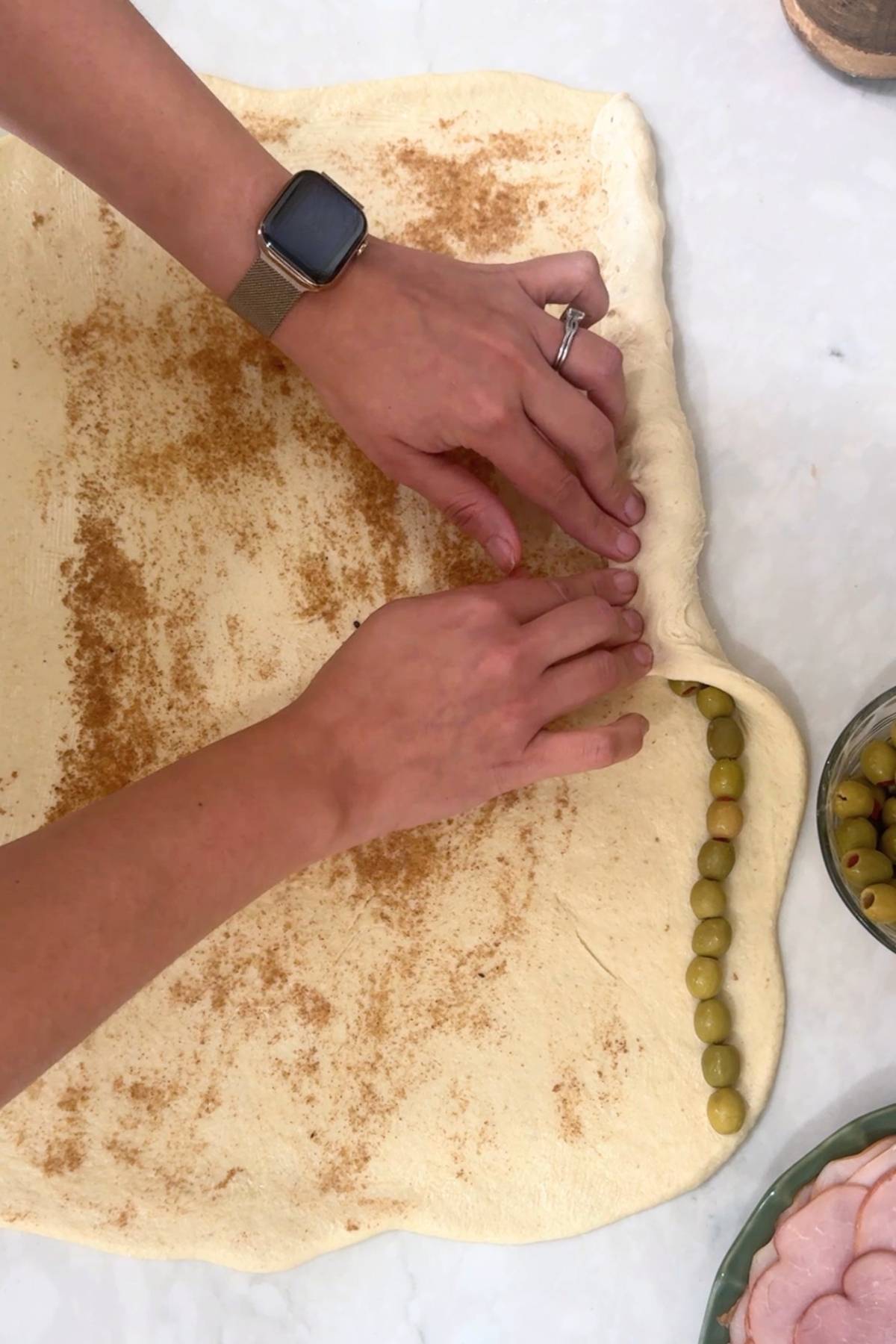
Roll & Fill
Roll the dough into a large rectangle, brush with butter, sprinkle with brown sugar, and wrap the top edge over a row of whole olives.
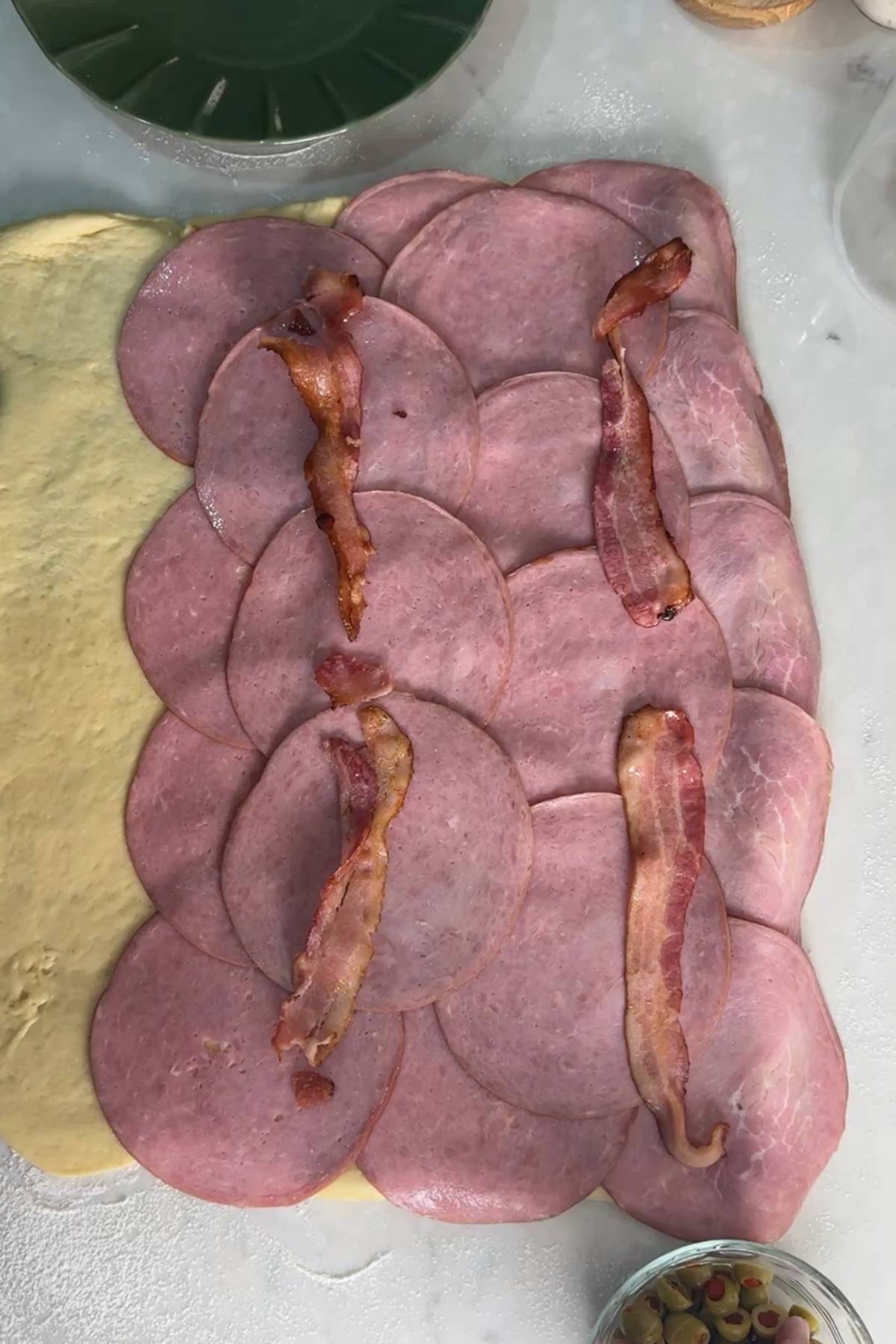
Layer the Meat
Drape the ham slices over the olive row and dough, then top with par-cooked bacon strips.
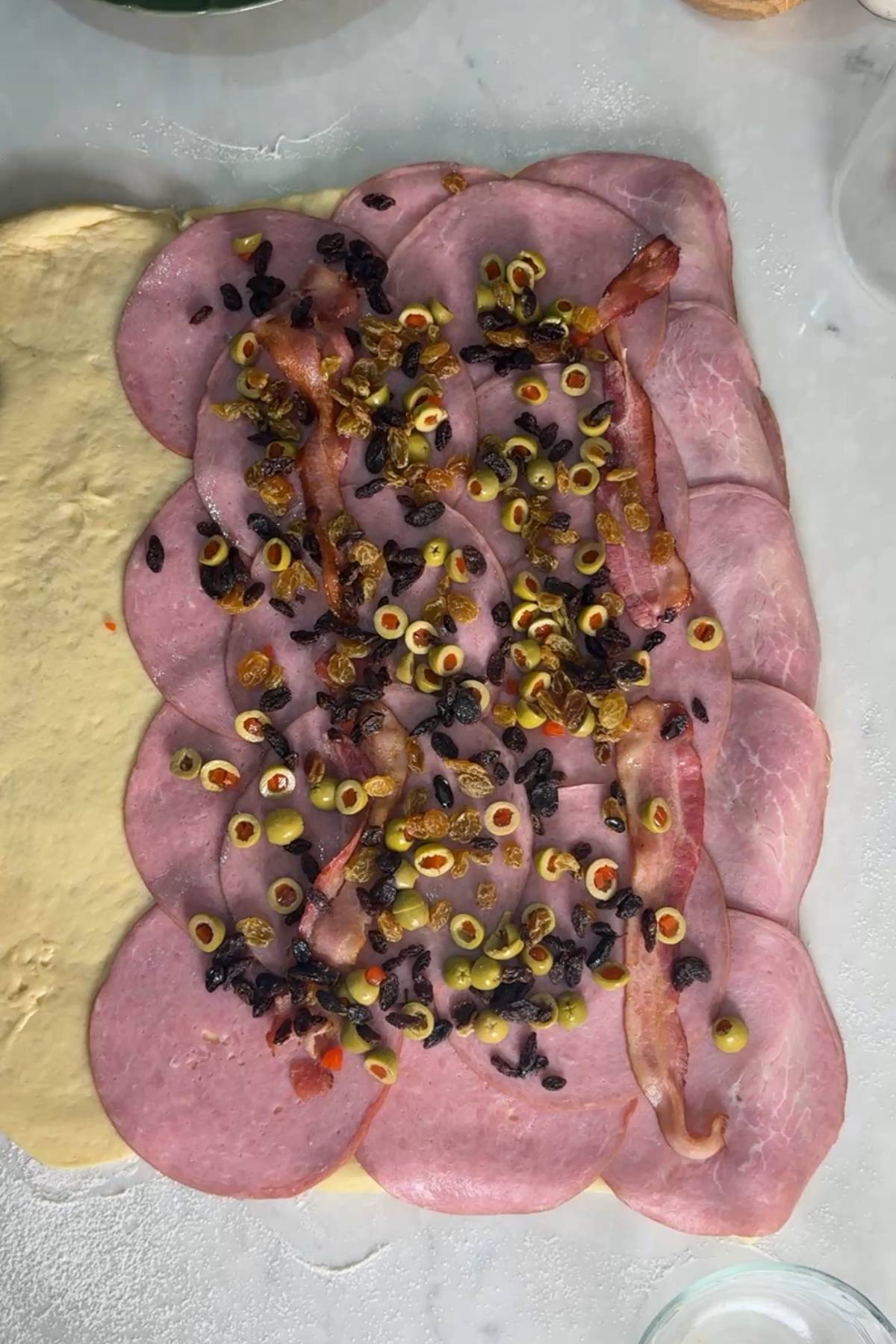
Add Inclusions
Scatter the sliced olives and soaked, drain and dried raisins evenly over the ham and bacon.
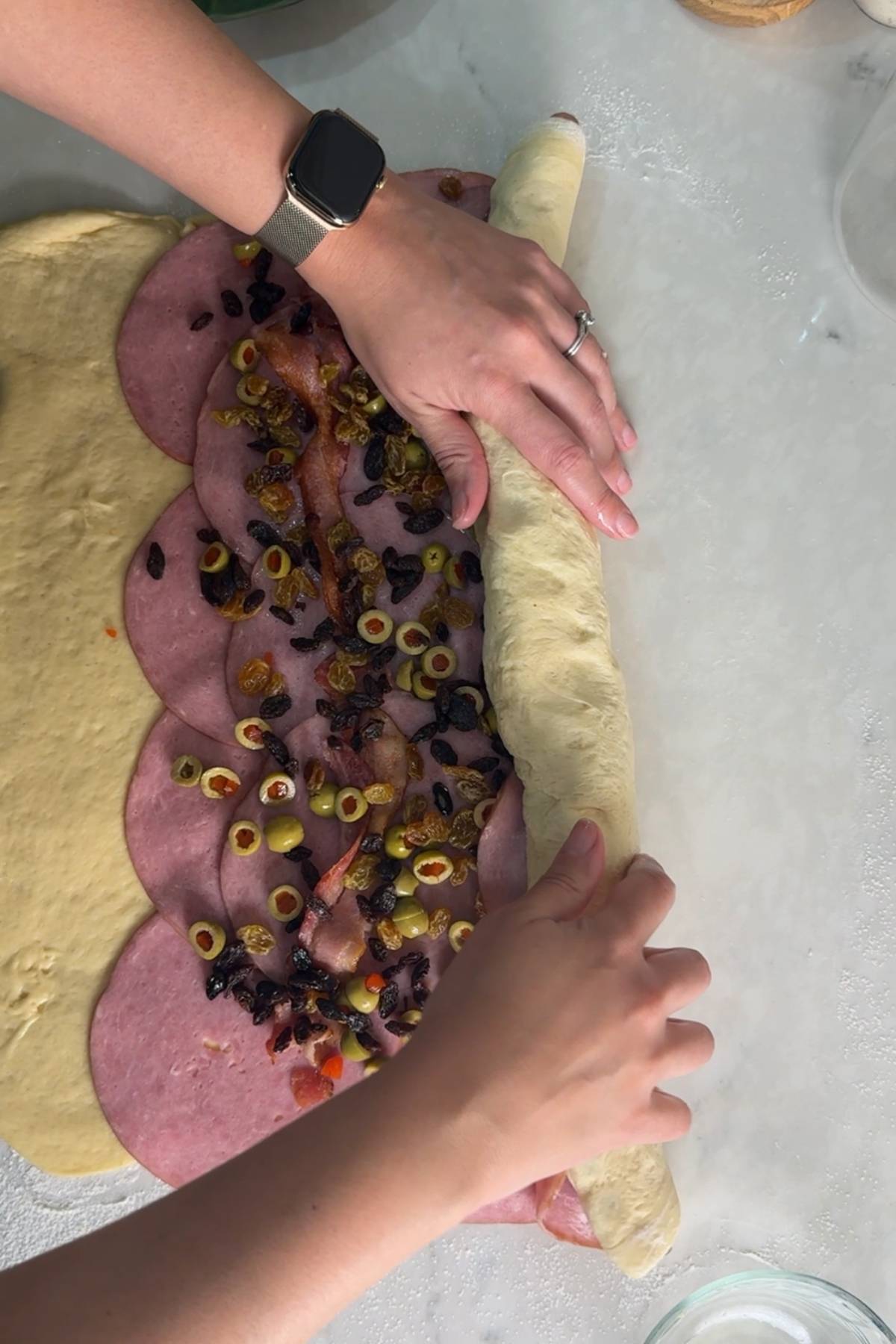
Roll the Dough
Starting from the top edge (where the whole olives are), gently but tightly roll the dough down toward you.
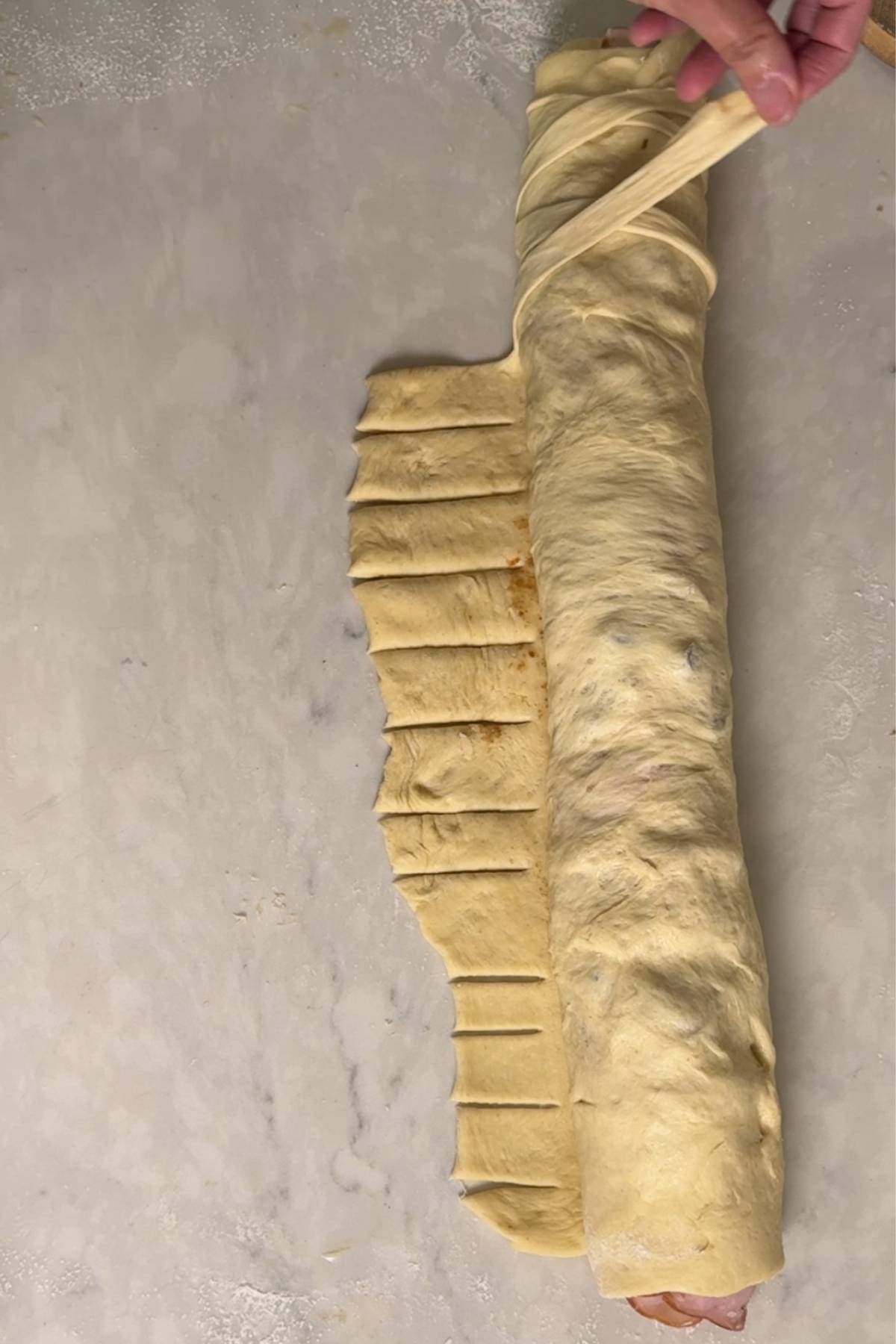
Decorate & Proof
Decorate with dough strips, dock with a fork, and let it rise again for 3-4 hours until puffy.
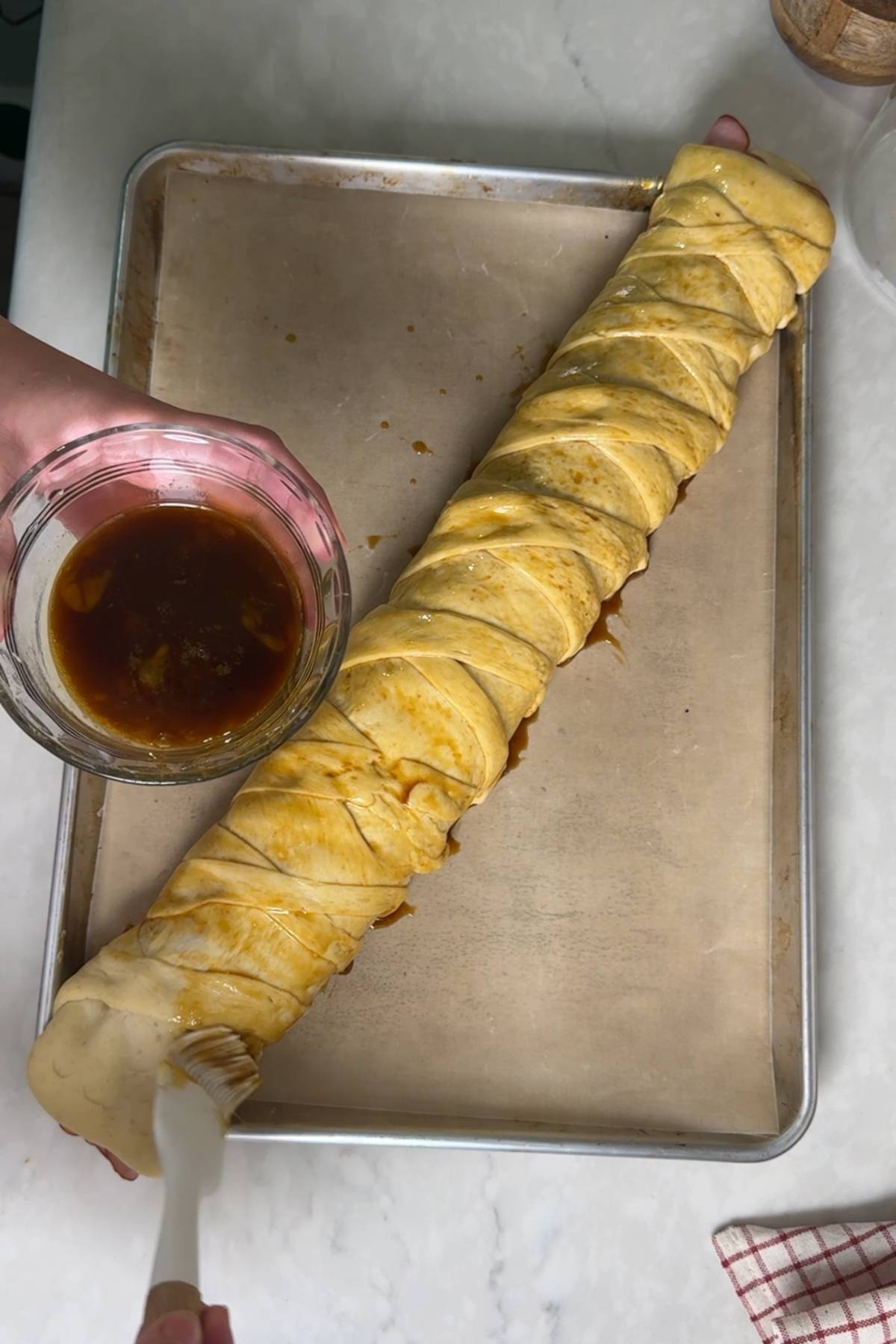
Egg Wash & Bake
Then brush with the molasses/papelon + egg wash and bake at 350°F (175°C) for 30 minutes or until deep golden brown.
Secrets For Best Results Making Sourdough Pan De Jamon
- Peak Starter: Your starter must be very vigorous. If it is sluggish, the heavy fats (butter/eggs) and heavy filling (ham) will prevent the bread from rising.
- Watch the Dough, Not the Clock: Ambient temperature is everything. At 78°F (26°C), the first rise takes 4-5 hours, but if your kitchen is cooler, it will take longer. Always wait for that 50% rise.
- The Cold Retard: Don't skip the fridge step! Chilling the dough for just 1 hour solidifies the butter, turning a sticky dough into a smooth, manageable sheet that rolls like a dream.
- Drain and Dry Your Olives and Raisins: Wet olives and raisins equal soggy dough. Drain them and pat them very dry with paper towels before using.
- Par-Cook the Bacon: Cook the bacon until it renders fat but is still flexible. If it's crispy, it might tear the dough; if it's raw, it will make the bread greasy.
Storage Tip
Room Temperature: It is safe to leave out for serving for 2-4 hours, but do not leave it out overnight due to the meat filling.
Refrigerator: Wrap the loaf tightly in plastic wrap or a bread bag and store it in the fridge for 3-5 days.
Freezing: This is the best method for long-term storage. Wrap the cooled loaf in plastic and then foil; it keeps well for 2 months.
Substitutions and Variations
Some of the substitutions below I have not tried myself, but you could try them and please let me know how it goes, so we can troubleshoot together.
- Flour: If you don't have high-protein bread flour, you can use All-Purpose flour, I have done that many times, though the loaf may be slightly less tall. For a Gluten-Free version, you could use a high-quality 1:1 gluten-free bread flour blend (expect a different texture).
- Milk: You can substitute whole milk with almond milk, soy milk, or oat milk for a dairy-free dough.
- Butter: High-quality vegan butter should work well as a 1:1 substitute.
- Sugar: If you can't find Papelón or Piloncillo (what we use traditionally), unsulphured molasses or dark brown sugar works perfectly for the egg wash.
- Eggs: This dough relies heavily on eggs for structure and I have not tried making an eggless version, but once I do, I will update this part.
- Yeast Version: Short on time? Check out my traditional Yeast Pan de Jamón recipe which is ready in a fraction of the time.
- No Raisins/Olives? If you have picky eaters, you can omit them, but I recommend replacing them with something flavorful like dried cranberries to keep the sweet/salty balance.
Want to Save This Page?
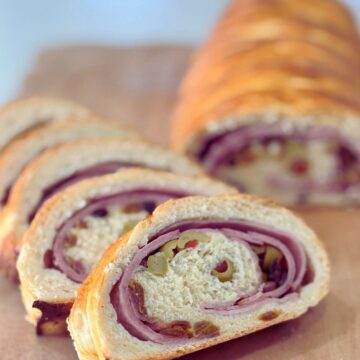
Sourdough Pan de Jamon
Ingredients
Ingredients To Feed Your Sourdough Starter
- 8 grams (½ tablespoon) active sourdough starter at peak
- 48 grams (3 tablespoons + 1 teaspoon) filtered water room temperature
- 48 grams (⅓ cup + 1 tablespoon) bread flour
- 13 grams (1 tablespoon) white granulated sugar (optional)
Ingredients for the dough
- 480 grams (4 cups) high-quality organic bread flour 13% or more protein content (You can substitute for All-Purpose Flour)
- 26 grams (2 tablespoons) white granulated sugar
- 8 grams (1 ½ teaspoons) fine salt
- 100 grams (½ cup) active sourdough starter at peak 100% hydration
- 240 grams (1 cup) whole milk warm, between 100°F - 110°F (38°C - 43°C)
- 2 large eggs - beaten room temperature
- 57 grams (4 tablespoons or ½ stick) unsalted butter 65°F (18°C)
- 13 grams (1 tablespoon) oil to coat the rising container and the dough I prefer avocado oil, but can use olive or vegetable oil.
For the filling
- 14 grams (1 tablespoon) unsalted butter melted
- 13 grams (1 tablespoon) dark brown sugar
- 454 grams (1 pound) smoked ham thinly sliced, but not "shaved"
- 4 strips smoked bacon (optional)
- 1 jar (approximately 8 oz) green olives, stuffed with pimentos drained and dried. Keep half of them whole; slice the other half.
- 75 grams (½ cup )raisins soaked and drained. Can use a combination of blonde and regular raisins.
For the egg wash
- 1 small egg - beaten room temperature
- 21 grams (1 tablespoon) unsulphured molasses or Papelón (or Panela/Piloncillo)
Instructions
Feed your Sourdough Starter
- The night before mixing, feed a portion of your starter at a 1:6:6 ratio: 8 grams starter, 48 grams water, and 48 grams flour. Cover loosely and leave at room temperature. Use in the morning after it has reached peak activity.
Mixing
- In the bowl of a stand mixer with a dough hook, whisk together the warm milk, sourdough starter and sugar until well dissolved and bubbly.Add the flour and salt.Mix for 2 minutes on medium speed, just until it comes together, no more or it will be hard to incorporate the eggs.
- Add the beaten eggs and continue mixing for about 5 minutes or until fully incorporated, stopping to scrape the bowl midway.
- With the mixer on medium speed, add the butter, one table spoon at the time. Mix for 1-2 minutes between each butter addition.
- The dough should look smooth and soft. It should not be wet or sticky and it should pass the window pane test.If it looks too wet, add ½ tablespoon of flour, mix and reassess.
First rise
- Coat a rectangular container with oil.Brush the dough with the oil as well to prevent drying during rising.
- Place the dough in the oiled container and let it rest, covered with plastic wrap, until it rises 50%, for about 4-5 hours, in a warm spot around 78°F (26°C). Ambient temperature plays a huge role in rising times: a cooler spot means a longer wait, while a warmer spot speeds things up. Because other factors like flour type and starter strength also affect the speed, the golden rule is to watch the dough, not the clock.
Cold Retard
- Once the dough has risen 50%, it should feel aerated but still have some resistance when pressed. The dough should look smooth and slightly domed.Place the dough in the refrigerator for 1 hour, covered with plastic wrap, so it's easier to roll later.You can extend this cold retard for up to 24 hours, but the dough will become tangier as time passes.
Prepare your ingredients
- Meanwhile, prepare your ingredients:- Soak the raisins in warm water (or rum/wine!) for 10–15 minutes.- Slice half of the stuffed olives- Cook the bacon until it starts to turn golden but hasn't darkened or hardened. Drain on paper towels.
Filling and shaping
- Remove the dough from the fridge 30 minutes to 1 hour before rolling, so the butter can soften slightly to get a smooth rectangular sheet.Gently transfer the dough onto a clean, lightly floured surface.
- Using a rolling pin, roll the dough out into a large rectangle, roughly 12 x 16 inches (30 x 40 cm). Aim for a thickness of about ¼ inch-you want it thin enough to spiral nicely, but thick enough to hold the heavy filling.
- Brush the dough lightly with melted butter.
- Sprinkle the dark brown sugar on top of the dough.
- Place the whole olives in a single straight row near the top edge (the side you will start rolling from). This ensures that the center of your loaf has a beautiful line of olives running through it.
- Fold the top edge of the dough over the row of whole olives, tucking them in tightly. Press gently with your fingertips to secure the dough around the olives so they don't shift.
- Layer the first few slices of ham directly over the wrapped olive row. Center the slices so that the olive row sits right in the middle-this means the top half of the ham will drape over the back of the roll, while the bottom half extends onto the flat dough. Continue layering the rest of the ham to cover the dough completely, leaving a 2-inch clean border at the bottom edge of the dough for sealing.
- Next, distribute the cooked bacon strips, raisins, and sliced olives evenly over the ham.
- Starting from the top edge (where the whole olives are), gently but tightly roll the dough down toward you.When you reach the clean border at the bottom edge of the dough, cut it into thin strips (start by cutting it in half, then quarters, then eighths to get even pieces). Wrap these strips diagonally or in X shapes around the log to create that classic Pan de Jamón design.
Second rise or proofing
- Transfer the loaf to a baking sheet lined with parchment paper. Use a fork to poke holes on top of the loaf, pressing deep to allow steam to escape.
- Cover the loaf with a clean and damp kitchen towel and let it rise in a warm spot around 78°F (26°C) for about 3-4 hours.I do not recommend doing a cold proof because this is a delicate enriched dough, filled with a heavy amount of inclusions. The moisture from the ham and olives could seep into the dough, creating a gummy or raw layer inside the spiral.
- Towards the end of the second rise, preheat the oven to 350°F (175°C). Place a rack in the middle of the oven.The Poke Test: Gently press a finger into the dough. The indentation should spring back very slowly and leave a small dent. If it springs back instantly, it needs more time.
Egg wash and bake
- Whisk the remaining egg with the molasses or papelón (panela/piloncillo) and brush the mixture all over the risen loaf, making sure to brush the top and all sides for even color.
- Transfer to the oven and bake on the middle rack for 30 minutes, rotating halfway to ensure even browning. The bread is done when the crust is a deep golden color.
- Remove from the oven and immediately brush with melted butter.
- Allow to cool completely before slicing.
Preserving
- Because of the ham and bacon filling, this bread cannot be stored at room temperature like other breads.It is safe to leave out on the table for serving for 2 to 4 hours, but it should not be left out overnight.Storage Method: Wrap the loaf tightly in plastic wrap or place it inside a paper or plastic bread bag and store it in the refrigerator for 3 to 5 days.Freezing is the best way to preserve the texture for extended periods:Let the loaf cool completely. Slice it into individual servings (optional, but convenient). Wrap tightly in plastic wrap, then a layer of foil to prevent freezer burn. It keeps well for 2 months.
Reheating
- Don't eat this bread cold! The fats in the bacon and butter solidify in the fridge. A quick warm-up in the oven wakes up the flavors and makes the bread soft and pillowy again."Oven (Best Result): Reheat at 350°F (175°C) for 10–15 minutes. This crisps the crust and melts the fat in the bacon/ham, making the inside juicy again.Microwave (Quickest): 20–30 seconds is enough. It will be softer (less crispy), but still delicious.
Related Recipes
Looking for other recipes like this? Try these:

Subscribe to get my recipes
Join the movement Bringing Bread Back to every family table! Get recipes for homemade bread and other bakes delivered via email.
Leave a Reply