

If you've ever scratched your head at sourdough advice like "feed your starter 1:2:2" - you're not alone. Those numbers can feel like secret code! In reality, feeding ratios are a simple, handy tool to keep your sourdough starter happy and baking-ready.
In this post, we'll break down what feeding ratios mean, why they matter for your starter's health and schedule, and how to tweak them to suit your life.
I hope this friendly guide will help demystify the math and make maintaining your starter a breeze-but if you want the math done for you, my calculators are the shortcut you need!
Jump to:
What Are Sourdough Starter Feeding Ratios?
Feeding ratios are basically the "recipe" for your starter's meal. They are a handy shorthand to communicate how much food and water you're giving relative to the amount of starter, which makes scaling and adjusting easy.
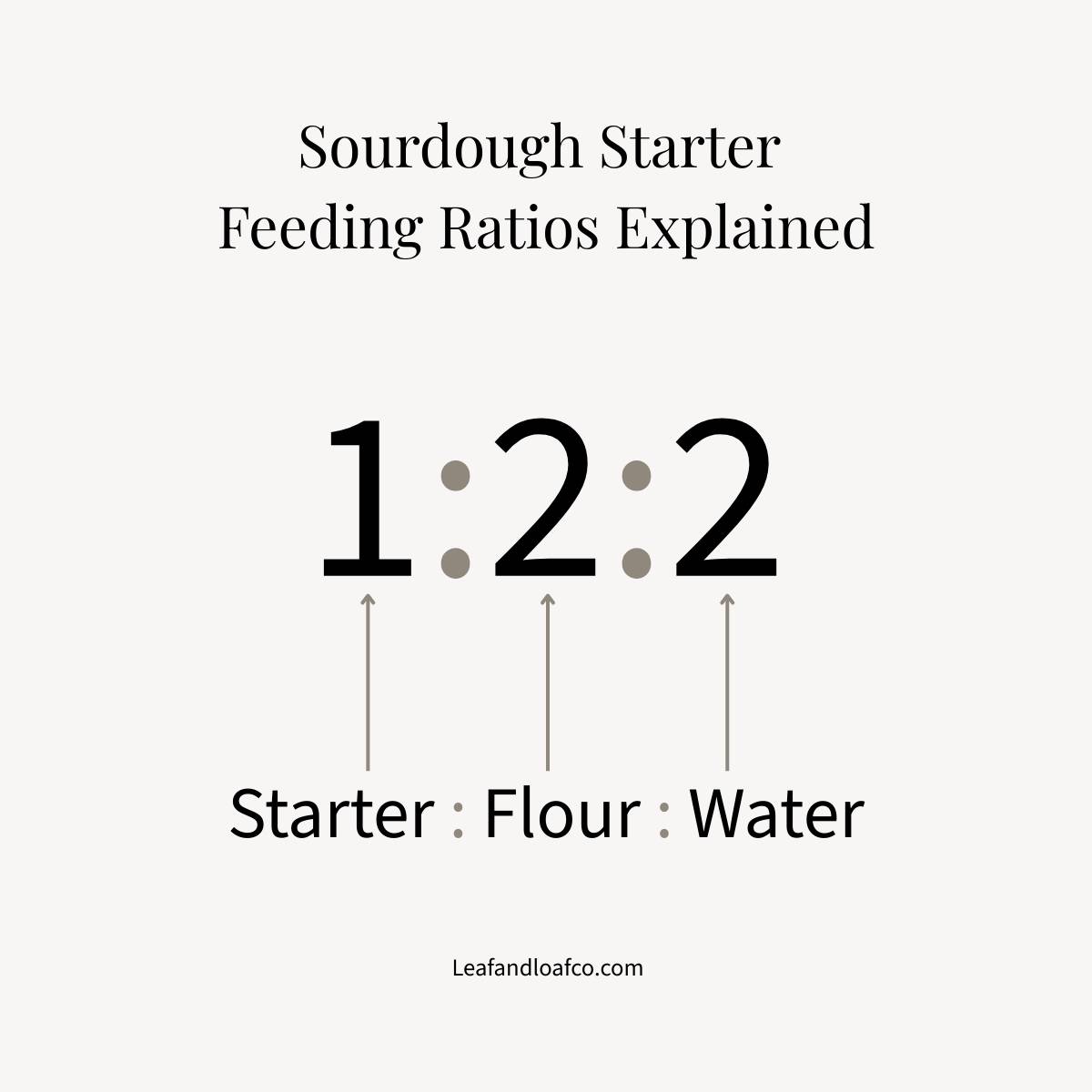
They're written as three numbers (like 1:1:1 or 1:2:2) representing the parts of starter : flour : water by weight.
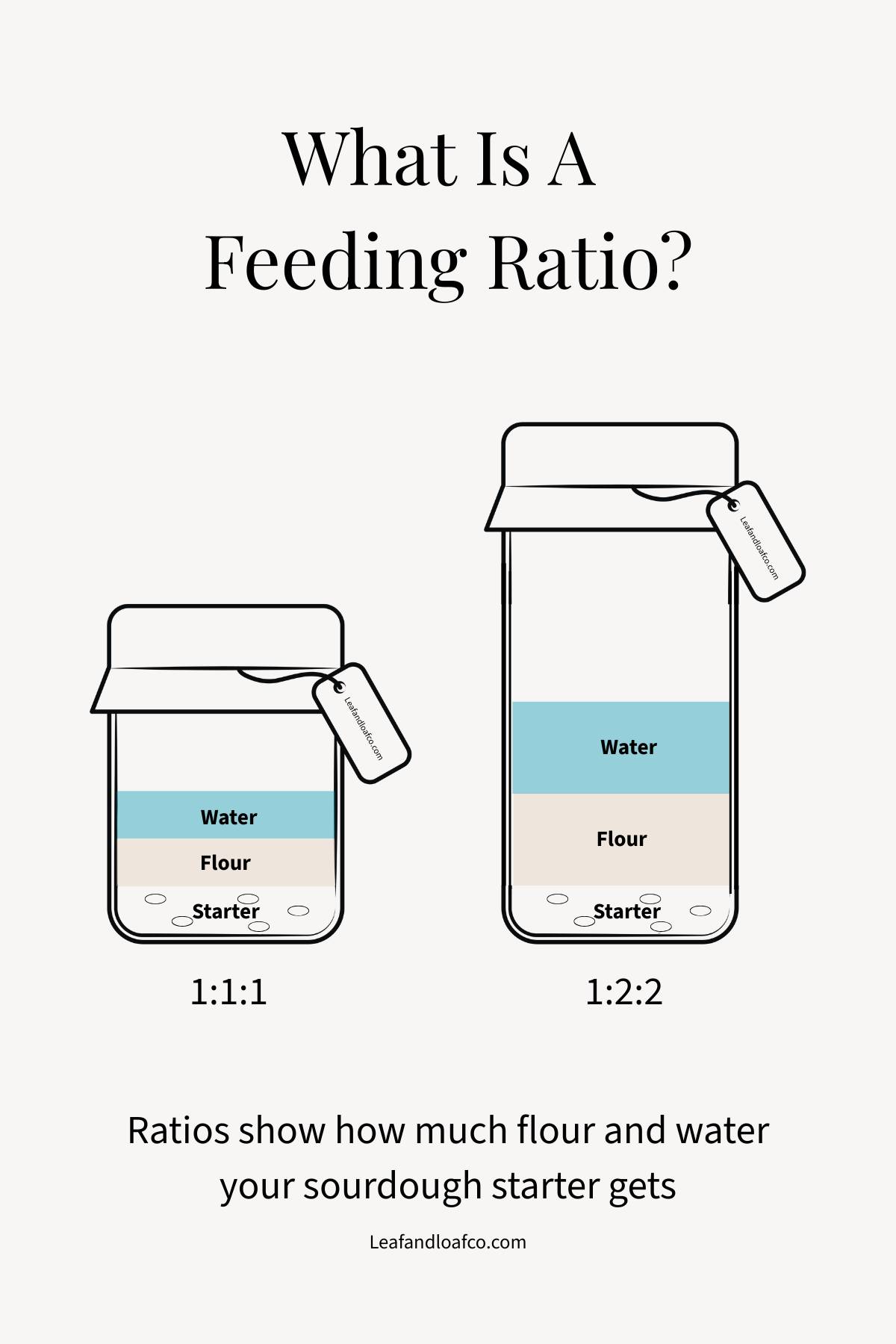
- The first number is always 1, meaning one part of your existing starter (often called "seed")
- The second number is how many parts of fresh flour to add
- The third is how many parts of water to add.
For example, a 1:1:1 ratio means you feed with equal weights of starter, flour and water. If you have 30 grams of starter, you would feed it with 30 grams of flour and 30 grams of water.
A 1:2:2 ratio would mean if you have 30 grams of starter, you would feed it with 60 grams of flour and 60 grams of water, and so on.
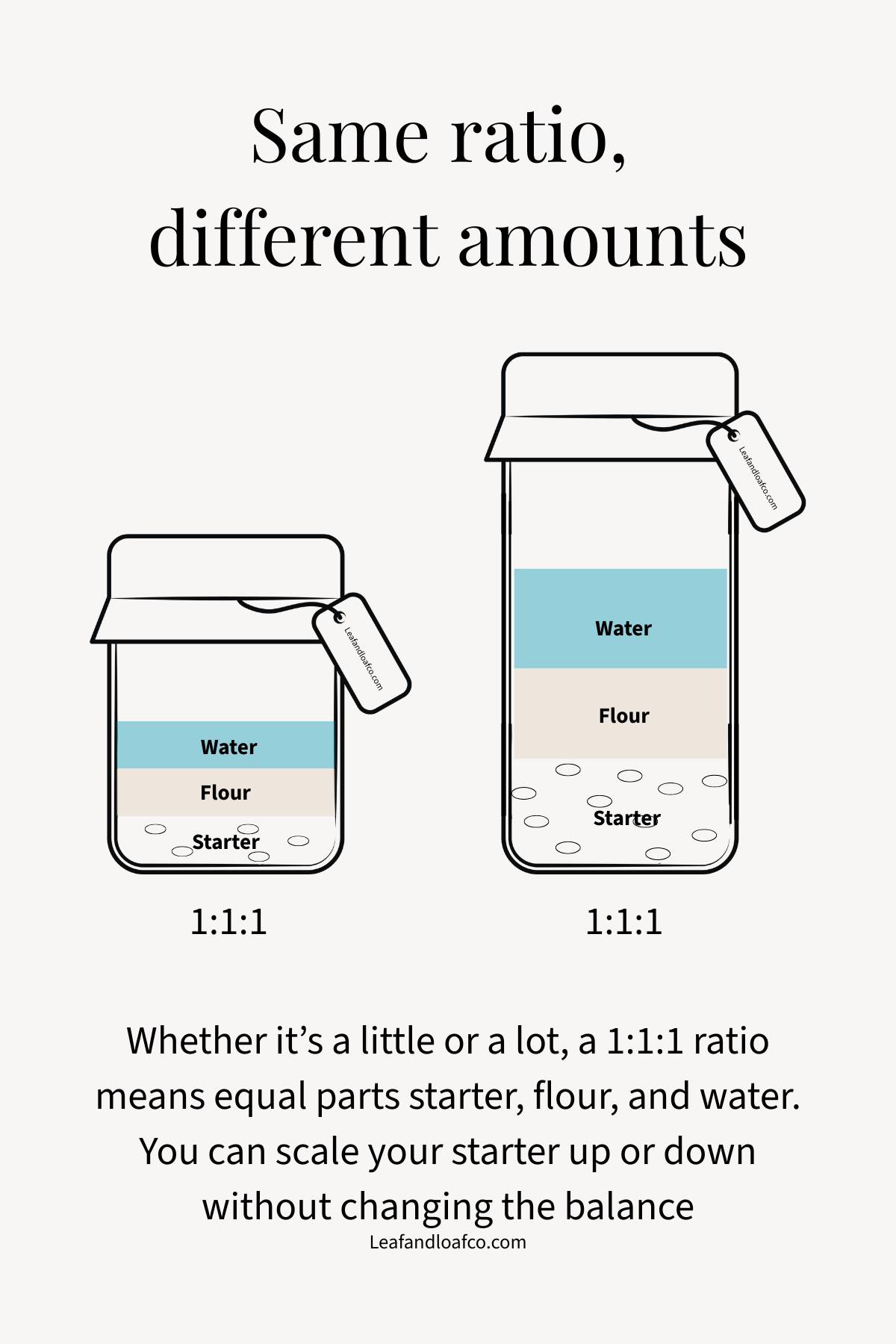
These ratios are always measured by weight, not volume, to stay accurate. Using a kitchen scale is key - measuring cups can mislead you because flour and water have different densities. This way, whether you keep a big jar or just a little, you can scale the feeding up or down and still give your yeast and bacteria the same proportion of food every time.
So why use a ratio instead of a fixed recipe? Because it's flexible!
One baker might keep 20 g of starter and feed 1:2:2 (40 g flour and 40 g water), while another might keep 100 g and feed 1:2:2 (200 g flour and 200 g water). Both are following the same ratio, so their starters get the same treatment - just sized differently.
Why Sourdough Starter Feeding Ratios Are Useful
Feeding ratios aren't just baker's gibberish - they serve several important purposes in sourdough upkeep:
- Starter Health: A proper ratio ensures your microbial community gets enough food. At minimum, most starters need equal parts flour to starter (1:1:1) so they don't "starve". Under-feed them, and they'll quickly exhaust their food, producing excess acid and alcohol that can weaken your culture. A good ratio keeps your starter strong, bubbly, and balanced rather than sluggish or overly sour.
Most experienced sourdough bakers will recommend you to feed using at least a 1:2:2 ratio, for a more substantial meal.
- Predictable Timing: Ratios let you control how fast your starter ferments and peaks. A smaller feeding (lower ratio like 1:1:1) means less new food, so the starter will ripen faster. A larger feeding (higher ratio like 1:4:4 or 1:5:5) gives more food, slowing fermentation so it takes longer to peak. This predictability helps you align the starter's readiness with your baking schedule (no more guessing when it will be ready).
- Accuracy & Consistency: Working by ratios encourages using a scale, which improves accuracy. Consistent feedings by weight mean your starter's behavior will also be more consistent day to day. It takes the guesswork out of feeding and leads to repeatable results.
Precise ratios = predictable timing and starter performance.
- Easy Scaling (More or Less Starter): Ratios make it simple to scale up or down depending on how much starter you need. For instance, if you want to reduce waste, you can maintain a very small starter (say 20 g) and feed it 1:1:1 (20 g flour, 20 g water) to keep only a tiny amount on hand. Or, if a recipe calls for a lot of starter, you can feed that 60 grams of starter you keep using the same ratio of 1:1:1 (60 g flour, 60 g water) to get 180 grams. The ratio stays the same; the total size adjusts to your needs.
- Waste Reduction: Higher ratios let you go longer between feedings, which can mean fewer refresh cycles (and less waste) over time.
In a nutshell, feeding ratios are useful for maintaining a healthy starter, timing its peak for baking, and managing the practicalities (quantity and waste). They give you a simple dial to turn in your sourdough routine, whether you want speed, convenience, or just a happy microbial pet.
Factors That Influence Sourdough Feeding Ratios
Feeding ratios are powerful tools, but they don't work in isolation. Many other factors can affect how your starter grows and how a given ratio behaves. Here are some key factors to keep in mind:
- Starter Age & Strength: A young starter (or one that's been neglected) might be slower to rise even with an ideal ratio, while a mature, vigorous starter will ferment more quickly. As your starter ages and gains strength, it generally becomes more predictable and resilient. Healthy yeast and bacteria populations respond faster to feedings.
If your brand-new starter isn't doubling on a 1:2:2 feed as fast as you expect, don't fret - it may just need time and a few more feed cycles to build strength.
- Flour Type: The type of flour you feed can speed up or slow down fermentation. Whole grain flours (like whole wheat or rye) tend to make a starter extra lively - they contain more nutrients and wild yeasts, which can boost activity. White bread flour or all-purpose flour is more standard and a bit slower/steadier. If you switch flour types, you might notice changes in how fast or high the starter rises, even at the same ratio.
Tip: if your starter is sluggish, try blending in a bit of whole grain flour for a feeding or two to give it a nutrient kick.
- Water Temperature: Feeding with warm water versus cold water can change the pace of fermentation. Warm water (around 85/30°C) will wake the starter up faster and shorten the time to peak. Cold water will do the opposite, slowing the activity down.
On a chilly morning you might use lukewarm water to encourage your starter along, whereas if you need to slow it for an overnight ferment, using cool or even refrigerated water can help. Water temp is a handy lever alongside ratio to fine-tune timing.
- Ambient Temperature: Perhaps the biggest factor of all is your kitchen environment. A starter in a warm room (75-80°F) will ferment much faster than one in a cool room (65°F or below). The same 1:3:3 feeding might take 6 hours to peak in summer but 10+ hours in a chilly winter kitchen. Always consider the room temp when planning feedings - in hot weather you might use a higher ratio or feed more often to prevent over-ripening, whereas in cold weather you can use a lower ratio or find a slightly warmer spot so your starter stays active.
Consistent room temperature can make your starter's behavior more predictable (some bakers even use a proofing box or warm spot to keep it steady).
- Hydration Level: The thickness or hydration of your starter (how much water relative to flour) also influences fermentation. Most feeding ratios assume a "100% hydration" starter (equal flour and water, as in 1:1:1 or 1:2:2 with flour and water being the same). A looser, more liquid starter ferments faster and can develop milder lactic flavors. A stiffer starter (say you fed 1:2:1, which would be a thick paste) ferments more slowly and often produces more acetic (sharp) acidity.
If you maintain your starter at a different hydration, expect its rising profile to change. Generally, keep the flour:water balance consistent each time so you can predict its growth.
All these factors intertwine with your feeding ratio. Think of your starter as a little ecosystem: temperature, ingredients, and care will either boost or temper its activity.
When you notice your starter acting "ahead of schedule" or "slower than usual," consider these influences. You can adjust both the ratio and the environment to keep your sourdough culture thriving year-round.
Adjusting Feeding Ratios to Fit Your Schedule
One of the best things about understanding feeding ratios is that you can manipulate them to match your baking schedule. Instead of the starter bossing you around ("feed me now or I'll die!"), you can plan feedings so the starter is ready when you are.
Let me share with you some common scheduling scenarios and how to tweak ratios (and other variables) to make sourdough fit your life:
- Need a quick turnaround (starter ready in a few hours)? Use a lower ratio feeding. For example, if you want to mix dough by lunchtime, you could feed your starter in the early morning at 1:1:1. With that smaller meal, the starter will wake up and ripen more quickly - often doubling within about 4-6 hours if conditions are warm. This way you can have an active starter ready to bake with on short notice.
Just remember, a low ratio means the starter will also get hungry sooner, so don't let it sit unfed all day after it peaks or it may collapse and over-acidify.
- Want to feed at night and bake first thing in the morning? Go for a higher ratio feeding before bed. Suppose you plan an overnight ferment: feed your starter right before you sleep at something like 1:6:6 or higher. This bigger feeding is a larger buffet of food for the microbes, meaning it will take them longer (perhaps ~8-12 hours at room temp) to eat through it and peak. That way, when you wake up, the starter should be hitting its bubbly prime and ready to join your dough.
As extra insurance, you can put the starter in a slightly cooler spot overnight if your kitchen is very warm, to prevent it from peaking too early.
- Baking in the evening after work? Time your morning feed accordingly. Let's say you feed your starter before heading to work. If you want it ripe by the time you're home (~8-10 hours later), choose a moderate-to-higher ratio like 1:4:4 or 1:5:5 in the morning. At average room temperature, that should carry the starter through the workday. When you return, it'll likely be peaking or just past peak, good to go into a dough.
- Too busy to feed twice a day? Use a hefty ratio or refrigeration for once-a-day feedings. Many home bakers maintain a schedule of one feeding every 24 hours by using a really high ratio (like 1:10:10) or by refrigerating the starter. For instance, an established starter can often be fed 1:10:10 (e.g. 10 g starter, 100 g flour, 100 g water) and left at room temp, and once it peaks, stick it in the fridge until you are ready to feed it again soon. The cold will slow fermentation to a crawl, effectively extending the time before next feeding by several days.
This is great for weekend bakers: you might keep the starter in the fridge on weekdays with one big feed, then take it out Friday and do one or two feedings at room temp to wake it up for a weekend baking session.
Let's bring all that together in a handy chart of examples. Below is a rough guide to how different feeding ratios can line up with starter readiness times, assuming a healthy starter at about 72°F:
| Feeding Ratio (Starter:Flour:Water) | Approx. Time to Peak @ ~72°F | When to Use It |
|---|---|---|
| 1:1:1 (equal parts) | ~4–6 hours Holding peak for ~an hour | Quick boosts – e.g. feed in morning for an afternoon mix. Requires frequent feeding (starter eats through food fast). Not recommended for daily maintenance. |
| 1:2:2 | ~5–7 hours Holding peak for ~1.5 hours | Medium timeline – good for twice-daily feedings. Use for a starter refresh in morning to bake in evening, or vice versa. |
| 1:4:4 | ~6–8 hours Holding peak for ~2 hours | Longer rise – ideal for overnight in cooler kitchens (feed before bed, ready by early morning). |
| 1:6:6 | ~7–9 hours Holding peak for ~2.5 hours | Great for when you want to stretch the peak time without a full overnight. Balanced for flexibility without rushing. |
| 1:8:8 | ~8–10 hours Holding peak for ~3 hours | Ideal when you need your starter to last all day — like feeding in the morning for a late-night mix. Slows things down while still staying active and predictable. |
| 1:10:10 | ~9–11 hours Holding peak for ~3-4 hours | Slow and steady – use when you need a full day cycle or are keeping starter at cool room temp for 24 hours. In a warmer kitchen might only work for overnight feeding. |
Note: These times are estimates - your starter's actual schedule may vary depending on all the factors we mentioned (temperature, flour type, etc.). Always observe how your specific starter behaves and adjust. If it's peaking faster than expected, next time feed a higher ratio or cool it down; if it's lagging, use a lower ratio or warm it up.
With a bit of practice, you'll get a feel for the right ratio to fit your routine. The beauty is that by tweaking these ratios, you can practically "train" your starter to be ready when you want to bake. It's like setting an alarm clock made of flour and water!
Want to Save This Page?
Sourdough Starter Feeding Ratio FAQ
There's really no single "best" ratio for all situations - it depends on what you need. For general everyday use, many bakers find something like 1:4:4 or 1:6:6 to be a great balance. Those ratios give your starter plenty of food without requiring constant feeding, and they typically fit a 6-9 hour rise cycle. That said, 1:2:2 is a perfectly good ratio if you're able to feed more frequently or want a quick turnaround starter. On the flip side, if you want to feed less often, a 1:8:8 or higher might be "best" for you. The key is that the ratio should provide enough flour to nourish the starter until your next planned feeding (or until you need it for baking) without starving it. As long as your starter is doubling in volume and smelling pleasant, the ratio you're using is working well. So the "best" ratio is the one that keeps your starter healthy and lines up with your schedule.
When you're just creating a starter from scratch or caring for a young starter, it's usually safest to stick with 1:1:1 (equal parts) at first. A new starter can be unpredictable and may not have a huge population of yeast yet, so feeding with equal parts ensures it has food but doesn't dilute the fledgling culture too much. Many beginners start with 1:1:1 feedings once or twice a day as the new starter gains strength. Once it's consistently rising and bubbling, you can consider giving it larger meals. Some bakers move to 1:2:2 for a new starter at that point. But if you try a higher ratio early on and your starter seems sluggish, go back to 1:1:1 for a bit longer.
Visit my post on How To Create A Sourdough Starter From Scratch
An established, healthy starter opens up more options. At this point, your starter can likely handle (and even appreciate) a bigger feed. Many seasoned bakers settle on about 1:4:4 or 1:5:5 for mature starters kept at room temperature. For example, feeding 10 g of starter with 50 g flour and 50 g water (a 1:5:5) twice a day can maintain a very robust culture. An established starter could even thrive on a weekly 1:10:10 ratio before a cold nap in the fridge. The best ratio here will depend on your routine.
To revive a starter that's been neglected (say it's been sitting unfed for a couple of days), your goal is to replenish the yeast and bacteria with fresh food and cut the accumulated acidity. The best approach is to discard most of it and feed a very tiny amount of starter with a generous ratio like 1:10:10 and possibly do a few back-to-back feedings. This gives the microorganisms a lot of new flour to feast on and dilutes the sour, alcohol build-up. Let that ferment (it might take longer than usual, maybe 12+ hours if it was really weak). Then, once it peaks, repeat the process: discard most, feed again at a high ratio. Often, a neglected starter might spring back after 2-3 feedings like these. With patience, even a very languid starter usually perks up within a couple of days of generous meals. Once it's back to doubling in volume and smelling yeasty/fruity (rather than harsh vinegar), you can resume your normal feeding ratio and schedule.
If you keep a jar of discard in your fridge and need to bring it back to life, you can! Discard is basically unfed starter, so to revive it you treat it like you would a neglected starter. Discard (or use in recipes) most of it and feed a very tiny amount of it with a generous ratio like 1:10:10. Do several back-to-back feedings like this and it should come back to live soon.
Absolutely! You're not married to one ratio forever - you can change your starter's feeding ratio whenever needed. Sourdough starters are quite adaptable. If you've been feeding 1:1:1 and want to switch to 1:3:3, go right ahead. You don't need to do it super gradually or anything; just start feeding the new ratio, and observe. Changing ratios is a normal part of managing a starter through seasons and life changes. For example, you might use 1:5:5 in summer when it's warm (to slow it down), and switch to 1:2:2 in winter when it's cooler (to keep it lively). Or if you find you can't keep up with feeding twice a day, you can move to a larger ratio once a day. The key is to monitor how the starter responds: if a new ratio causes it to peak at an odd time, you may need to adjust timing or the ratio again.
Related Content
Looking for other posts like this? Try these:


Subscribe to get sourdough tips
Join the movement Bringing Bread Back to every family table! Get sourdough tips and recipes for homemade bread and other bakes delivered via email.
Diane says
I think you have a typo: One baker might keep 20 g of starter and feed 1:2:12 (40 g flour and 40 g water)
Should be 1:2:2?
Maria Baradell says
Yes, thank you so much for pointing that out. I just removed the 1, so it reads 1:2:2 instead of 1:2:12 THANK YOU!